
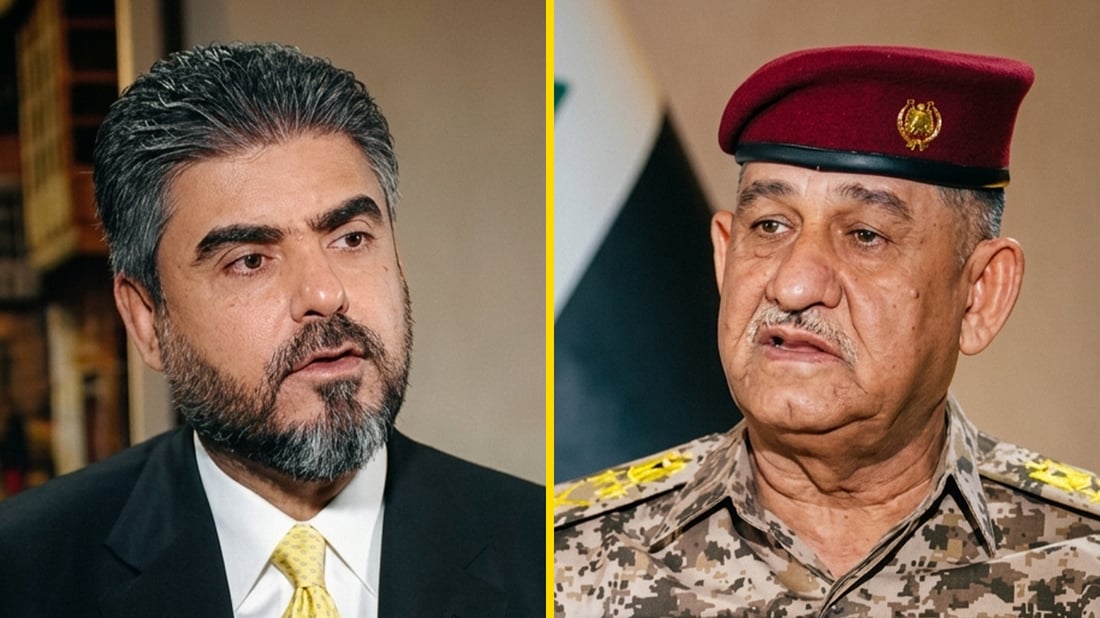
Heavy weapons from compliant factions to go to state storage, committee head says
BAGHDAD — All heavy and medium-heavy weapons belonging to armed formations participating in Iraq’s weapons integration program, including tanks, artillery, certain missiles and drones, will be transferred to state-controlled storage under central committee supervision, the head of the Higher Committee for Restricting Weapons to State Control said Saturday.
Lt. Gen. Qais al-Muhammadawi told Al Hadath TV that the weapons would be handed over “according to official documents” to a committee representing the Defense Ministry, Joint Operations Command and the commander-in-chief’s office, then stored “in special warehouses, in preparation for redistributing them to the army and security forces according to need.”
Muhammadawi said the process began with Saraya al-Salam following Muqtada al-Sadr’s directive to place the group’s weapons under state authority, which he described as “a real and solid basis for the actual start of the file of restricting weapons to the state.” A joint committee with representatives from the Defense Ministry, Interior Ministry, PMF and Saraya al-Salam has been formed to inventory members, classify weapons and develop restructuring mechanisms.
He said the government’s objective goes beyond collecting weapons. “The goal is not limited to inventorying weapons or changing names, but to reach national security formations linked to the commander-in-chief of the armed forces and operating within the official frameworks of the state,” he said, adding that “the stage requires security forces without political affiliations.”
Three groups have so far agreed to participate: Saraya al-Salam, Asaib Ahl al-Haq and the Imam Ali Battalions. The process applies only to formations already administratively affiliated with the PMF. Political titles will be cancelled, Muhammadawi said, with brigade numbers retained but filtered and redistributed within the PMF. No new military positions will be created and personnel not already affiliated with the PMF will not be included.
He warned that non-compliant groups could face consequences. “Any entity that refuses to comply with the procedures will face legal accountability, while the PMF will take administrative measures against those who refuse to hand over weapons,” he said.
The announcement follows a series of steps since the Coordination Framework on June 1 endorsed weapons restriction and authorized Prime Minister Ali al-Zaidi to implement the policy. On June 3, military spokesman Sabah al-Numan said a government committee had begun work on the initiative. A day later, Saraya al-Salam transferred its security responsibilities to the Samarra Operations Command in the first publicly announced implementation step.
Kataib Hezbollah, Harakat al-Nujaba and Kataib Sayyid al-Shuhada have rejected disarmament, arguing their weapons remain necessary for Iraq’s security. On May 30, Kataib Hezbollah official Abu Mujahid al-Assaf said the group was prepared to acquire weapons from departing factions, including drones, loitering munitions, cruise missiles and anti-armor weapons.