
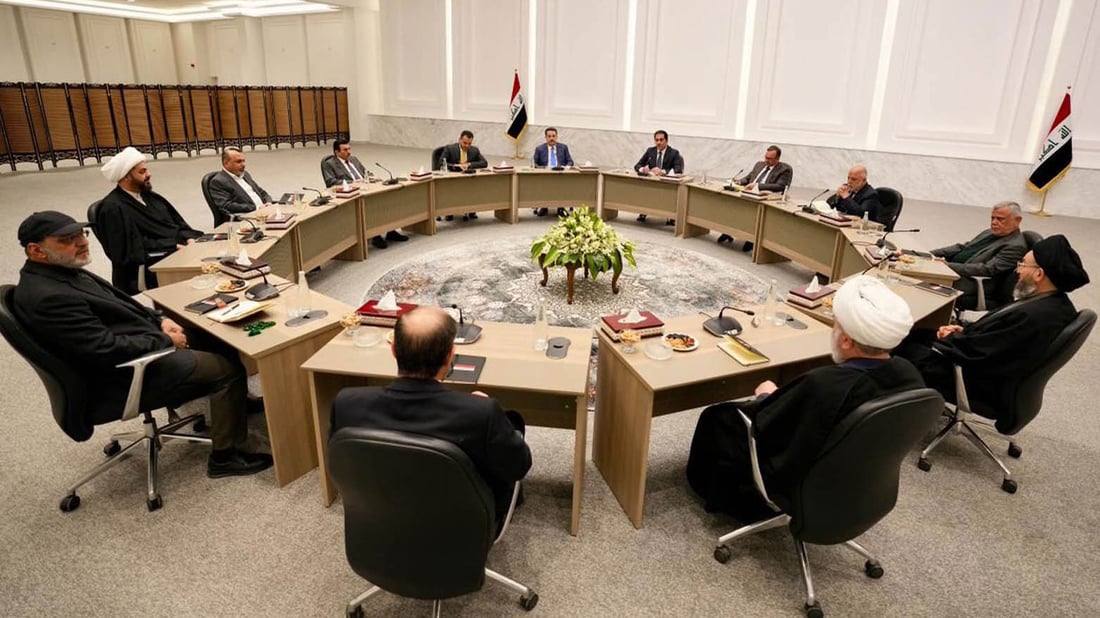
FILES: Leaders of Iraq’s Coordination Framework meet in Baghdad
Media Monitor
State of Law warns of Framework ‘collapse’, discusses forming new parliamentary bloc
BAGHDAD — A senior State of Law Coalition figure warned Monday that the Coordination Framework could “completely collapse” if political entitlements from last week’s cabinet confidence vote are not resolved, as discussions begin on forming a new parliamentary bloc called the “Strongmen Movement.”
Hussein Mardan said the proposed movement would bring together political forces that felt “unfairly treated during Thursday’s session” and lawmakers who believed they were “wronged and denied their entitlements,” with the goal of reaching a parliamentary majority of half plus one. He said discussions were underway through contacts and individual and group meetings, and that the initiative’s future would depend on the next parliamentary session after the Eid holiday.
“If all political blocs do not receive their entitlements, I guarantee that a large gap will emerge between the political forces,” Mardan said. “The Coordination Framework will completely collapse, and there will no longer be anything called the Framework, and the same applies to the Sunni framework.”
State of Law had nominated Lt. Gen. Qasim Atta for interior minister and Amer al-Khuzaie for higher education, but parliament did not grant confidence to either amid disputes over vote-counting procedures.
Coalition lawmaker Osman al-Shibani accused parties that blocked the nominees of attempting to “hijack the state” through “night deals” rejected by the coalition, and said the portfolios would be approved in the first post-Eid session. He attributed attacks against the coalition to opponents’ frustration with its leader. “He is strong, does not accept arm-twisting, and does not have economic offices meeting at night with these parties to arrange positions,” Shibani said of Maliki. He added that the parties that obstructed the session were connected by “economic interests and issues” rather than any political project or ideological disagreement.
Ahmad Adnan of the Sadiqoun Movement’s political bureau pushed back against framing the vote outcome as “betrayal” or “treason,” saying lawmakers had simply been unconvinced by the proposed nominees. He attributed part of the dispute to State of Law’s own breach of prior understandings, saying the coalition had refused to support the Asaib nominee for first deputy speaker of parliament despite an earlier agreement. He said current media attacks against Sadiqoun and Hikma stemmed from “personal complexes” within the Maliki coalition after both movements opposed Maliki’s prime ministerial candidacy over what he described as “internal and international objections.”
The Coordination Framework is a coalition of Shiite political parties formed after the October 2021 elections, bringing together factions that had opposed Muqtada al-Sadr’s attempt to form a majority government excluding rival groups. It includes State of Law, the Sadiqoun bloc — the political wing of Asaib Ahl al-Haq — and the Hikma Movement, among others.
Parliament approved 14 ministers Thursday and passed the government program, but rejected nominees for planning, culture, construction and housing, higher education and interior. Voting on defense, labor, migration and youth and sports ministries was postponed.