
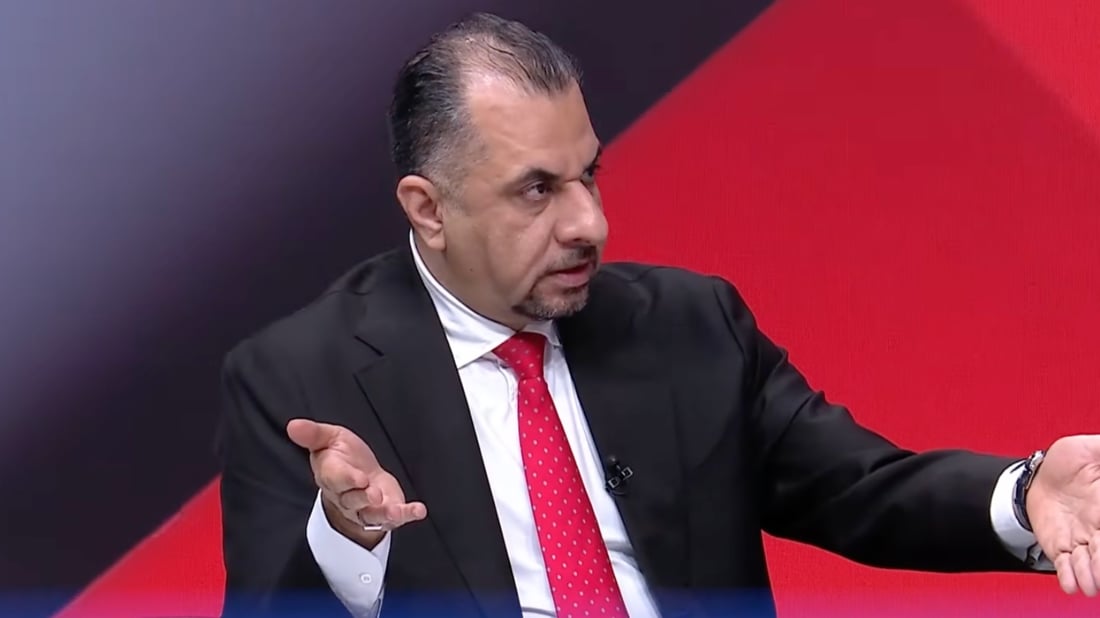
Fadi al-Shammari, a senior figure in the Hikma Movement, speaks during an interview on Al Dial TV
Media Monitor
Zaidi faces cabinet deadlock as blocs dispute portfolio allocations
BAGHDAD — Prime Minister-designate Ali al-Zaidi is facing mounting difficulties in forming his cabinet as disputes intensify within the Coordination Framework over ministerial allocations and reported U.S. conditions barring ministers linked to armed factions from the next government.
Fadi al-Shammari, a senior Hikma Movement figure, said Zaidi asked the Framework to keep the Finance and Interior ministries outside the political quota system given “economic and security challenges,” but factions rejected the request. “Ali al-Zaidi said to the Framework: since there are two challenges at the present time, economic and security, I want the Finance and Interior ministries and for these ministries not to go to political forces that have their own political calculations,” Shammari said on Al Dial TV. Framework parties opposed the move, he said, because granting those ministries to Zaidi directly would disrupt the agreed ‘political balance’.
Disputes also persist over how to divide portfolios among Shiite blocs. Shammari said the Hikma Movement was dissatisfied with the current formula, arguing it failed to reflect parliamentary weight. “There are five forces with the largest parliamentary weight: Reconstruction and Development, State of Law, Sadiqoun, Hikma and Badr, and we believe the division did not take this into account,” he said, adding that Hikma believes it is entitled to the Oil Ministry along with another portfolio.
Under the current proposal, Reconstruction and Development and State of Law would each receive three ministries, while Hikma, Asaib Ahl al-Haq and Badr would each receive two. But Shammari said that formula itself is contested. “Reconstruction and Development says it has 51 lawmakers while State of Law has 31, so how do both receive three ministries?” he said. “This is the current disagreement and I think it will be resolved soon.”
The U.S. position has added a further layer of complexity. Shammari said Washington had stipulated that no minister from armed factions participate in Zaidi’s government as a condition for engaging with it, and had identified six factions prohibited from participation. “The American condition this time is complicated,” he said. “It requires handing over weapons in exchange for allowing these factions to participate in the government, and this is somewhat difficult because of the time factor and also the question of which side would receive the weapons.”
He warned the U.S. position toward Zaidi’s cabinet was stricter than its approach to Sudani’s government. “The Americans say they did not deal with some ministries that had factions or armed wings in Sudani’s government. But in Zaidi’s upcoming government, if there is even one minister from these factions, they will not deal with the entire government, and this is a real problem.”
The Coordination Framework nominated Zaidi on April 27 after months of political deadlock following the November 2025 parliamentary elections.