
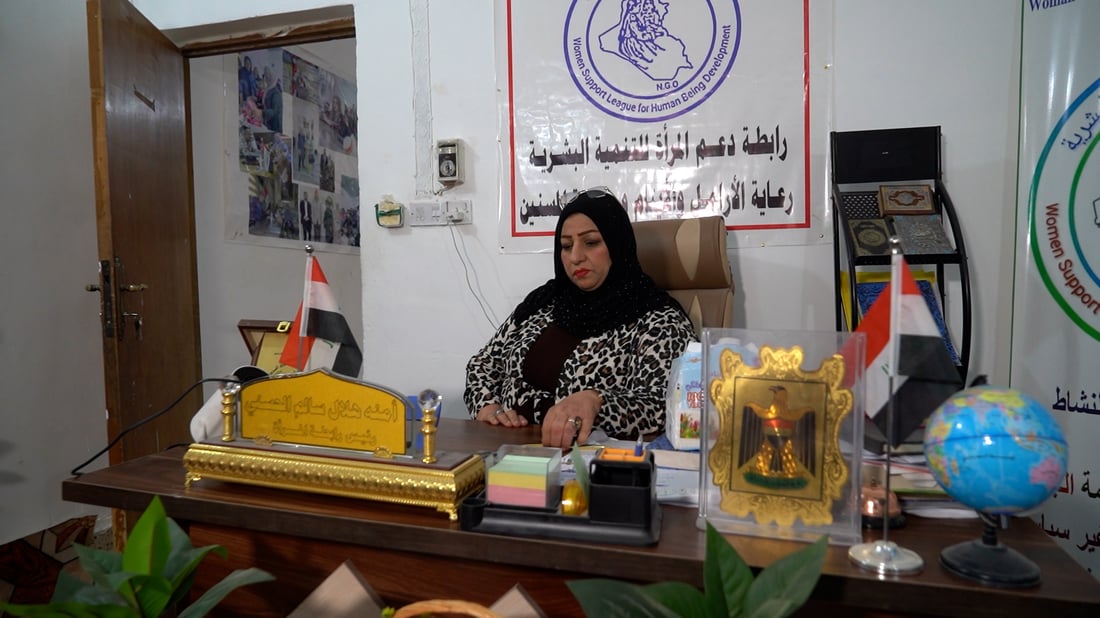
Private aid initiative
Woman sells jewelry to open shelter for orphans and vulnerable in Tikrit
SALAH AL-DIN — A woman in Tikrit has opened a privately funded shelter for orphans, patients and vulnerable people after the city’s government-run care facility fell into disrepair.
Amina al-Abbasi, in her 50s, sold her gold jewelry for about 35 million dinars (about $22,580) to rent and equip a two-story house in the al-Shuhada neighborhood of al-Qadisiyah, where she now hosts around 30 residents.
“I sold my gold jewelry and rented the house,” al-Abbasi told 964media, adding that the shelter is open to “the elderly and anyone who has no shelter, in addition to kidney and cancer patients and the blind, without any conditions.”
“All are welcome, and they receive housing, food, drink and treatment for free,” she said.
The house, about 200 square meters in size, includes two floors with multiple rooms and can accommodate up to 50 people. Current residents are mostly from Salah al-Din governorate, along with one person with disabilities from Khanaqin who was found abandoned and taken in by the shelter.
Al-Abbasi said the initiative began after she observed the deteriorating condition of the nearby government-run orphanage in the al-Dubat neighborhood, located less than one kilometer away.
That facility has been deemed unfit for use. Khaled Ahmed, director of the government orphanage since 2025, said a Ministry of Labor and Social Affairs delegation in April that year determined the building should be demolished and rebuilt due to structural damage, including termite-related deterioration and subsidence.
The 10 residents who had been living there were relocated for safety, some to relatives and others to camps or care homes in other governorates.
Ahmed said the situation remains unchanged, adding that Tikrit is effectively without a functioning government orphanage, with the building empty of residents for the past year.
Al-Abbasi said her shelter has also faced challenges, including damage from recent heavy rains that increased the need for maintenance. She called on Salah al-Din authorities to allocate a suitable location to accommodate those in need, including children, women, the elderly and patients.
To sustain operations, she relies on donations coordinated through social media groups, including networks of pharmacists and volunteers, where information about cases is shared and contributions are collected in the form of money or medical supplies.