
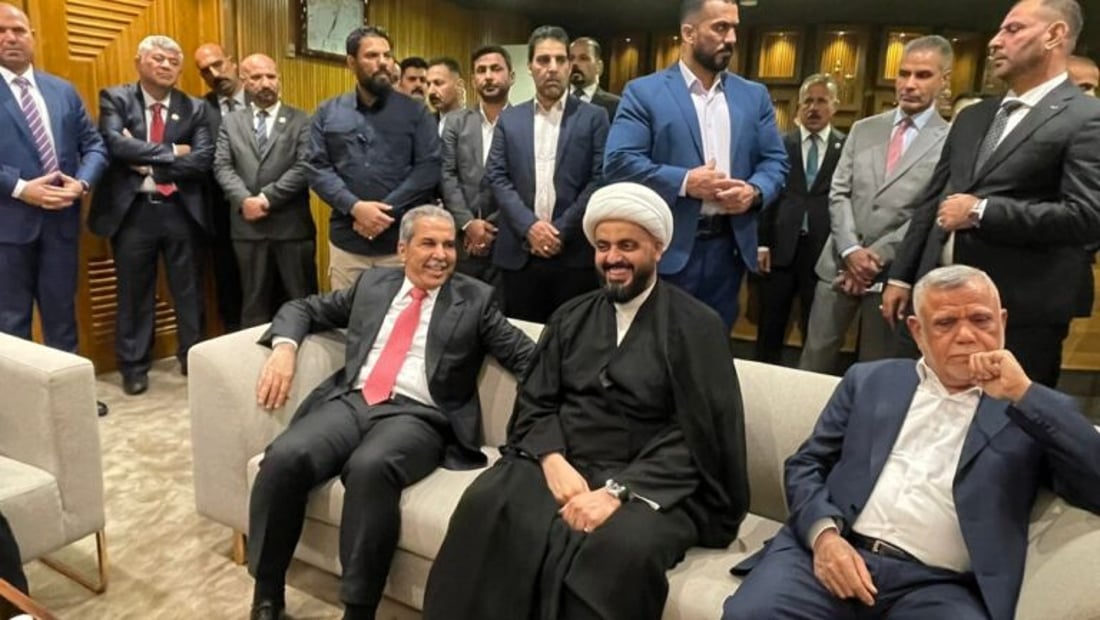
Kataib Hezbollah official rejects calls for state monopoly on war decisions
BAGHDAD — Kataib Hezbollah security official Abu Mujahid al-Assaf directly challenged Supreme Judicial Council President Faiq Zaidan on Friday, rejecting the state’s exclusive constitutional authority over decisions of war and peace and framing the factions’ military operations as a religious and moral duty that requires no government approval.
“Honorable people of this nation did not declare war on anyone, but rather fulfilled their religious and moral duty to defend their land when the Americans occupied their country,” al-Assaf said, adding that defending land and holy sites “does not require the approval of those aligned with the enemies.”
He accused proponents of disarmament of being part of a “Zionist-American project” and warned that “all voices that rise against the honorable mujahideen or their supporters are either involved in collaboration with the enemies or hiding behind other titles.” He also alleged that attacks on Iraq were carried out “using drones launched from Jordan, Saudi Arabia and Kuwait,” directly implicating countries Baghdad has pledged to protect from cross-border attacks.
The response came hours after Zaidan published an article warning that armed factions acting independently on war and peace decisions represent “a clear violation of the constitution” and risk dragging Iraq into internal or regional conflicts. Zaidan cited the constitutional requirement for a joint presidential-prime ministerial request and a two-thirds parliamentary majority before any declaration of war.
The exchange lays bare the core tension running through Iraq’s crisis: Prime Minister Sudani has repeatedly insisted decisions of war and peace “belong exclusively to the state,” the judiciary has now given that position explicit constitutional weight, and Kataib Hezbollah has responded by explicitly rejecting it — while remaining formally incorporated into Iraq’s own security apparatus.