
(Graphics: 964media)
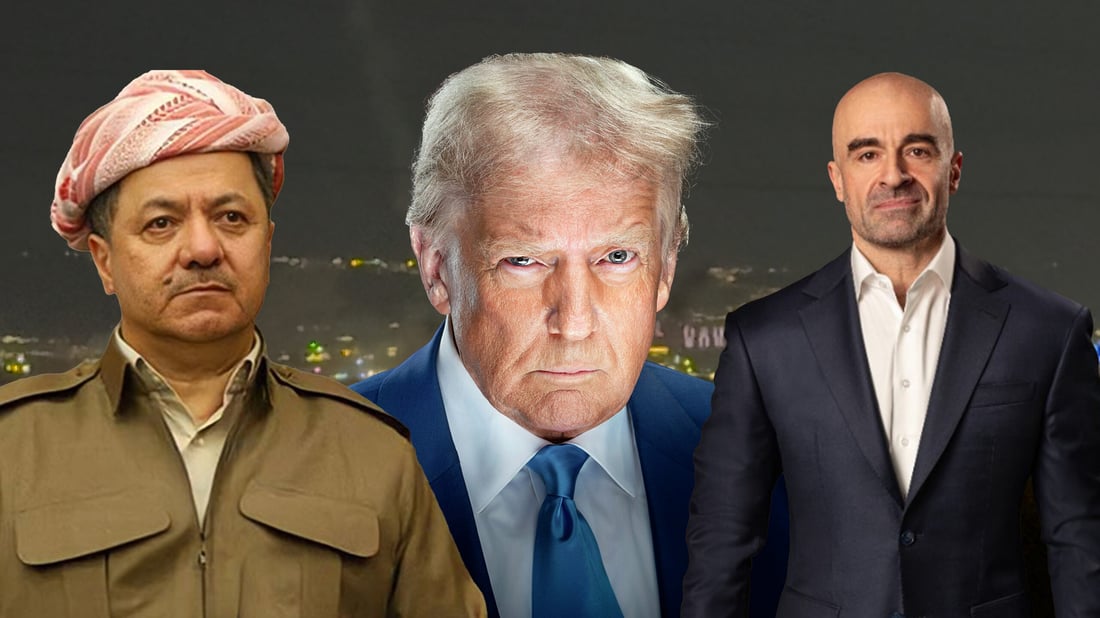
Trump called Barzani and Talabani around start of Iran war, sources confirm
WASHINGTON/ERBIL — U.S. President Donald Trump called Kurdistan Democratic Party leader Masoud Barzani and Patriotic Union of Kurdistan leader Bafel Talabani around the time the war with Iran began, informed sources told 964media, amid ongoing uncertainty about what the United States ultimately seeks to achieve in Iran.
Sources said the calls were “part of Trump’s outreach to allies in the region,” corroborating a report originally published by Axios.
According to the sources, the term “regime change” has been central to recent discussions. They added there are indications Washington may be open to engaging with “new Iranian leadership” rather than pursuing complete collapse — an outcome that could leave room for a negotiated transition. How the war ends, and whether it results in full regime change as pushed for by Israel or a milder political transition in Tehran, could significantly affect the calculations Kurdish leaders face.
The uncertainty on the Kurdish side mirrors a broader confusion about U.S. war aims. In the days since the strikes began, Trump and his administration have offered shifting and at times contradictory explanations for the campaign.
Trump suggested before the strikes that regime change “would be the best thing that could happen” in Iran, then cited an imminent threat, then focused on destroying Iran’s missile capabilities and navy, then told The Atlantic that Iran “wants to talk” and he had agreed to do so. On multiple occasions, Trump has called on Iranian citizens to bring down the regime.
Defense Secretary Pete Hegseth denied at a Pentagon briefing that this was a “regime change war” — then added in the same breath that “the regime did change.” The contradiction lent credence to the view that Washington may be more focused on who comes next in Tehran than on bringing down the whole regime.
Senate Minority Leader Chuck Schumer said a classified briefing by Secretary of State Marco Rubio “raised more questions than it answered.” CNN reported that administration officials overstated Iran’s nuclear timeline in the lead-up to the strikes, contradicting U.S. intelligence assessments.
The calls place Kurdish leaders in a particularly delicate position. The Kurdistan Region has absorbed days of sustained strikes since the war began Saturday. Foreign Minister Fuad Hussein said Monday that more than 70 missiles and drones have targeted Erbil alone.
Projectiles have repeatedly targeted Harir Air Base and the U.S. Consulate, with debris falling on residential neighborhoods. The IRGC has struck Iranian Kurdish opposition camps in Koya and Sulaymaniyah on multiple occasions, including a strike Tuesday that hit the camp’s medical center. Pro-Iran Iraqi militias have claimed separate drone operations against what they say are U.S. positions in Erbil.
The Khor Mor gas field was taken offline as a precautionary measure, cutting power across much of the region to three to four hours a day.
Bafel Talabani issued a cautious public statement calling on residents to remain “strong, resolute and united” in the face of what he called a “great danger” and said the PUK was coordinating with the KDP to defend the region, without taking sides.
The current wave of strikes on the Kurdistan Region is not the first time Erbil has found itself in Iran’s crosshairs. In January 2024, the IRGC fired ballistic missiles at the home of prominent Kurdish businessman Peshraw Dizayee, killing him, members of his family and two others, claiming the property was a Mossad headquarters. Iraqi and Kurdish authorities categorically rejected the claim, and Iraq’s national security adviser said inspections of the site found no evidence of Israeli intelligence activity. The accusations have never been substantiated.