
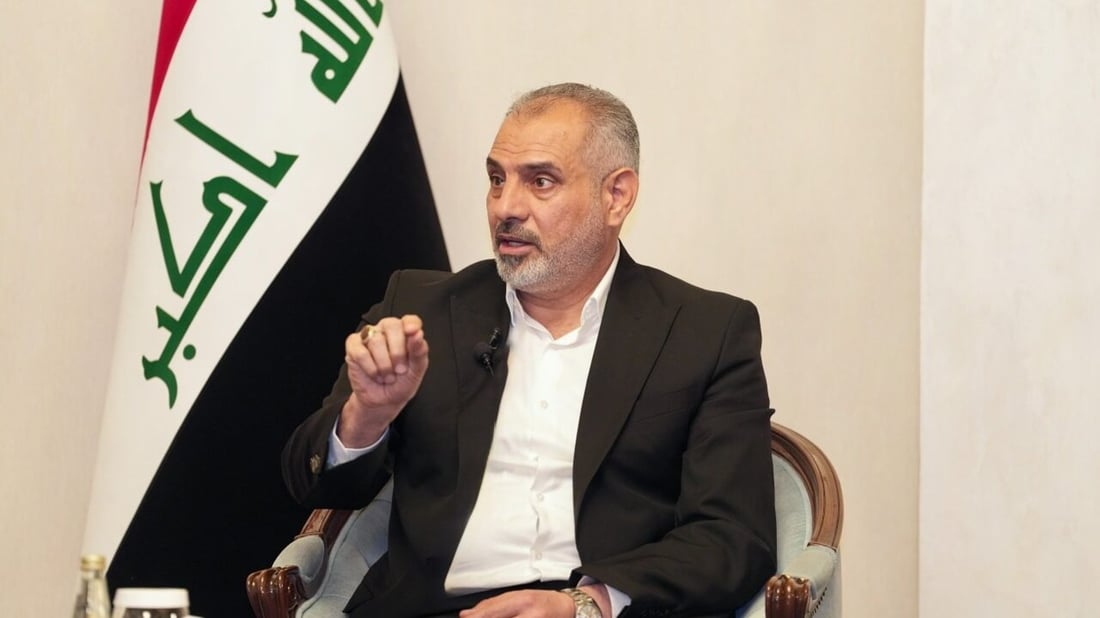
Adnan Faihan, First Deputy Speaker of Iraq’s Parliament
Deputy speaker calls US objection to Maliki ‘improper’ but warns against confrontation
BAGHDAD — Adnan Faihan, First Deputy Speaker of Iraq’s Parliament and a senior leader in Asaib Ahl al-Haq, described the U.S. president’s objection to Nouri al-Maliki’s nomination for prime minister as “improper,” but questioned the feasibility of confrontation at a time when “the international system is absent and the United States acts alone.”
In an interview with Iraqiya TV, Faihan said that regardless of President Donald Trump’s position, imposing Maliki on the Sunni component would be unrealistic, as Sunni leaders have rejected his candidacy. He interpreted their stance as an attempt to avoid “reopening old files,” particularly those linked to Maliki’s second term in office.
Faihan revealed that he himself had faced objections from some international actors over his background in the “Islamic resistance,” questioning how he could assume a senior parliamentary post.
“I heard responses to these objections from various political forces — not only from Shiite leaders but also from Sunni leaders,” Faihan said. “The answer was unified: this matter is not open for discussion. He is an elected representative of the Iraqi people. Where is democracy in objecting to that?”
He explained that it has become customary for the largest bloc to agree on a prime ministerial candidate and then present that nominee to Sunni and Kurdish partners. However, the first objection to Maliki’s nomination came from the Sunni component before any international opposition.
“The Sunni objection is respected and should be discussed, as they are partners in the political process,” he said, recalling a previous instance when the Shiite bloc objected to a Sunni nominee for speaker. “They accepted the discussion, and we reached a consensus figure that satisfied all parties.”
Regarding Washington’s stance, Faihan described the American objection as a “dangerous precedent,” saying it was the first time such opposition had been expressed so openly. While rejecting U.S. interference, he cautioned against escalating tensions.
“Today there is no respect for state sovereignty, nor for international laws or norms. The United Nations and the Security Council are absent, and the current global administration resembles the ‘law of the jungle,'” he said. “These are conditions we must consider to preserve the stability of the state.”
Faihan clarified that the Sadiqoun bloc had reservations about Maliki’s nomination from the outset, warning that internal disputes could resurface.
“We are not in need of reopening old files and crises that we have already moved beyond,” he said.
The Coordination Framework nominated Maliki following the 2025 elections. Trump has warned that Washington could halt support for Iraq if Maliki returns to office.