
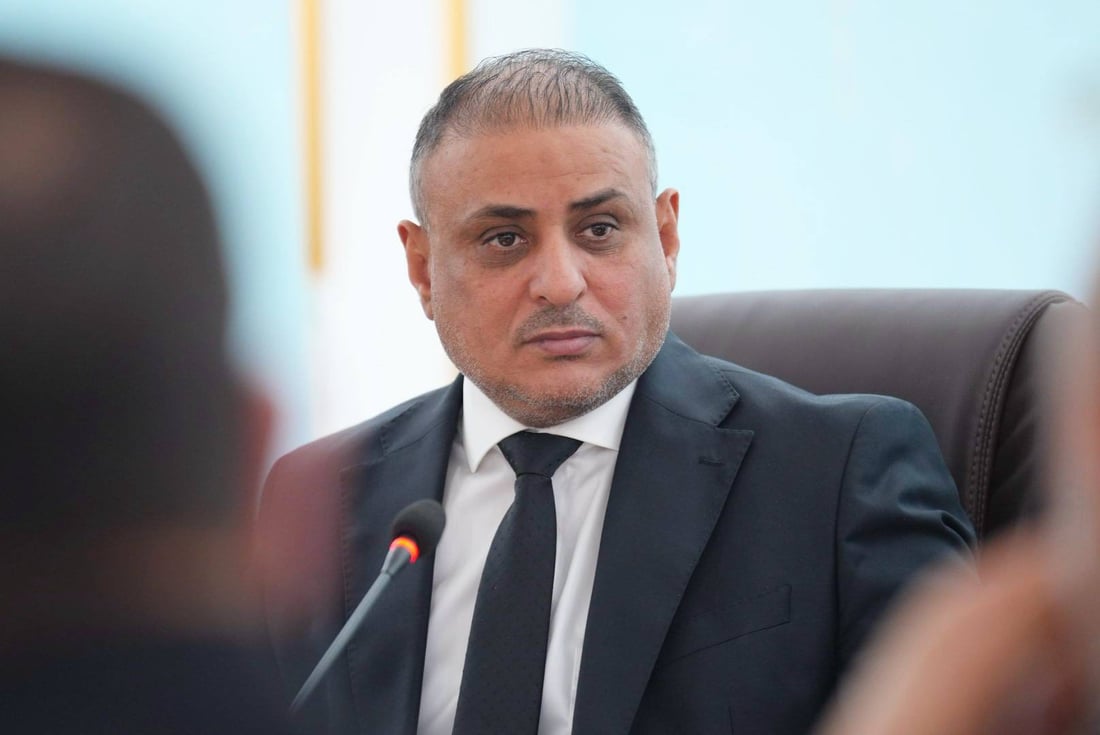
Mohammed Jameel Al-Mayahy, former governor of Wasit
Former Wasit governor warns Iraq risks ‘spiral’ amid political deadlock
BAGHDAD — Mohammed Jameel al-Mayahy, head of the Wasit Ajmal Coalition and former governor of Wasit, warned Thursday that Iraq’s prolonged political deadlock could spiral out of control without a decisive intervention.
“Political deadlock is dominating the scene at the moment,” al-Mayahy said in a social media post. “Everyone is betting on time and on regional and international changes.”
He said “the indicators confirm there are no signs of a breakthrough and no clear solutions,” adding that “some whisper quietly about timid solutions, fearing they might upset a certain party.”
Al-Mayahy called for “a courageous initiative to take it out of the dark tunnel in which it is intended for us to suffocate,” warning that “the idea of keeping a caretaker government and exceeding constitutional deadlines without any signs of a solution will cause matters to spiral out of control, God forbid.”
Addressing decision-makers directly, he said: “To every respectable and influential person who holds authority and decision today — the decision is still in your hands. Do not squander solutions and do not act arrogantly for the sake of your people.”
Iraq’s government formation has stalled since the 2025 parliamentary elections. Under Article 72 of the constitution, parliament must elect a president within 30 days of its first session — a deadline that has passed. The president then nominates a prime minister candidate to form a government.
Parliament recently postponed a scheduled session to elect the president without setting a new date, leaving the country under a caretaker government with limited powers.
Kurdish parties, which customarily hold the presidency under Iraq’s post-2003 power-sharing arrangement, have yet to agree on a unified candidate.
Disagreements have also emerged over the prime ministership. The Shiite Coordination Framework nominated former Prime Minister Nouri al-Maliki, who served from 2006 to 2014, sparking debate within Iraq. President Donald Trump said in a social media post that the United States would not continue its support for Iraq if al-Maliki returned to office. Al-Maliki stepped down in 2014 under pressure following security failures and the fall of Mosul to the Islamic State group.