
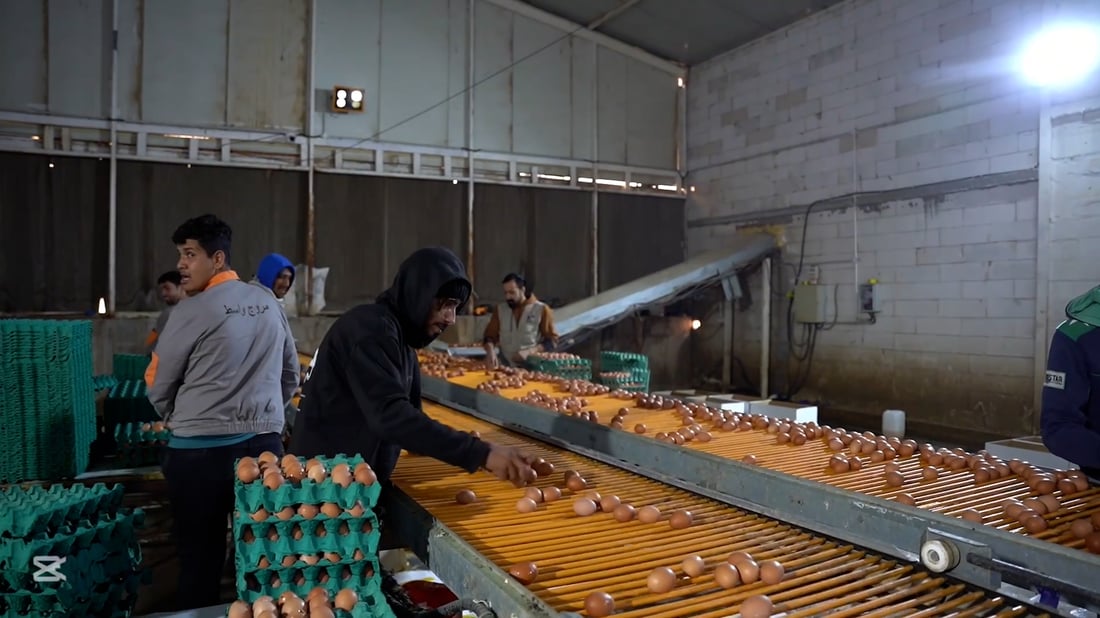
Workers sort and package eggs along an automated production line at the Marooj Wasit egg facility in the al-Battar area west of Kut, where the farm produces up to one million eggs every two days. Photo by 964media.
Wasit egg farm says lack of government support hurts competitiveness against imports
WASIT — Iraqi egg producers say they face higher costs and weaker competitiveness as neighboring countries subsidize their farms, lowering export prices, while local producers receive no government backing despite rising output.
The Marooj Wasit facility in al-Battar, 10 kilometers west of Kut, produces more than 1,300 cartons of eggs daily — each containing 360 eggs — including double-yolk eggs identified through inspection by size.
Project director Adnan Kamel Zaidan said the farm uses premix in feed to reduce egg odor and limestone to strengthen shells, giving them a darker color and making them more resistant to breaking during transport. Production reaches “one million eggs every two days” through a modern line “not touched by hands.”
The facility relies on soybean meal, yellow corn, bran and premix for balanced poultry nutrition.
“The most prominent problems we face are electricity fluctuations and high fuel prices, in addition to the absence of government support, while imported eggs enter Iraqi markets at lower prices due to the support enjoyed by production facilities in neighboring countries,” the operator said.
Electricity is critical to operations, powering heating, cooling, lighting and ventilation. The facility runs eight generators, each consuming about two barrels of gas oil per day, adding a heavy financial burden.
Despite the challenges, domestic output continues to grow. Iraq produced an estimated 5.315 billion eggs in 2024, an 11.2% increase from 2023, according to the Central Bureau of Statistics. Poultry production reached 178,300 tons of live chicken. The government has pursued self-sufficiency policies and restricted imports when necessary to protect local producers.