
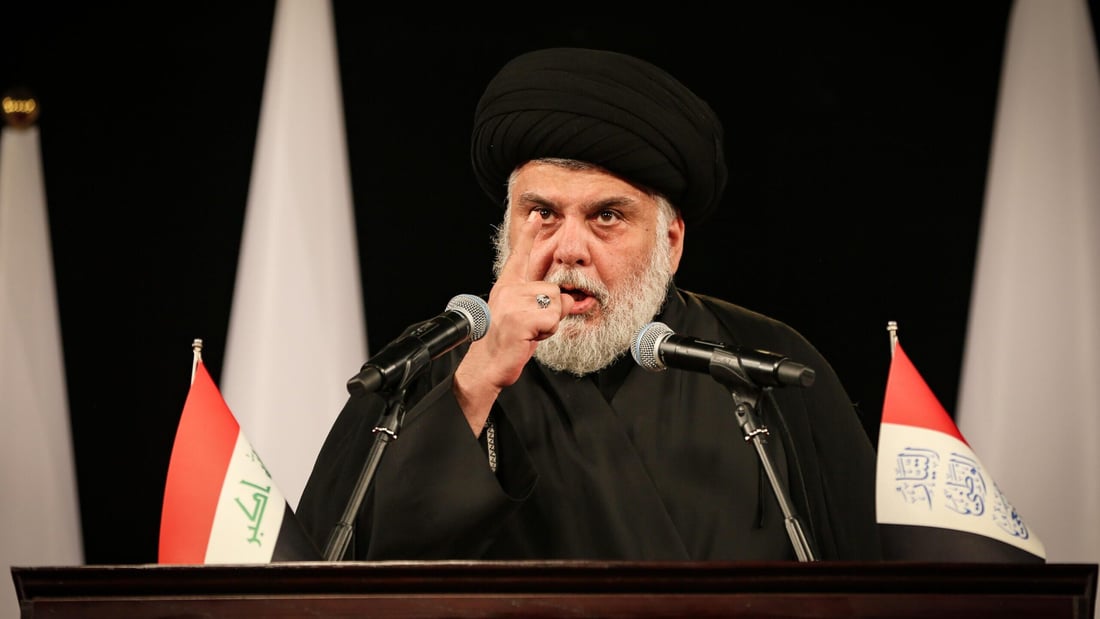
Sadrist movement leader Muqtada Al-Sadr
‘Send logistical support’: Sadr outlines recommendations for Iraq-Syria border
NAJAF — Influential Shiite leader Muqtada al-Sadr issued a statement with ‘recommendations’ on Friday for securing Iraq’s border with Syria, following a security report he reviewed on the situation in the area.
In a statement, Sadr emphasized the need to provide full logistical support to security forces stationed at the border. “Send logistical support to personnel, officers, and vehicles, and strengthen the security and military presence, even gradually, including food, water, clothing, health supplies, fuel, and similar necessities,” he wrote.
Sadr also called for enhanced coordination among all branches of Iraq’s security apparatus. “Work to achieve high-level coordination between the various security, military, and intelligence forces, particularly the Popular Mobilization Forces,” he said.
His third point urged action to confront extremist networks near the border, stating, “Work to reduce and contain the threat of extremist and terrorist strongholds that may pose a breach in our Iraqi borders.”
He further recommended increasing the presence of senior officers at frontline positions to bolster morale. Lastly, Sadr called for the deployment of religious and national figures to support troops morally and promote unity. He concluded by warning that political disputes should not distract from Iraq’s security priorities.
The message comes as Syrian regime forces and allied groups press an offensive in Kurdish-majority areas of northeastern Syria. Kurdish leaders say the renewed fighting has displaced civilians and raised fears of demographic change and ethnic targeting.
Meanwhile, U.S. Central Command announced Wednesday the start of a mission to transfer Islamic State detainees from northeastern Syria to detention facilities in Iraq, beginning with the relocation of 150 individuals held in Hasakah.
The fighting and rapid territorial shifts have renewed international concern over prisons and camps holding thousands of Islamic State detainees and their families. Clashes near several detention sites have led to reported escapes, heightening fears among observers that ongoing instability could enable the extremist group to regroup and pose renewed security threats across the region.
During the offensive, monitoring groups and Kurdish officials have accused Syrian government forces and allied armed groups of abuses and possible war crimes, including the destruction of homes and businesses, the displacement of tens of thousands of residents, and reports of summary executions and mutilation of bodies.