
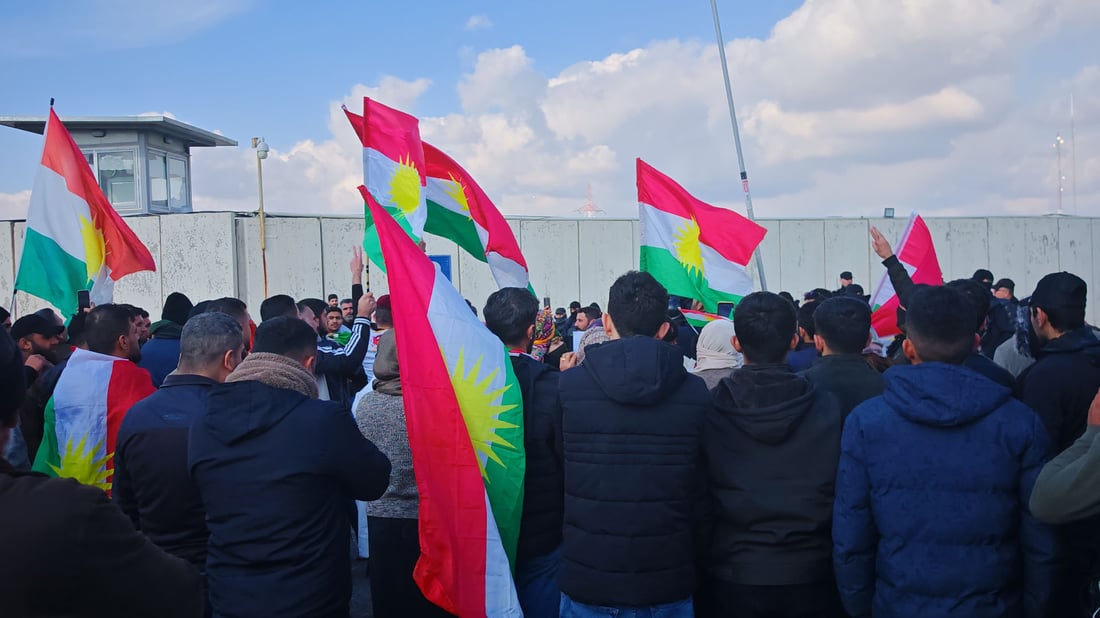
Protesters carry the Kurdistan flag during a demonstration outside the United Nations office in Erbil on Jan. 20, 2026, in support of Kurds in Rojava facing attacks by Syrian government forces and affiliated groups. (Photo: 964media)
Erbil launches humanitarian aid drive for displaced Kurds in Syria’s Rojava
ERBIL — The Erbil Governorate announced Wednesday the launch of a large humanitarian campaign to collect aid for displaced and affected civilians in Rojava, northeastern Syria.
The decision was announced during a coordination meeting at the governorate headquarters attended by the governor, the deputy governor, the district commissioner, the mayor of Erbil, and representatives of chambers of commerce, import and export unions, the Barzani Charity Foundation, and several business figures.
In a statement, the governorate said the people of Erbil have long been known for generosity and solidarity, adding, “In this difficult moment for our brothers and sisters in Rojava, we see it as our duty to respond to the call and support them.”
The governorate said all relevant institutions were instructed to begin preparations immediately. Starting Thursday, Jan. 22, a central collection point will be established at Shanadar Park in central Erbil, where individuals, charitable organizations and companies can deliver humanitarian assistance.
The campaign comes amid a renewed assault by Syrian government forces and allied armed groups on Kurdish areas in northeastern Syria. In early January 2026, forces of the Syrian transitional government launched a military offensive against predominantly Kurdish neighborhoods in Aleppo, including Sheikh Maqsoud and Ashrafiyeh, following the collapse of a ceasefire with Kurdish authorities. The fighting involved ground clashes, artillery fire and incursions by government-aligned units, forcing Kurdish fighters to withdraw from parts of the city.
By mid-January, Syrian government forces had advanced into wider Kurdish-administered areas of northeastern Syria, including territory that had been under Kurdish control for more than a decade. Under a subsequent ceasefire arrangement, Damascus assumed military and administrative control over towns such as Raqqa and Deir ez-Zor that had previously been held by Kurdish forces.
Kurdish leaders have warned that the offensive has displaced large numbers of civilians and raised fears of demographic change and ethnic targeting in Kurdish-majority areas. During the fighting, Syrian government forces and allied armed groups have been accused by monitoring groups and Kurdish officials of abuses and possible war crimes, including the destruction of homes and businesses, the displacement of tens of thousands of residents, and reports of summary executions and mutilation of bodies.