
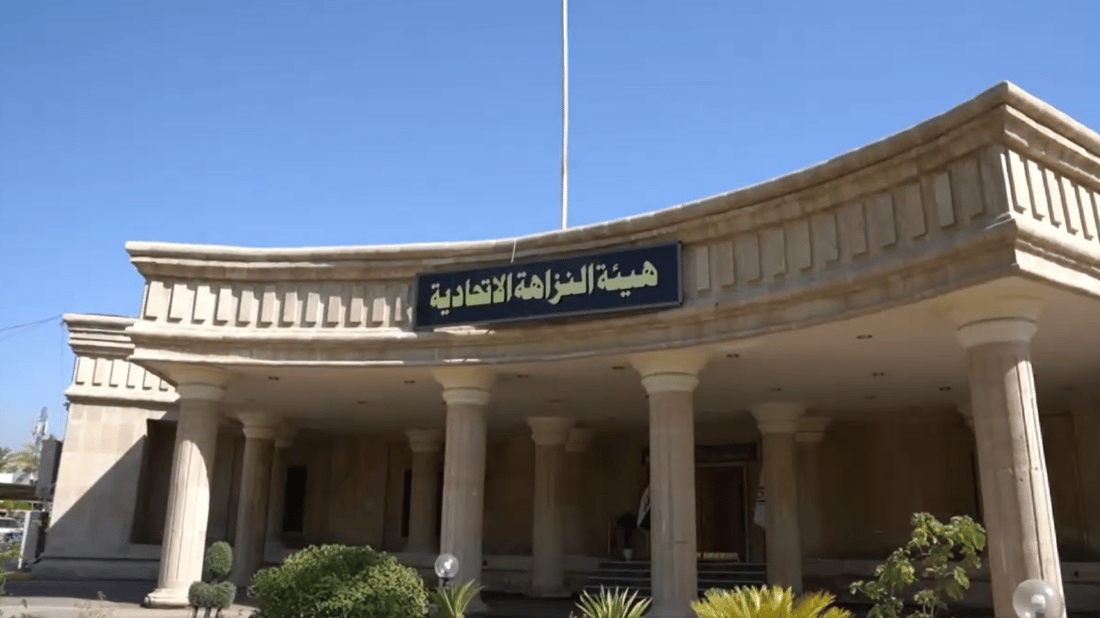
The headquarters of the Federal Commission of Integrity in Iraq.
Integrity Commission urges enforcement of civil defense rules across Iraq
BAGHDAD — Iraq’s Federal Commission of Integrity on Tuesday called on all ministries, non-ministerial entities, and provincial governments to implement civil defense recommendations within specified timeframes.
The commission’s statement, said the recommendations include removing encroachments on roads and sidewalks, preserving emergency exits, and ensuring safety standards are met in hospitals and medical centers. It also warned of the risks posed by large informal markets, aging buildings, and warehouses constructed from flammable materials.
The commission teams visited multiple institutions, including the Interior Ministry, the Ministry of Construction, Housing, Municipalities, Baghdad’s mayoralty and governorate, and the National Investment Commission, to assess civil defense readiness. The report urged that all multi-story commercial, industrial, service, and residential building plans be submitted to the General Directorate of Civil Defense for fire prevention and safety assessments.
A copy of the report was sent to the Prime Minister’s Office, the General Secretariat of the Council of Ministers, and various ministries and officials. It noted that most residential and commercial complexes had not submitted their architectural plans for civil defense approval before construction, and called for designs to include fire hydrant locations and specifications.
The report also pointed to limited resources at the Civil Defense Directorate, despite government support for new equipment and rescue aircraft. It cited a shortage of rescue and fire vehicles and issues related to aging fleets.
Between January 2024 and August 2025, the Civil Defense Directorate closed 12,185 projects for safety violations, fined 5,192 others, and referred 2,067 projects to criminal courts. The report noted a lack of cooperation by some government entities in allowing inspections or facilitating compliance with safety protocols.
The commission emphasized the need for dedicated emergency lanes in urban planning to improve response times and reduce losses. It also urged hospitals and clinics to store fuel away from generators, build protective barriers around oxygen tanks, and install full fire suppression systems.