
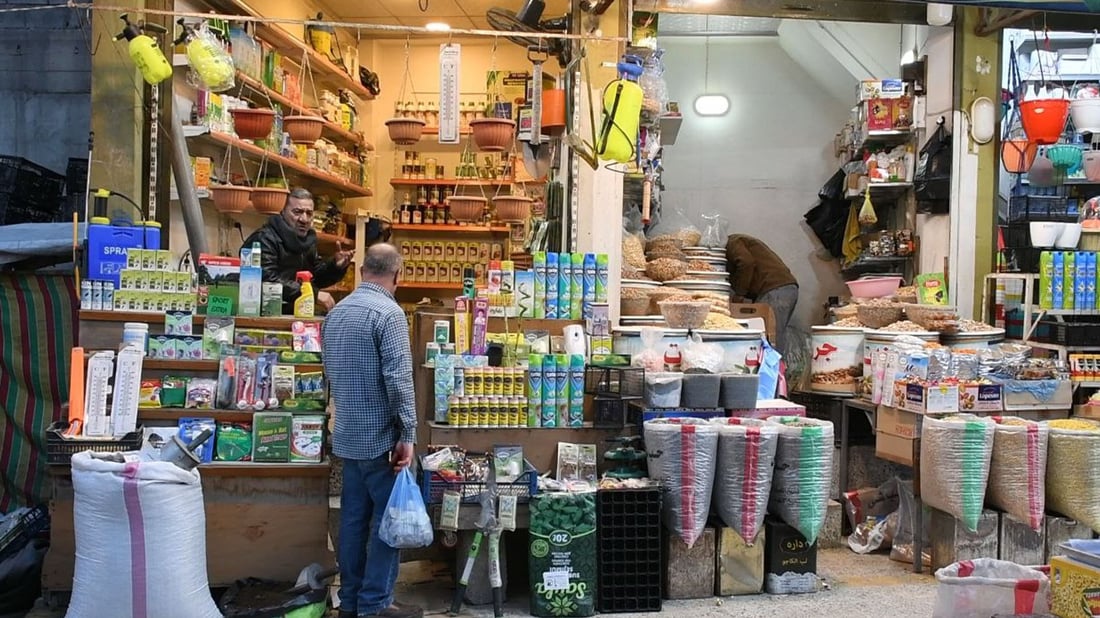
Customers shop for spices and dried foods at one of Mosul’s traditional spice markets in the Old City, a centuries-old commercial area that continues to draw shoppers from across Iraq, including the Kurdistan Region. Photo by 964media.
Kurdistan Region shoppers head to Mosul markets for spices, bargains
MOSUL — Residents of the Kurdistan Region are increasingly traveling to Mosul to buy food, household goods and specialty items, especially spices, as traders and customers cite lower prices and long-standing reputation for quality in the northern Iraqi city.
Mosul’s spice market, one of the city’s oldest commercial areas, is located in the Old City on the right bank of the Tigris River. Traders say its history stretches back more than 400 years. The market includes more than 20 shops selling dried foods and spices and draws customers from across Iraq, including Erbil and Sulaymaniyah.
Mosul’s markets have long been known for affordable goods and distinctive flavors, including spices, meat, pickles, tahini and grape syrup.
Ashna Jamal, a resident of Erbil, said shopping has become part of any trip to Mosul. “We come to Mosul to visit doctors or just to walk around, and every time we come, we don’t return without shopping,” she said. “Mosul spices are very good, especially biryani spices. I think whoever buys them here will not buy them again in Erbil.”
Mohammed Abu Omar, who has worked in one of the market’s shops for 35 years, said the business has remained in the same family since 1870 and is now run by the sixth generation.
“We have spices, custard, raisins and almonds. Figs come to us from the north, we have red and black raisins, the best types are Iraqi, and we also have sumac,” he said.
He attributed the market’s reputation to customer trust. “Because of honesty, thank God, we do not cheat. What we have in the shop is what we sell. We give people first-grade products, and whoever buys from us comes back later and says, ‘May God have mercy on your parents,’” Abu Omar said.
Another Erbil resident, Jamal Saeed, said price differences are a major draw. “Spices and meat in Mosul are cheaper and better than in Erbil, so whenever we come to the city, we buy them and take them back to Erbil,” he said.
The spice market is often described as part of Mosul’s broader Saray market and a central trading hub in the city. Shop owner Salwan Saadi said sellers often tailor blends to different communities.
“We have special spice blends. For example, for our Kurdish brothers we prepare special mixes, for Christians we prepare specific types, and people from villages and surrounding areas also have their own blends,” he said. “In addition, we have spices and special mixes that we are known for and that differ from other governorates.”
Saadi said shoppers from the Kurdistan Region tend to seek biryani blends. “People from Kurdistan, from Erbil and Sulaymaniyah, mostly come for biryani spices, yellow and brown biryani, and they also ask for kebab spices,” he said.
He added that the market sells both imported and local products. “They also come from abroad, from South America, from Brazil. Several types come from Mexico, especially kebab spices and peppers. From India we get peppers and various spices, and from East Asian countries as well, along with some locally produced spice seeds like ginger, cumin and black seed,” Saadi said.