
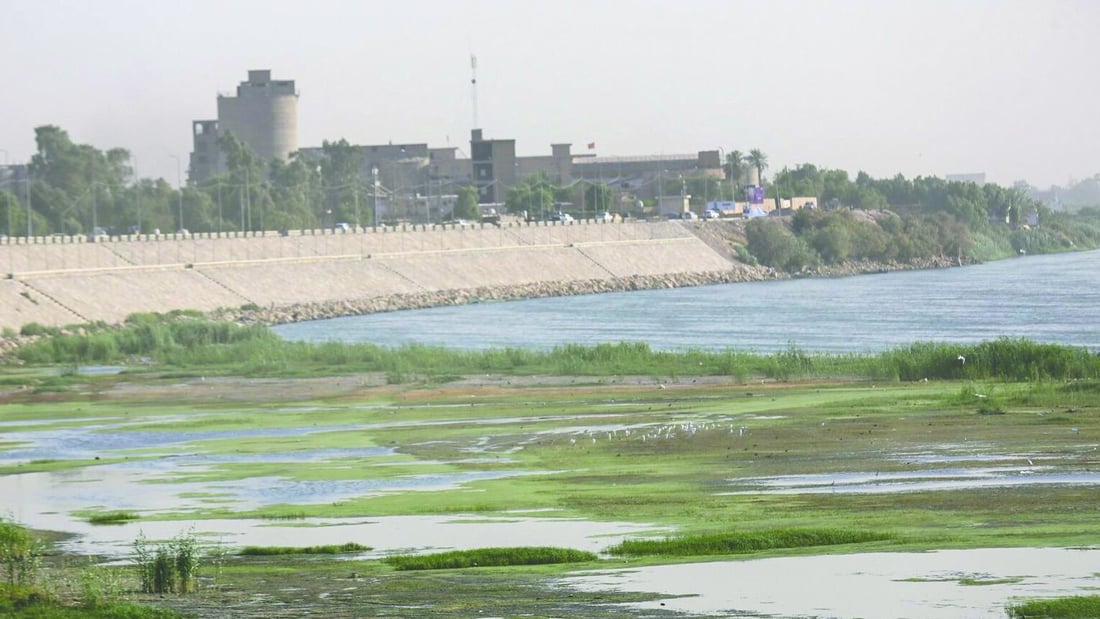
Iraq says rainfall raised reservoir levels but drought risk persists
BAGHDAD — Iraq’s Ministry of Water Resources said recent rainfall has improved reservoir levels by up to 1 billion cubic meters, but warned the country still faces drought risks and needs far higher reserves to get through the coming summer safely.
Ghazan al-Sahlani, deputy director general of the General Authority for the Operation of Irrigation and Drainage Projects, said current storage remains low despite gains from recent rains.
“The water currently available in the country’s reservoirs is limited in terms of storage volumes, despite a noticeable increase resulting from the recent rainfall,” al-Sahlani told the state-run newspaper Al-Sabah, citing improved levels at Dukan, Darbandikhan, Hamrin and Al-Azeem dams.
He said reservoirs and lakes upstream of dams still face large capacity gaps.
“Storage facilities and lakes at the fronts of dams are still suffering from a large storage deficit of up to 80% of their capacity, despite the inflows achieved from the recent waves of rainfall,” al-Sahlani said, adding that this “reflects the continuation of government concern over the water storage situation, as the risk of drought remains possible.”
Al-Sahlani said rainfall so far has not reached 1 billion cubic meters, while Iraq’s full operational storage capacity stands at about 80 billion cubic meters. He said the country needs a minimum storage threshold to safely cover summer demand.
“The reassuring level of water storage that should be available for the country to pass the upcoming summer season successfully should not be less than 18 billion cubic meters,” he said. “Only then can it be said that there is safe water storage.”
The ministry has warned that Iraq’s reserves remain historically low. Iraq’s water reserves fell to their lowest level in 70 years at the end of last summer, dropping to about 3 billion cubic meters, compared with more than 55 billion cubic meters recorded in mid-2019, according to the ministry.
Al-Sahlani said the latest indicators require close monitoring of inflows from neighboring countries and careful management of strategic reserves.
“This is necessary in anticipation of any climatic or water developments that may occur in the country or the region during the coming months,” he said.
The warning comes after improved rainfall across Iraq this year, particularly in northern and northeastern areas. The Ministry of Water Resources said earlier this winter that rain amounts ranging from about 120 to 260 millimeters increased reserves and allowed reduced releases from dams and reservoirs.
In the Kurdistan Region, heavy rainfall in December boosted inflows to major dams, enabling the resumption of hydropower generation at Dukan Dam and raising water levels at Darbandikhan and Duhok dams, according to data released at the time.
The recent gains follow five consecutive dry seasons that sharply reduced river inflows and rainfall. Over the past 25 years, water shares in the Tigris and Euphrates basins have fallen by about two-thirds, contributing to crop losses and emergency measures to support farmers affected by water shortages.