
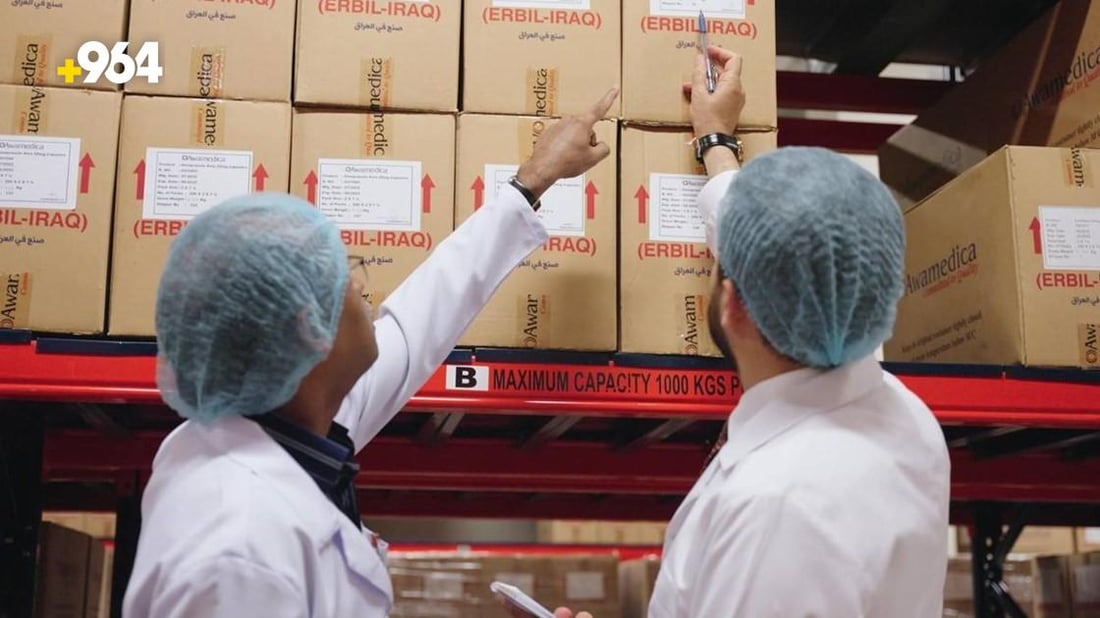
Warehouse staff inspect boxed medical supplies at a pharmaceutical storage facility
Pharmacists urge Iraq to halt planned tariff hike on medicines
BAGHDAD — The Iraqi Pharmacists Syndicate on Sunday urged the Council of Ministers to reverse a planned increase in customs tariffs on medicines and pharmaceutical imports, warning the move could raise prices, disrupt supply chains and threaten drug security.
In a statement dated Jan. 3, 2026, the syndicate cited Cabinet Decision No. 957 of 2025, which provides for increasing customs duties on medicines, medical supplies and pharmaceutical raw materials to ten times their previous level.
The syndicate said the measure would “be reflected in the drug pricing system and on the selling prices of medicines and medical supplies to citizens,” while also affecting “drug supply chains and their availability in the pharmaceutical market.” It warned the impact would place an added burden on patients and their families.
The Iraqi Pharmacists Syndicate called on the cabinet “to keep the customs duty imposed on pharmaceutical products — medicines, medical supplies and raw materials used in pharmaceutical manufacturing — without any increase,” saying higher tariffs would undermine market stability and “directly threaten drug security in the country.”
The statement was signed by Dr. Najat Fouad Ibrahim Al-Saigh, head of the Iraqi Pharmacists Syndicate.
The appeal comes after the General Authority of Customs announced it would implement a new 15% customs tariff starting Jan. 1, 2026. Customs Director General Thamer Qasim Dawood said the tariff would apply to luxury and non-essential goods and would not include items affecting citizens’ daily lives.
“Starting Jan. 1, 2026, the new customs tariff will be applied by imposing a 15% customs duty on luxury goods,” Dawood said, adding that mandatory Iraqi specifications would also be enforced for imported vehicles manufactured in 2025 and later.
He said the measure aims to regulate imports, improve quality and safety, and protect consumers from non-compliant vehicles. Dawood added that the increase applies to hybrid vehicles and that “the customs duty on all cars has become 15%,” stressing that essential goods such as food and basic necessities are excluded.
According to customs officials, Cabinet Decision No. 957 of 2025 applies to all federal border crossings without exception and covers goods entering the country from Jan. 1, 2026.