
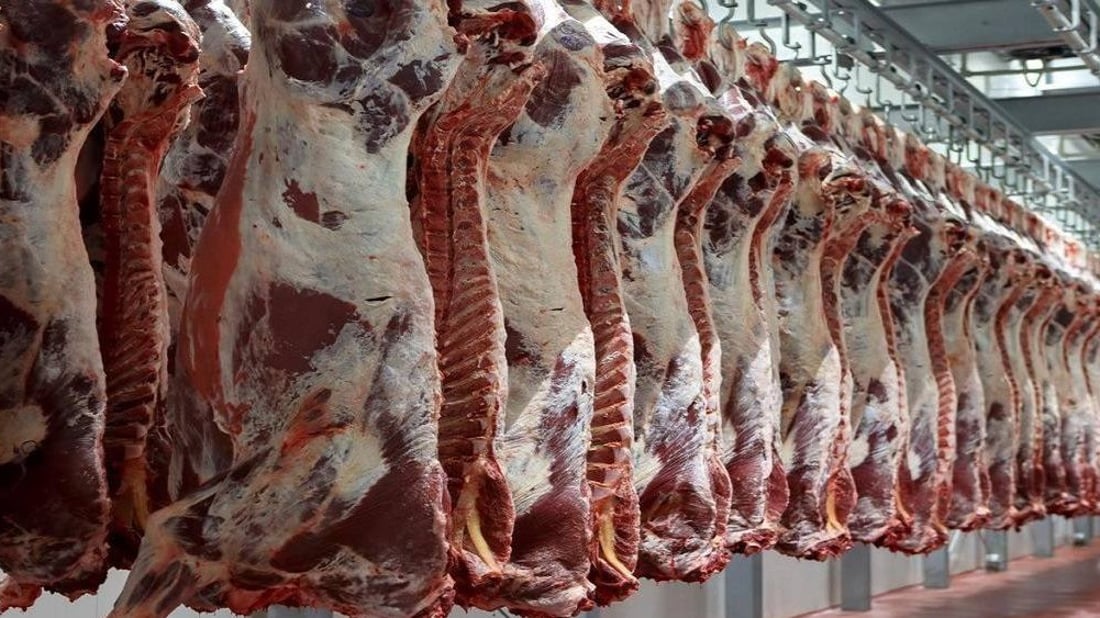
Cuts of beef hang on hooks inside a refrigerated meat processing facility.
Iraq agriculture ministry sets 21-day quarantine for imported livestock
BAGHDAD — Iraq’s Ministry of Agriculture said Tuesday it is tightening veterinary controls on meat and livestock imports, including a 21-day quarantine period for live animals, while moving to expand local production through calf-fattening projects and support for animal feed.
Deputy Minister Mehdi Saher al-Jubouri said the ministry is increasing imports to meet demand for red meat and address shortages in local supply.
“The ministry has taken a set of measures to address the increase in local demand for red meat and the shortage in supply, represented by allowing the import of large quantities of meat and livestock from various approved global origins to ensure covering the shortfall in the markets,” he told the state news agency.
Al-Jubouri said imports are subject to strict health requirements overseen by veterinary departments and hospitals, along with quarantine procedures at border crossings.
“Import operations are subject to stringent health conditions and procedures supervised by veterinary departments and veterinary hospitals, in addition to health quarantine procedures at border crossings to ensure they are free from any infections that could affect human health,” he said.
He said the ministry is coordinating with the Ministry of Health to examine incoming meat and food shipments, and confirmed that “imported live animals, upon arrival at Iraqi ports and crossings, are subject to strict monitoring and a veterinary quarantine examination that extends for 21 days before allowing their entry.”
Beyond imports, al-Jubouri said the ministry is also working to increase domestic output by facilitating livestock projects in all governorates, including stations for breeding and fattening calves and cattle.
He also announced a national feed program aimed at distributing seeds suitable for Iraq’s environment and expanding feed availability to support breeders. Al-Jubouri said higher rainfall this season is expected to improve natural pastures in rain-fed areas and support the cultivation of feed crops in irrigated zones.