
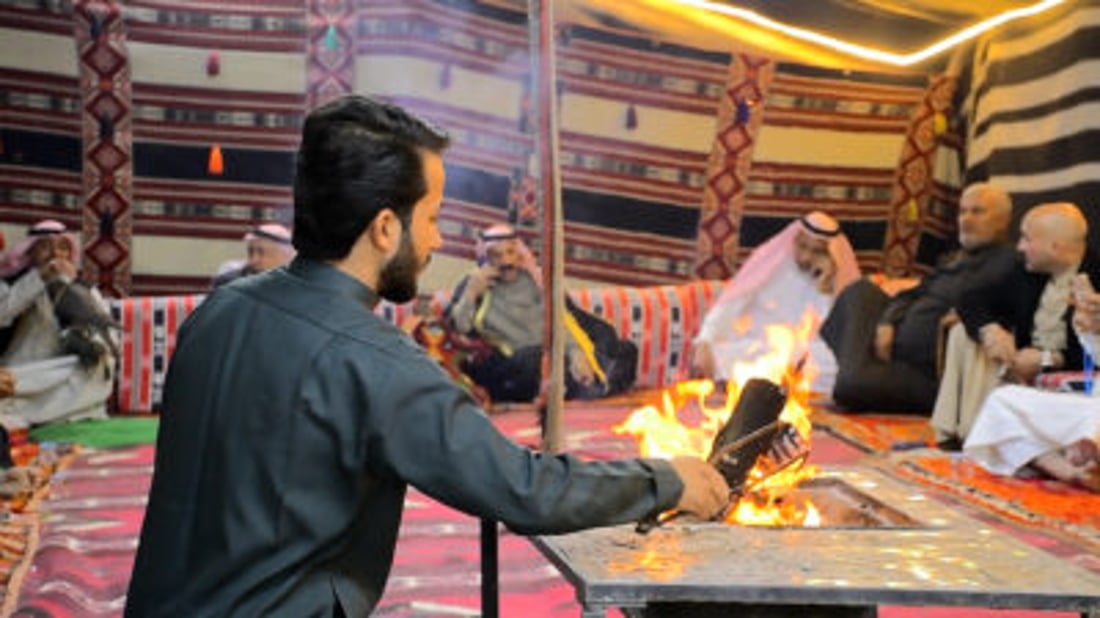
Inside a traditional tent in Zubair, Basra, where tribal gatherings continue through the winter months. (Photo: 964media)
Basra
Tribes return to winter tents in Zubair, keeping ‘houses of dignity’ tradition alive
BASRA — With the arrival of cooler weather each year, Arab tribes in Zubair, Basra, leave their concrete homes and return to an ancestral winter tradition: pitching tents, known locally as bayt al-sha’ar, for nightly tribal gatherings.
From autumn until late April, these tents host evening councils that run from sunset to midnight, blending cultural heritage, social life and informal community mediation.
Sheikh Abu Abbas Al-Jamali of the Abada tribe told 964media that the tents, often called buyut al-‘izz, or “houses of dignity,” remain a symbol of pride and autonomy for their owners. “These tents preserve the dignity of their owner. If someone faces discomfort in a place, they can simply dismantle their tent and move elsewhere,” he said.
The tents are bought or sewn in southern towns such as al-Hayy in Wasit and Al-Shatrah in Dhi Qar, with some made locally in Basra. According to tribal custom, sewing is carried out voluntarily by skilled artisans in a spirit of mutual assistance. Once a new tent is raised, participants are hosted for a celebratory lunch.
Sheikh Badr Hazem of the Rafi’ tribe said gatherings in the tents usually begin after evening prayers. Elders arrive early and leave around 9 p.m., while younger men often stay much later.
“The tent is a key space for guiding young people, preserving the values and heritage of their ancestors,” he said. “It’s far better than cafés or public spaces. These gatherings promote tribal cohesion and social unity.”
Sheikh Saadoun Atshan, also from the Rafi’ tribe, said that even families with modern homes and built guest halls still prefer winter meetings in bayt al-sha’ar.
“We are nomadic by tradition. In winter, our councils are held in bayt al-sha’ar,” he said. The gatherings draw not only locals but also visitors from tribes up to 40 kilometers away. “They are open to all, for any occasion, literary session, or discussion,” he said.