
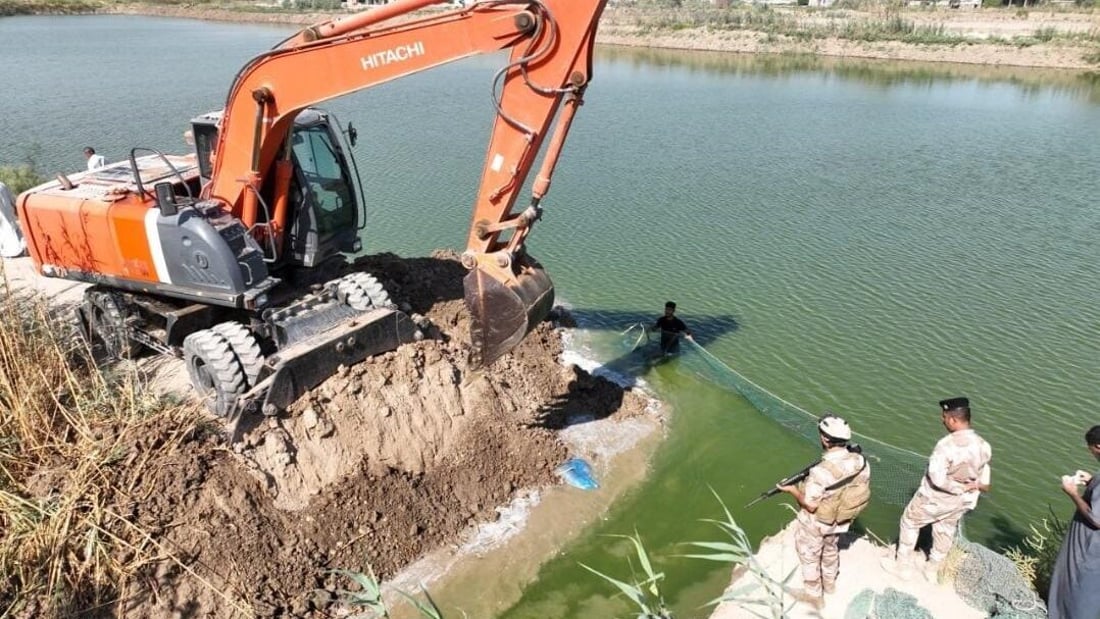
Iraq's Ministry of Water Resources Clears 550 Unauthorised Fish Ponds in Baghdad
Iraq removes 12,000 illegal fish farms as water ministry targets violations on rivers
BAGHDAD — Iraq’s Ministry of Water Resources said Tuesday it has dismantled 12,000 unauthorized fish farms as part of an ongoing campaign to remove violations on rivers and protect water distribution.
Ministry spokesperson Khaled Shamal told the Iraqi News Agency that “the ministry’s campaign to remove violations on the rivers is ongoing, especially those involving manipulation of water outlets and the installation of pumps in an unlicensed manner,” adding that “the ministry’s teams were able to remove 12,000 illegal fish lakes.”
The ministry has previously said that water violations are among the most serious challenges facing its work because of their impact on water allocation, agricultural planning and the continuity of drinking water supplies. It said the violations included establishing fish-breeding lakes without legal authorization, installing pumps directly on riverbanks and encroaching on citizens’ water shares, and in some cases on the rights of one governorate at the expense of another.
Shamal said the ministry has resolved most violations in the governorates of Baghdad, Babil, Salah al-Din, Anbar and many others, while Maysan “still faces dangerous challenges due to the spread of unregulated fish lakes.”
He added that recent rainfall has been directed to areas suffering from water shortages in southern Iraq and the marshlands, and used to push back saltwater intrusion in Basra.
The move is part of a growing national campaign to shut down unauthorized fish farms, which officials say are straining Iraq’s already fragile water resources. Many ponds were built without government approval and draw large quantities of water from the Tigris and Euphrates as drought conditions worsen. In response to the shortages, the Ministry of Water Resources has launched operations to dismantle these sites, draining the ponds, breaking down their banks and refilling them to prevent future use, particularly in areas where farms were constructed without permits.