
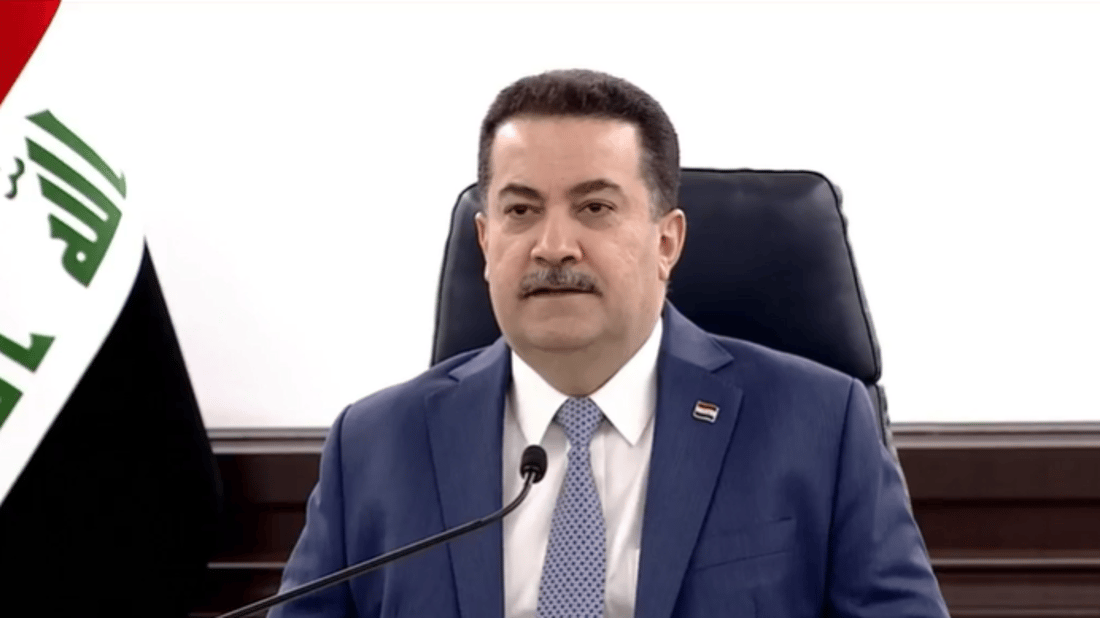
(Photo: Al-Sudani's media office)
Monitor
Al-Sudani: no curfew, no influence on special vote as Iraq prepares for elections
BAGHDAD — Prime Minister Mohammed Shia Al-Sudani chaired a meeting of the Higher Security Committee for Securing the Elections on Saturday during a visit to the Joint Operations Command headquarters in Baghdad, reviewing preparations ahead of Iraq’s parliamentary vote set for Tuesday.
The prime minister affirmed Iraq’s commitment to holding the elections on schedule, describing it as “a significant milestone for the state.” Al-Sudani stressed neutrality among the security forces, warning that “the use of authority or security resources to influence officers or personnel during the special voting process will not be tolerated.”
He also said no curfew would be imposed on election day and directed security bodies to ensure smooth public movement and respond swiftly to disinformation.
More than 800 international observers are expected to monitor the election process, according to the electoral commission.
The Commission said that about 1.3 million security personnel and over 26,000 displaced voters will cast their ballots in Sunday’s special voting ahead of Iraq’s Nov. 11 parliamentary elections.
Iraq entered its electoral silence period earlier this morning, suspending all campaign activity to create a calm environment for voters and focus media coverage on voter education. 7,768 candidates contesting seats in the election.
Statement from Al-Sudani’s media office:
Prime Minister and Commander-in-Chief of the Armed Forces Mohammed S. Al-Sudani conducted a visit today, Saturday, to the headquarters of the Joint Operations Command in Baghdad.
His Excellency chaired a meeting of the Higher Security Committee for Securing the Elections, which was also attended via video conference by the subcommittees in the provinces, including the Kurdistan Region of Iraq, to review the latest security preparations for the parliamentary elections scheduled for Tuesday, following the special voting day scheduled for tomorrow, Sunday.
The Prime Minister listened to a briefing presented by the Deputy Commander of Joint Operations and Chairman of the Higher Security Committee for Securing the Elections regarding the committee’s assigned duties during the elections, as well as the work of the five main and subcommittees in Baghdad and the provinces. The briefing also emphasized high-level coordination with the Independent High Electoral Commission, the readiness of civil defense agencies, and other supporting bodies, along with the campaign launched by the committee to maintain schools so they can be ready for use after the voting process concludes.
His Excellency also received a briefing from the Electoral Commission on its measures and preparations to conduct the elections in accordance with international standards, applicable laws, and the constitution, ensuring transparency and confirming the presence of more than 800 international observers for the elections.
The Commander-in-Chief commended the cooperation between the Electoral Commission and the security forces in ensuring the success of this national mission, which will shape Iraq’s future for the coming phase. He affirmed that despite the regional challenges and developments, Iraq has succeeded in holding the elections and upholding its democratic path.
Following the meeting, the Prime Minister visited the central command center to review detailed operational plans for securing the elections across Iraq. The center will continue its work to ensure security throughout both the special and general voting days.
The following are the key highlights from the Commander-in-Chief’s remarks:
🔷 The government’s success in conducting the electoral process as planned and on its constitutional schedule is a significant milestone for the state.
🔷 We commend and value the sacrifices and efforts of the security agencies over the past years.
🔷 These elections reaffirm Iraq’s democratic path as it undertakes its sixth electoral experience, demonstrating its commitment to the peaceful transfer of power.
🔷 Responsibility lies with decision-makers, who must address any issue that may obstruct the electoral process.
🔷 The strong presence and effective performance of the security agencies send a message of confidence and reassurance to citizens.
🔷 We direct the security agencies to facilitate citizens’ access to polling centers so they can exercise their constitutional right to vote.
🔷 The use of authority or security resources to influence officers or personnel during the special voting process will not be tolerated.
🔷 There will be no curfew on election day, and movement should remain smooth and unrestricted.
🔷 We direct full readiness to respond swiftly and directly to any misinformation, falsehoods, or attempts to cast doubt on the electoral process in the media or on social platforms.
🔷 We emphasize the need for strong and professional coordination between the security agencies and the Electoral Commission, as it is a key factor in successfully executing duties and resolving issues.
🔷 We stress adherence to professional standards in carrying out duties, free from any political affiliations or pressures.