
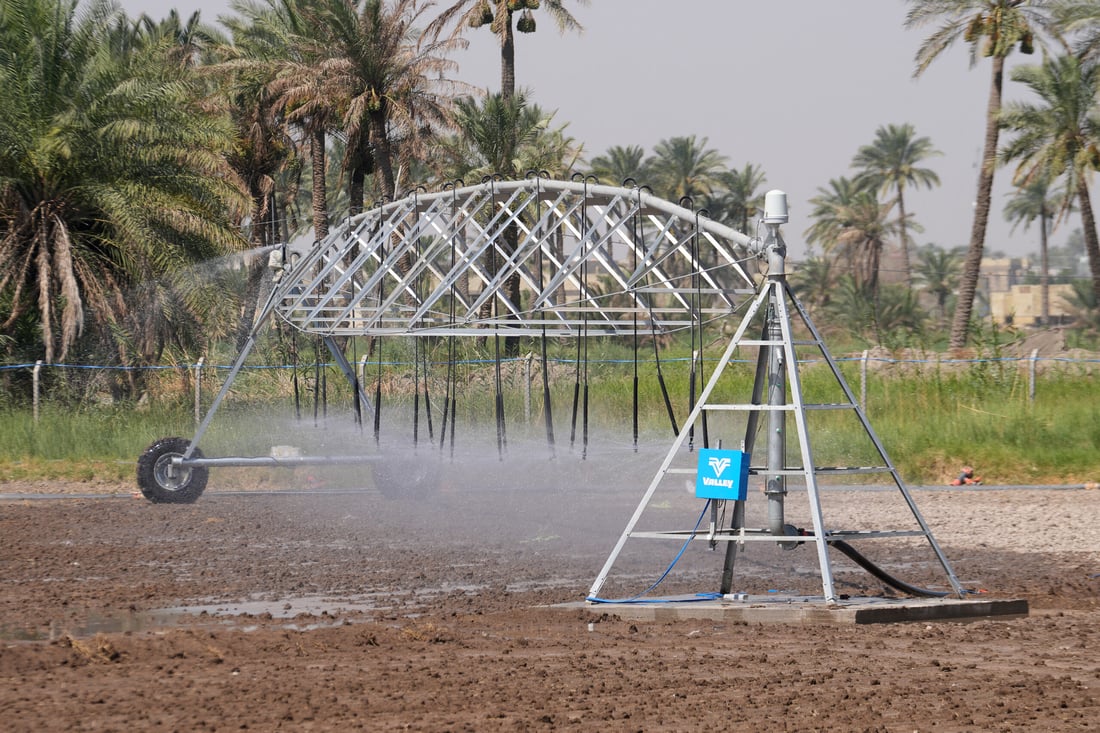
FILES: Sprinklers irrigate a rice field in Mishkhab in Iraq's Najaf (Photo by Qassem al-KAABI / AFP)
Water crisis
Iraq warns of ‘critical’ water shortage as Tigris and Euphrates levels fall
BAGHDAD — Iraq’s Ministry of Water Resources warned Thursday that the country is entering a “critical” stage as water levels in the Tigris and Euphrates rivers continue to decline, leaving national reserves at their lowest in decades.
Deputy Director General of the Irrigation and Drainage Projects Authority Ghazwan Al-Sahlani told Al-Sabah newspaper, “We warn of the deterioration of water storage levels to unprecedented levels, and the country is currently facing a critical stage that requires the cooperation of all concerned parties.”
The ministry said it has released more than twice the planned water quota from reservoirs to meet drinking and agricultural needs, a measure it described as unsustainable without joint efforts from other sectors.
“The ministry is making exceptional efforts to maintain water sustainability for as long as possible, but this cannot be achieved without the cooperation of all sectors,” Al-Sahlani said. He urged the Ministry of Agriculture to promote modern irrigation methods among farmers to reduce waste.
He added, “We stress the need for water departments to rationalize production by operating 50 percent of the design capacity of water complexes in districts and sub-districts, in line with the requirements of the current phase.”
Al-Sahlani also called on municipalities and sewage departments to remove violations along rivers and clean water channels from pollutants that harm both water quality and availability. The ministry further emphasized the importance of enforcing regulated irrigation schedules and curbing the unauthorized use of water pumps.
“The next two months may see further drops in the Tigris and Euphrates water levels,” Al-Sahlani said, adding that the ministry is managing the remaining reserves “fairly and flexibly” until inflows from upstream countries improve.
Earlier this month, the Badr parliamentary bloc threatened to cut all political and economic ties with Turkey over what it described as a “clear hostile act” of restricting water flows to Iraq.
In July, Water Resources Minister Aoun Dhiab said Turkey had failed to release the agreed volumes of water from both rivers, contradicting earlier claims by Parliament Speaker Mahmoud Al-Mashhadani that Turkish President Recep Tayyip Erdoğan had agreed to increase the flow beginning July 2.