
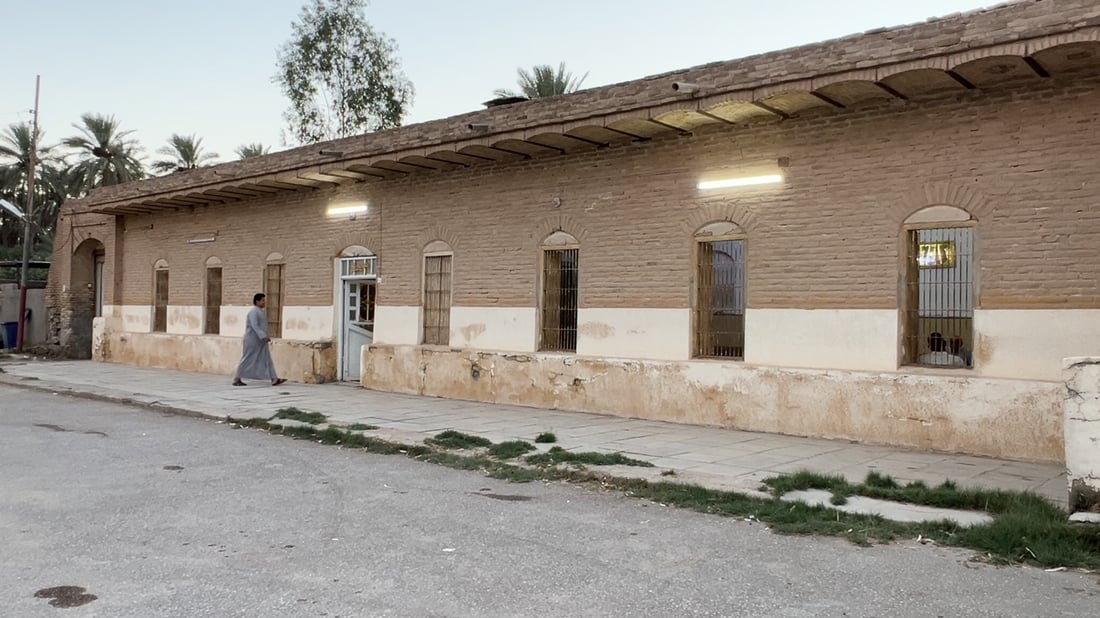
Aziz Castle in the Atishi area of Al-Husseiniya district, Karbala, once home to Sheikh Abdulaziz Al-Fawwaz Al-Masoudi and a gathering place for his tribe and guests. Photo by 964media.
Karbala
Aziz Castle at risk as historic site faces neglect despite heritage listing
KARBALA – Aziz Castle, or “Jal‘at Aziz” as locals call it, stands in the Atishi area of Al-Husseiniya district, where nearby orchard residents gather in the evenings. Once the home of Sheikh Abdulaziz Al-Fawwaz Al-Masoudi, it housed a large guest hall that welcomed his tribe and visitors from Karbala and beyond. Built of brick and reinforced after World War I with imported steel beams from the Berlin-Baghdad railway era, it contrasted with surrounding mud houses.
Although registered as Iraqi heritage in 2007, the castle’s foundations are deteriorating due to moisture, and parts are at risk of collapse. Authorities say the site is privately owned despite its listing and protection.
Mohammed Abdulaziz Al-Masoudi, heir of the castle, told 964media: “It was named after my grandfather Abdulaziz Al-Fawwaz, who built it after World War I. It contained a guesthouse with three sections, a house that has since collapsed, and a space for livestock. It did not have defensive towers, but it had an important social role in hosting visitors and gathering the tribe.” He said the Karbala Antiquities Department took charge of the site in 2014 and appointed a guard, but no restoration has been carried out despite repeated requests.
Hussein Yasser, former head of the Karbala Antiquities Department, said: “Aziz Castle is about 100 meters by 100 meters, built with brick and iron, while nearby houses were smaller and made of mud. It once had guesthouses for locals and outsiders, stables for horses, and houses for servants and the family. Some kitchens were likely added after the 1930s, when iron entered Iraq with the Berlin-Baghdad railway.” He noted only the facade with the guesthouse remains, with other parts replaced by modern homes. “It should today be a center for seminars and cultural sessions, with necessary restoration and maintenance.”
Visitor Hikmat Ghani Al-Tu’ma said: “I was invited to visit Atishi and was surprised by the number of heritage sites. Unfortunately, they have not received any government attention. The castle amazed me with its old architecture. These places should be highlighted and turned into tourist centers.”
Another visitor, Saleh Dhiab Mani, described it as a place where families meet and talk about daily life. “Anyone visiting the castle feels the heritage, authenticity, generosity, kindness, and humility, along with a sense of social harmony,” he said.
Yasser said the castle remains the only one left in the area after four others collapsed, adding that it stands as “a physical testimony to the region’s heritage” and requires serious attention from the state.