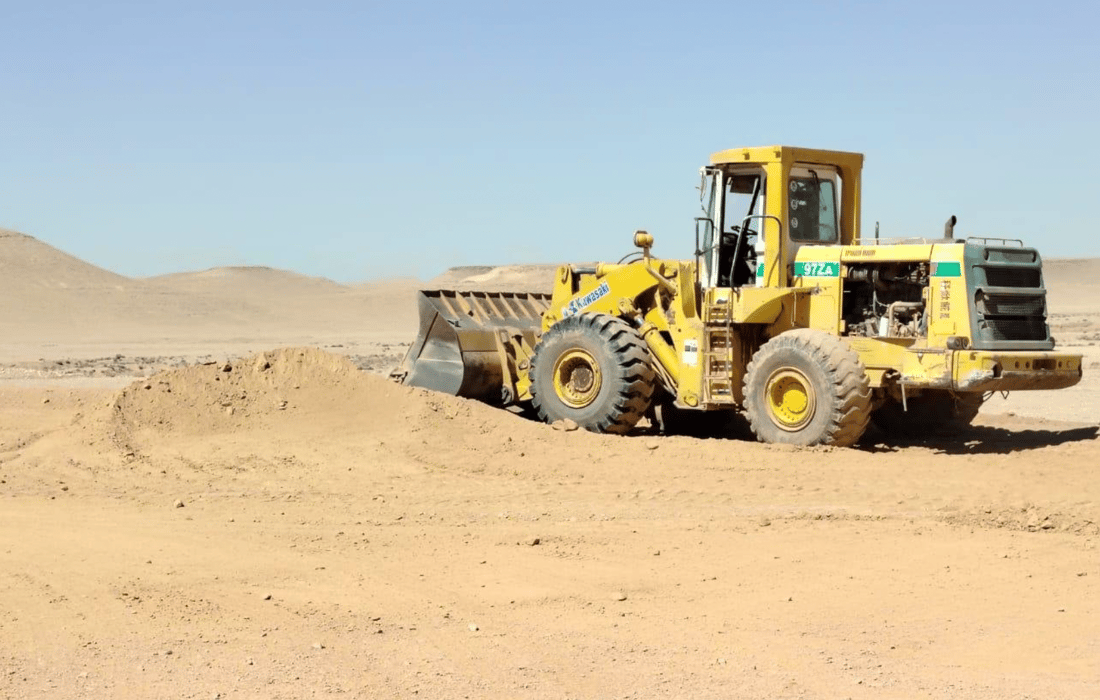
Construction equipment begins work on the al-Masad Dam project in Rutba district, Anbar governorate.
Iraq begins work on al-Masad Dam in Anbar as part of new water harvesting plan
BAGHDAD – Iraq’s Ministry of Water Resources said Sunday it has resumed construction of the al-Masad Dam in Rutba district of Anbar governorate, the first in a series of water harvesting projects planned across the country.
The project was previously halted due to security conditions during the ISIS war. Minister Aoun Thiyab Abdullah directed work to restart, with senior officials from the General Authority for Dams and Reservoirs and the Rafidain Company for Dams Implementation visiting the site to monitor progress.
The dam is designed to hold 6.8 million cubic meters of water and will provide drinking supplies, recharge groundwater, and improve the local environment, according to the ministry.
“This project comes within the first package of water harvesting dams that will be launched in sequence,” said Wissam Khalaf Ubaid, director general of the General Authority for Dams and Reservoirs. He said the broader plan includes three projects under Iraq’s framework agreement with Turkey: al-Abyadh 2 Dam in Karbala, Abu Taqiyya Dam in Nineveh, and al-Kharraz 2 Dam in Muthanna, along with 14 others in the design phase.
Rutba district administrator Imad Mishaal welcomed the project, saying it “will greatly serve the residents of Rutba district,” and pledged full local support.
The Rafidain Company for Dams Implementation is carrying out the work as part of efforts to expand Iraq’s water harvesting infrastructure. The ministry described the initiative as essential to tackling climate change and water scarcity.
On July 24, the ministry said Iraq is enduring its worst drought in nearly a century, with water reserves at only 8% of capacity. Officials blamed reduced releases from Turkey and Iran as well as climate change, noting that inflows to the Tigris and Euphrates are just 27% of last year’s levels. Central and southern governorates remain the most severely affected.