
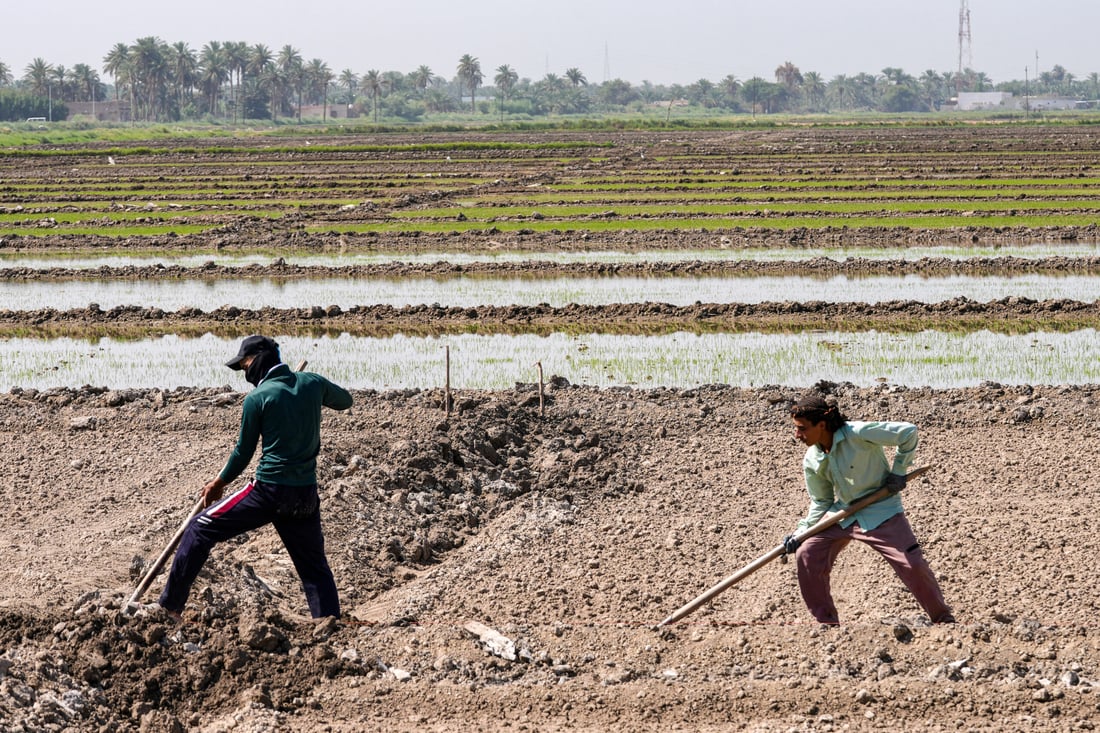
PHOTO FILE Farmers work in a rice field in Mishkhab in Iraq's Najaf (Photo by Qassem al-KAABI / AFP)
Water crisis
Water Ministry raises fines, takes legal action as river abuses reach 10,000
BAGHDAD — The Ministry of Water Resources announced it has recorded 10,000 violations on Iraq’s rivers so far in 2025. Ahmad Abdullah, director of the General Authority for Operation of Irrigation and Drainage Projects, told the Al-Sabah newspaper that violations include unauthorized installation of water pumps on river basins, construction of fish ponds, and opening of illegal water outlets.
“Lawsuits have been filed against the violators,” Abdullah said, noting that fines were raised from one million to 10 million dinars. He added that committees have been formed in each district and subdistrict to monitor and follow up on violations and obtain written pledges from offenders to protect Iraq’s water resources.
Abdullah said ministry staff face difficulties in addressing violations, especially from influential individuals and groups in governorates such as Salah Al-Din—particularly in Ishaqi—as well as in Wasit and southern Maysan, including Qal’at Saleh and Al-Azair. These violations, he said, affect water allocations to Basra.
Efforts to address the issue include importing fish to counter the impact on local fish farming and converting irrigation systems in Najaf from open to closed channels.
Field teams continue to remove violations and implement a rotational water distribution system to ensure water reaches remote areas.
Iraq is grappling with its worst water crisis in decades, with national reserves at their lowest levels in 80 years following a dry rainy season. Officials have pointed to climate change, drought, and upstream dam projects in Turkey and Iran as major contributors to the crisis.
Minister of Water Resources Aoun Dhiab previously said Turkey uses a system of dams along the Euphrates to generate hydroelectric power and transfer water between reservoirs before releasing it downstream, a process that has cut Iraq’s share by half. He said the reduction has worsened the country’s water crisis. Iraq is continuing technical negotiations with Ankara to establish a clear framework for sharing responsibility during regional water shortages, he said.
In July, rising temperatures and deepening drought conditions triggered a wave of public unrest across Iraq’s southern governorates. Years of mismanagement, infrastructure decay, and water scarcity have left many communities without reliable access to clean water or electricity. The crisis has been compounded by declining river levels, increasing salinity, and a lack of investment in essential services, fueling frustration among residents and prompting renewed calls for accountability.