
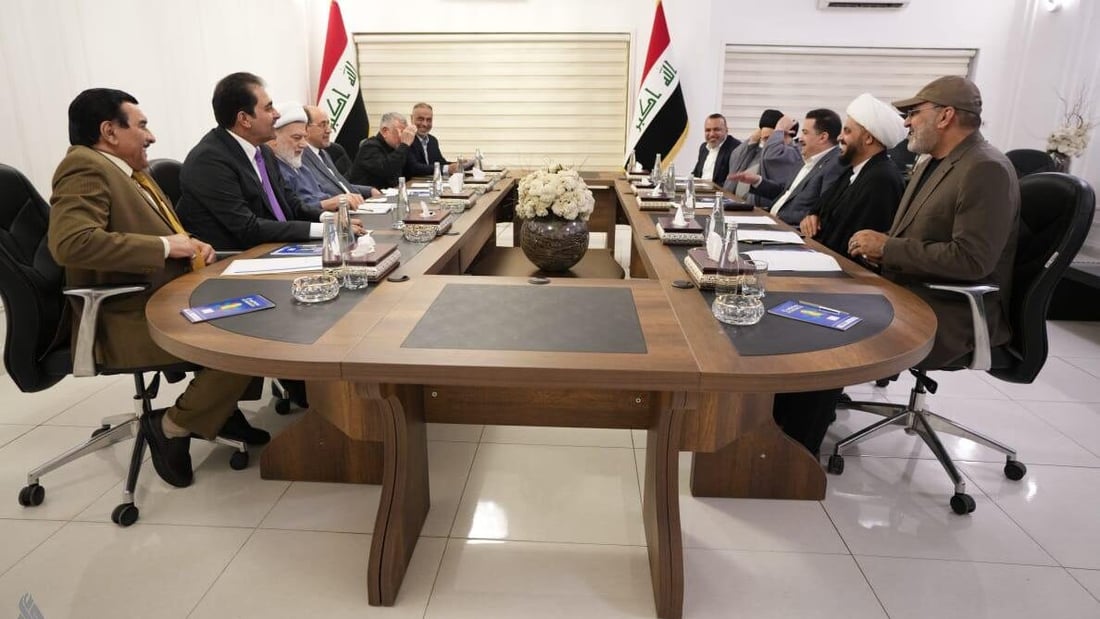
FILES: Members of Iraq’s Coordination Framework hold their regular meeting in Baghdad on Sept. 1, 2025.
Monitor
Coordination Framework backs coalition transition plan
BAGHDAD — Iraq’s Coordination Framework, the alliance of major Shia parties leading the government, said Monday it welcomed steps taken by the U.S.-led International Coalition in accordance with its agreement with Baghdad.
In a statement after its 242nd regular meeting, hosted by Deputy Speaker Mohsen Al-Mandalawi and attended by Prime Minister Mohammed Shia Al-Sudani, the bloc said it supported the coalition’s adherence to the deal, adding that Iraq seeks “balanced bilateral relations based on mutual interests with coalition countries at various levels.”
The remarks come as Iraq prepares to formally end the coalition’s mission in September 2025 and shift to bilateral security partnerships by 2026. Al-Sudani’s adviser Hussein Allawi said coalition headquarters in Baghdad and at Ain al-Asad Air Base will close next month, with cooperation moving under the U.S.-Iraq Strategic Agreement.
Full statement from Iraq’s Coordination Framework:
In the name of God, the Most Merciful, the Most Compassionate
The Coordination Framework held its regular meeting No. (242) today, Monday, at the office of Mr. Mohsen Al-Mandalawi, with the attendance of Prime Minister Mohammed Shia’ Al-Sudani, to discuss key local, regional, and international issues.
The Coordination Framework reiterated its condemnation of the blatant attack on Yemen, which claimed the life of the prime minister along with a number of government officials.
The meeting included a briefing from the prime minister on Iraq’s water and electricity files, along with the solutions his government is pursuing. The Coordination Framework presented important proposals in this regard.
The Coordination Framework welcomed the steps being taken by the International Coalition in line with the agreement concluded with the Iraqi government, affirming that Iraq is keen to maintain balanced bilateral relations based on mutual interests with coalition countries at various levels.
The Coordination Framework also called on active states in the region to adopt a joint vision to confront diverse security, economic, and environmental challenges.