
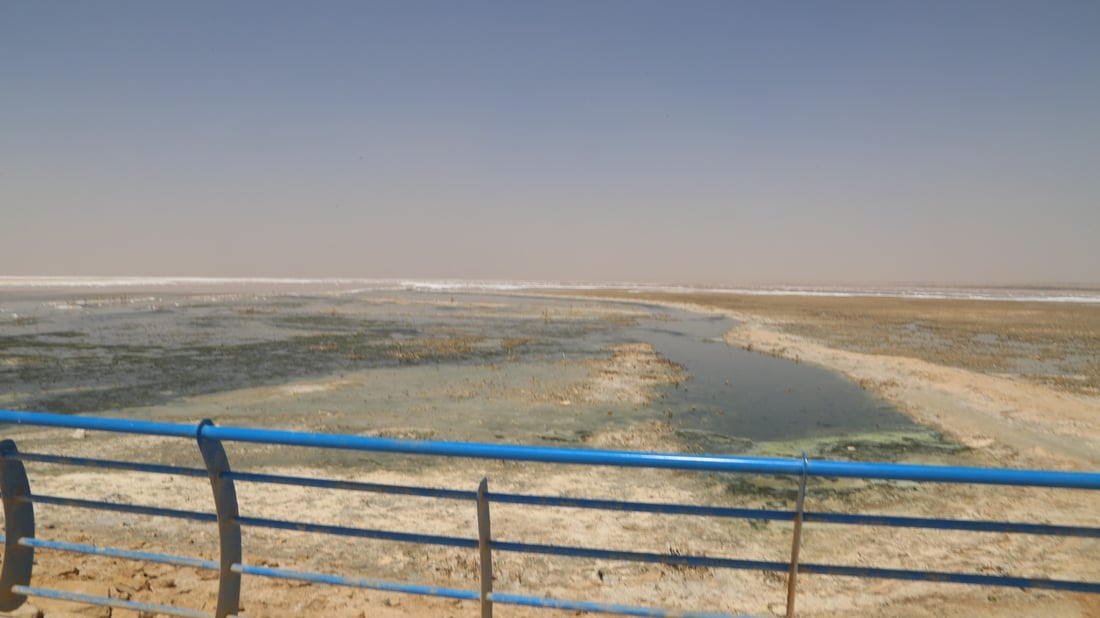
A view of Najaf Sea showing receding water levels and exposed shoreline, reflecting ongoing drought conditions in the governorate.
Responding to comments last week
Minister says Najaf Sea decline caused by drought, not intentional
BAGHDAD — Iraq’s Minister of Water Resources Aoun Diab said Monday that falling water levels in Najaf Sea are a natural result of drought, low rainfall and the closure of self-flowing wells to conserve groundwater, rejecting claims of intentional drying.
“The decline in Najaf Sea levels is a natural phenomenon due to low rainfall and the absence of floods,” Diab said in a ministry statement. He added that the drop is also linked to “the lack of surplus irrigation and drainage water, in addition to the closure and control of self-flowing wells to preserve groundwater from depletion.”
The remarks came during Diab’s meeting with Najaf Governor Youssef Kanawi to discuss the winter agricultural plan and water conditions in the governorate. The minister stressed his opposition to proposals to invest in the lake for non-agricultural purposes, calling it “a natural depression that depends on rainfall and floods.”
He said the ministry is working to secure minimum environmental flows for the Tigris and Euphrates, ensure fair water distribution, and prioritize drinking water stations. He urged cooperation from local governments, district administrations and farmers.
The statement follows weeks of debate over Najaf Sea’s shrinking shoreline. On Aug. 28, provincial council member Akram Sharbah told 964media he believed “there is an intention to get rid of it,” citing investment maps and the closure of wells. Activist Aqil Al-Hidrawi warned that housing projects could undermine religious tourism.
On Aug. 30, Najaf water resources director Shakir Al-Atwi rejected allegations of deliberate drying, attributing the decline to reduced rainfall, evaporation, salinity and shortages. He noted the lake has dried in past decades and could recover with improved rainfall, floods or an updated agricultural plan.