
Calls for regulation
Outrage after 200 olive trees cut for firewood in Bashiqa
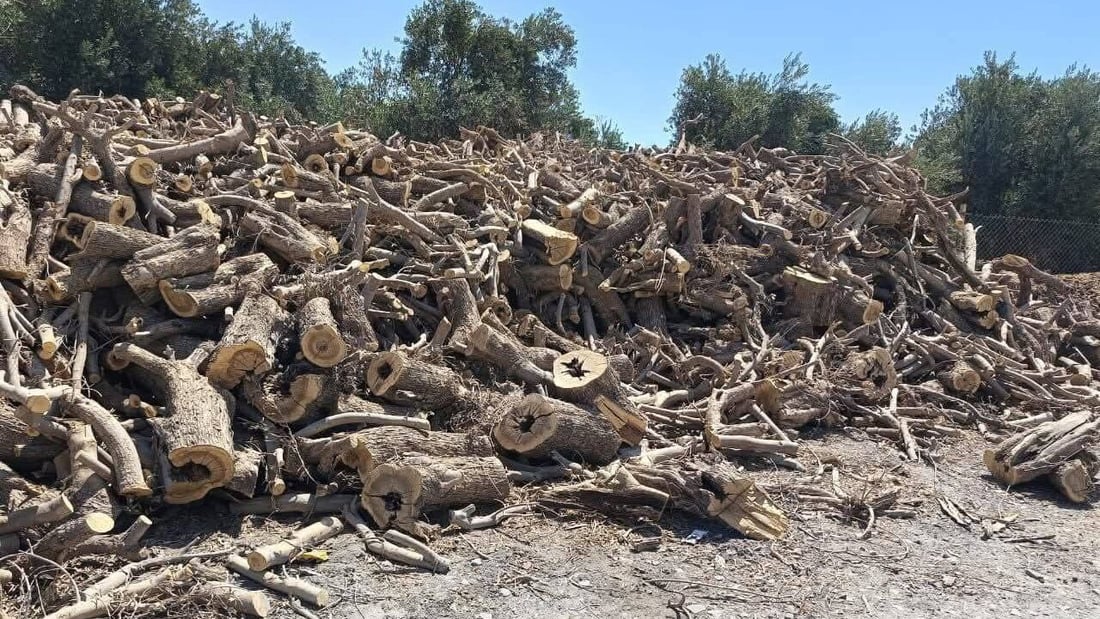
BASHIQA — A farmer in Bashiqa uprooted and sold hundreds of mature olive trees as firewood to a fish restaurant in Nineveh, triggering public outrage and renewed calls for tighter environmental protections.
Images of the cleared grove circulated on social media this week, drawing sharp criticism over the environmental toll of wood-fired cooking methods. Omar Abdul Latif, spokesperson for the Green Iraq Observatory, condemned the act in comments to 964media. “This is a crime, and it’s unacceptable to cut down 200 olive trees and sell them as firewood for restaurants and entertainment,” he said.
The farmer reportedly justified the removal by saying the trees were no longer productive or lacked proper irrigation. Abdul Latif rejected the reasoning. “These trees could serve as windbreaks and help reduce dust storms,” he said. “Even if they don’t produce olives, they can still be used in other projects.”
He warned that the incident in Bashiqa is not unique. “Entire farms in Diyala have been wiped out because of fish grilling. Even in Baghdad, old trees were cut down in ignorance, harming the environment,” he said.
Abdul Latif proposed a series of policy responses, including stricter laws against tree cutting, enhanced enforcement by environmental police to track wood sourcing, and encouragement of alternative fuels such as scrap wood or sawdust. He also suggested limiting the number of masgouf restaurants to those with environmental licenses.
“Restaurants and entertainment venues prefer high-quality wood for grilling, like citrus and olive,” he said. “We must know where this wood is coming from.”
Some activists have called for a temporary boycott of masgouf, a traditional Iraqi grilled fish dish, but Abdul Latif expressed doubt over its impact. “Such a campaign might not yield strong results because Iraqis are deeply attached to this dish,” he said. “The solution lies in law enforcement and regulation.”