
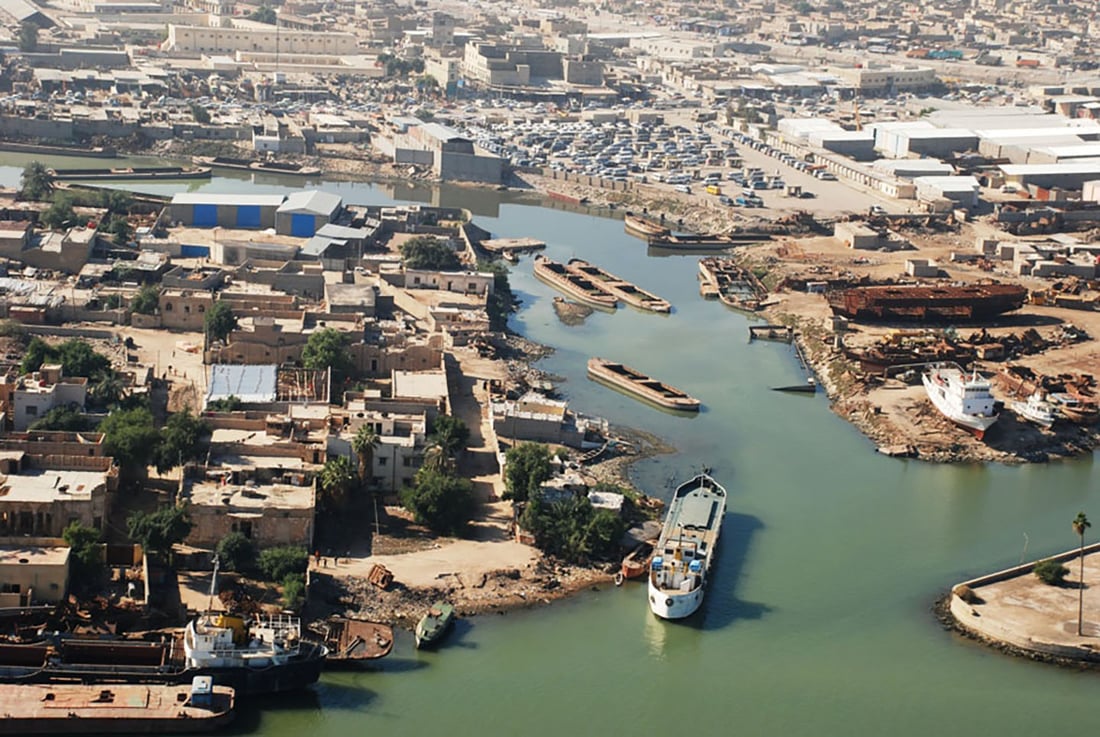
Aerial view of Basra
Drought
EU allocates €1.1 million to address Basra water crisis
BASRA — The European Union has allocated €1.1 million in humanitarian funding to address the worsening water crisis in Basra, where residents face acute shortages and rising salinity, according to a statement published Tuesday by the EU delegation in Iraq.
“In response to the escalating water crisis in Basra, southern Iraq, the European Union is allocating EUR 1.1 million in humanitarian funding,” the statement said.
Basra, a key oil-producing region in southern Iraq, has long struggled with deteriorating water quality. Reduced river flows from upstream sources, combined with seawater intrusion from the Gulf, have pushed salinity levels in the Shatt al-Arab waterway to dangerous levels. Decades-old infrastructure and limited federal investment have further constrained access to clean water, fueling periodic protests and deepening public frustration.
The EU said the funding will support emergency water, sanitation, and hygiene services over the next six months, targeting about 500,000 people, particularly those living in informal settlements on the city’s outskirts where “the crisis has been particularly acute.”
Iraq’s Ministry of Water Resources announced last week that the country is experiencing its worst drought in nearly a century, with national water reserves falling to just 8% of total storage capacity.
The EU called the current situation “Basra’s most serious water crisis since 2018,” citing multiple causes, including “the drying up of the Euphrates before reaching the city and the reduced Tigris River flow due to upstream drought-related usage.” The resulting salinity and scarcity have created significant health risks, particularly for displaced and vulnerable communities.
According to the Ministry of Water Resources, inflows to the Tigris and Euphrates have dropped to just 27% of last year’s levels. Reservoirs and dams nationwide are down 57% year-on-year, with central and southern governorates facing the worst shortages.
The humanitarian response will be implemented by the Norwegian Red Cross in partnership with the Iraqi Red Crescent. Efforts will focus on maintaining and upgrading water infrastructure in underserved areas and delivering clean water by truck to communities not connected to the public network.
“The EU remains committed to responding swiftly to emerging humanitarian needs and supporting the most at-risk populations,” the statement said.