
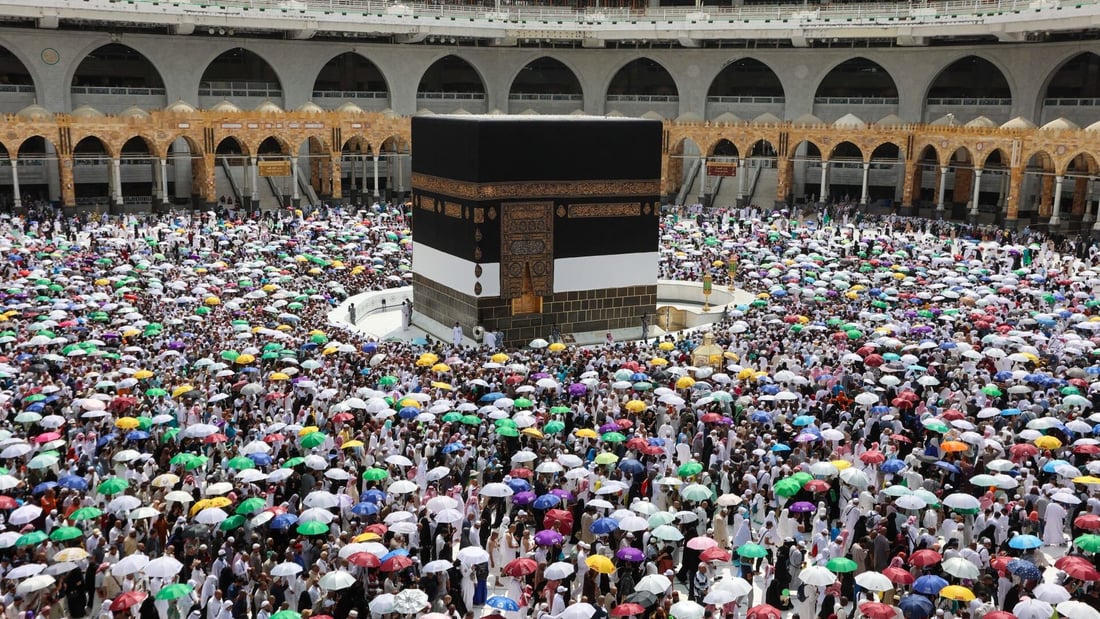
FILES: Pilgrims gather around the Kaaba at the Grand Mosque in Mecca, Saudi Arabia, during the Hajj pilgrimage
'Awaiting response'
Iraq officially requests higher Hajj quota from Saudi Arabian authorities
BAGHDAD — Iraq has formally requested an increase in its Hajj quota from Saudi Arabia and is awaiting a response following review by the kingdom, the country’s Hajj and Umrah Authority said Tuesday.
“We have officially sent a letter to the Kingdom of Saudi Arabia, and we are waiting for their response after they study the request,” said Sheikh Sami Al-Masoudi, head of the authority, in comments to the Iraqi News Agency.
The annual Hajj pilgrimage draws millions of Muslims to Mecca, and countries coordinate official delegations to provide logistical and spiritual support. Saudi Arabia assigns quotas based on the Muslim population of each country, typically allowing 1,000 pilgrims per million Muslims. Iraq’s recent quota has ranged between 34,000 and 40,000, distributed across its provinces, including the Kurdistan Region.
Al-Masoudi said the authority is already preparing for next year’s Hajj season. “This year we will build upon our successes and provide the best services,” he said. “Iraq has received the ‘Labaytum’ award three times in a row, but we will not rest on this achievement.”
The Labaytum award recognizes excellence in planning, healthcare, religious guidance, comfort, technology use, and overall organization.
“We will enhance and develop services to better serve our pilgrims,” Al-Masoudi added. “We’ve already begun preparations for the next season, including guidelines and service quality, to maintain our current level.”
Due to limited availability of official Hajj visas, many Iraqis in recent years have traveled on tourist visas. While often seen as more accessible or cost-effective, this route presents serious risks, including lack of supervision, inadequate medical support, and poorly managed accommodations.
In 2024, more than 25 pilgrims from the Kurdistan Region died during Hajj, many of whom had entered Saudi Arabia using tourist visas allegedly facilitated by local tourism companies.