
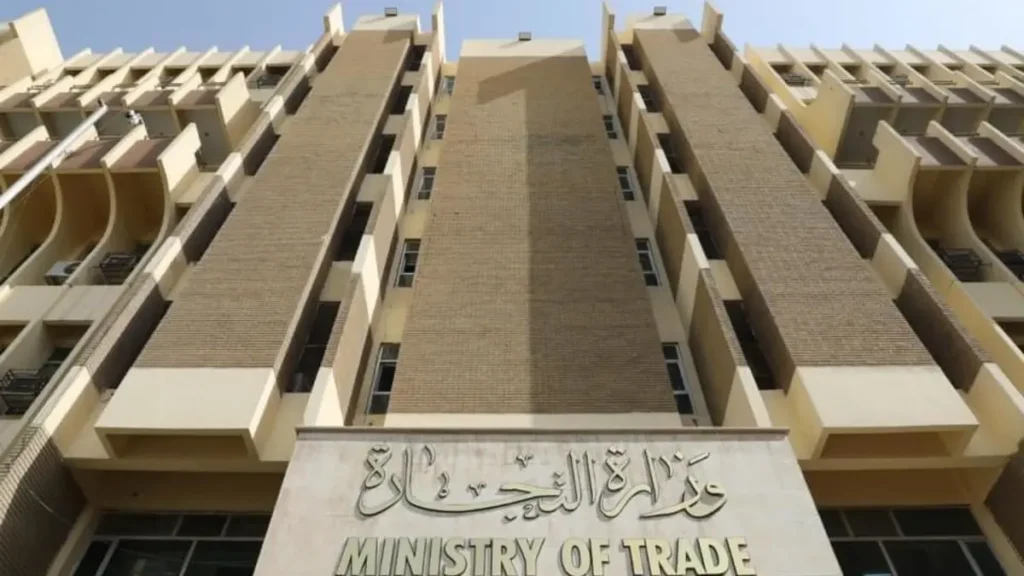
The headquarters of Iraq's Ministry of Trade in Baghdad
Israel-Iran conflict
Trade ministry launches ‘preemptive measures’ to shield food supply
BAGHDAD — Iraq’s Ministry of Trade announced Monday a “comprehensive plan” to ensure national food security in anticipation of fallout from the escalating conflict between Israel and Iran, including measures to expand food reserves, ease import procedures and support domestic agriculture.
“These are preemptive measures to guarantee national food security in case of any emergency resulting from regional developments, particularly the repercussions of the Israel-Iran war on global supply chains,” the ministry said in a statement.
Trade Ministry spokesperson Mohammed Hanoun said Iraq has contracted major rice imports and secured local production of sugar and oil, while enhancing storage facilities to protect reserves from climate-related damage and extend their shelf life.
The ministry also said it would facilitate imports by exempting key food commodities from customs procedures and collaborate with the private sector to expand strategic stockpiles.
Iraq shares a long border with Iran and relies heavily on Iranian goods, including food, fuel and construction materials. Officials have warned that instability in Iran or disruptions at border crossings could significantly affect Iraqi supply chains and domestic market prices.
Hanoun said the ministry is also working to boost domestic production, especially wheat. “We aim to stimulate national agriculture and lessen our vulnerability to international trade disruptions,” he said.
The ministry said it would double food ration items during crisis periods and prioritize distributions to low-income families and those enrolled in social welfare programs. Monitoring teams have been deployed to prevent hoarding and curb price manipulation.
Hanoun said the plan was developed through “high-level governmental coordination” and includes partnerships with the private sector to ensure stable supplies and maintain reserves for several months.
Meanwhile, authorities in the Kurdistan Region reiterated that current reserves of food and essential goods are sufficient to meet residents’ needs for at least six months. Officials urged the public not to engage in panic buying.