
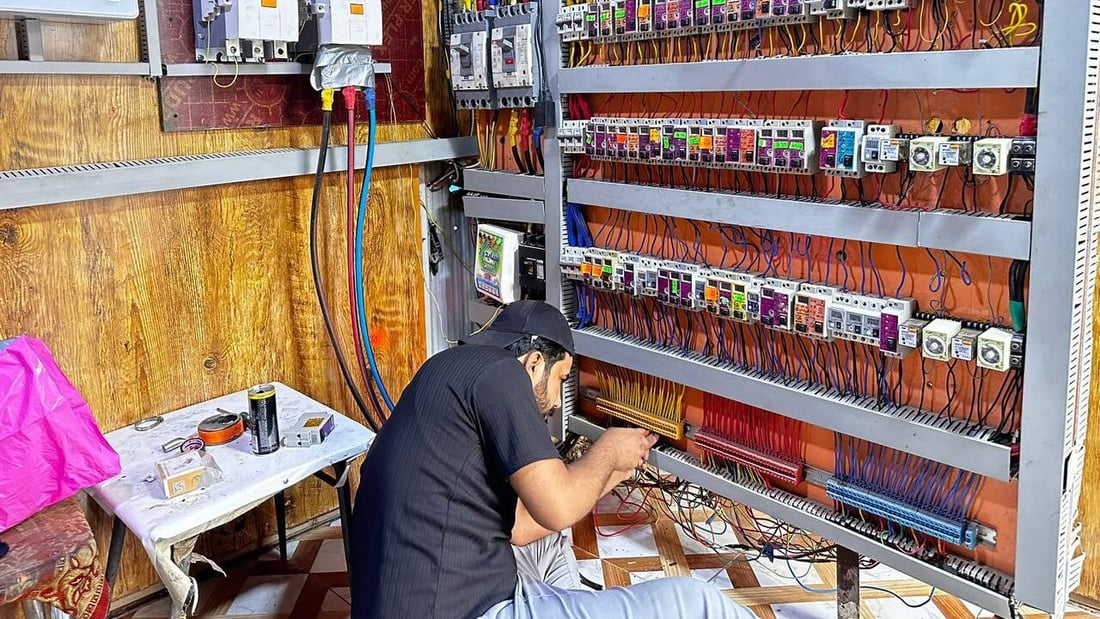
A worker repairs electrical circuits inside a private generator control room in Baghdad.
'A heavy burden'
Baghdad council calls for lower fuel prices as summer spike in demand looms
BAGHDAD — The Baghdad Provincial Council has urged authorities to boost fuel allocations for generator operators and lower fuel prices as summer approaches and national electricity supplies are expected to decline.
Safaa Al-Mashhadani, head of the council’s Oil and Energy Committee, told Al-Sabah that the move follows statements from the Ministry of Electricity warning that operating hours may be reduced next summer. “Based on these statements, we are drafting plans for the city’s 24,000 generators to ensure fairness for both operators and citizens,” he said.
Iran’s sudden halt in gas supplies to Iraq last November has already led to a one-third drop in electricity production, with 8,000 megawatts lost from the grid, according to the ministry. The crisis is poised to worsen when a U.S. waiver permitting Iraq to import Iranian gas expires on March 8 unless a new exemption is secured. While gas deliveries to Baghdad and central Iraq have already ceased, limited supplies continue to reach the south under the existing waiver. In February 2025, President Donald Trump signed an executive order revoking Iraq’s exemption to import electricity and gas from Iran, intensifying the U.S. pressure campaign against Tehran after renewing the waiver 23 times since 2018.
The committee recently met with representatives from Baghdad’s 41 administrative units to discuss widespread noncompliance with the official monthly pricing set for fuel by generator operators. “The meeting resulted in a demand for authorities to increase fuel allocations while lowering costs,” Mashhadani said. “Operators are forced to buy fuel at commercial rates, making it impossible to cover expenses under the fixed pricing system.”
Amid chronic power shortages across Iraq, many residents rely on privately owned generators and pay monthly subscription fees based on the amperes supplied. For most households, the amount they can afford is not enough to power air conditioning.
The government provides fuel to private generators at subsidized prices. Mashhadani noted that multiple meetings have taken place with the Ministry of Electricity to establish a coordinated framework between power distribution officials and generator operators to regulate operating hours in each area.
“The electricity crisis in Baghdad—whether through the national grid or generators—places a heavy burden on residents every summer,” he said. “This issue requires a comprehensive plan, with binding decisions from higher authorities such as the Council of Ministers and relevant agencies. We are working to secure the necessary approvals for such measures.”
With summer temperatures in Iraq, particularly in Baghdad and the southern governorates, expected to soar to 50°C (122°F), demand for electricity is set to spike as residents rely on air conditioning and cooling systems. Iraq is exploring alternative solutions, including floating liquefied gas terminals, increased electricity imports from Turkey and Jordan, and expanded solar energy adoption through government-backed loan programs. The Gulf interconnection project is also expected to be operational before summer.