
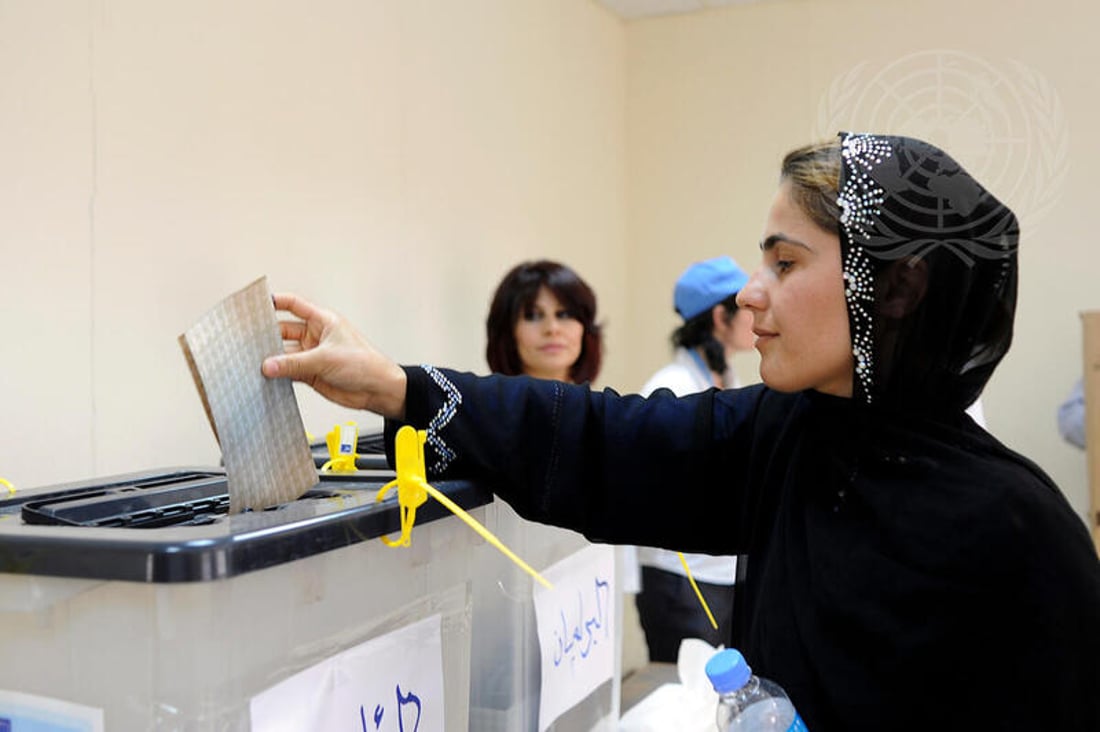
Nearly 7,000 Observers Registered for Kurdistan Parliamentary Elections
Consulates, journalists, and international teams
7,000 observers registered to monitor Kurdistan Region’s parliamentary elections
ERBIL — Around 7,000 observers, both local and international, have registered to monitor the Kurdistan Region’s parliamentary elections on October 20, according to data shared with 964media by Iraq’s Independent High Electoral Commission.
The data shows that 5,274 local observers from various organizations have signed up to supervise the election process. Additionally, 1,655 international observers—including representatives from 14 consulates and 14 international organizations, such as the United Nations and the European Union—are expected to be on hand to ensure fairness and transparency.
More than 20 international media organizations and 102 Arab and international journalists will be covering the election, ensuring comprehensive media coverage.
Hoger Chato, head of the Shams Monitoring Network, a local election oversight body, told 964media, “For the early voting day on Oct. 18, we have trained 600 observers. After the elections, we’ll release a detailed report on the process. On the day of the general election, 1,600 observers will be deployed across 30 monitoring teams in the Kurdistan Region.”
Chato added that preliminary reports will be issued on the first voting day, with a full report expected by October 21, highlighting any irregularities.
Early voting for security forces is set for Oct. 18, with the general election to follow on Oct. 20, deciding the makeup of the sixth Kurdistan Parliament.
The electoral process is divided into four constituencies: Erbil, Sulaymaniyah, Duhok, and Halabja. Erbil will elect 34 representatives, including two minority seats reserved for Christian and Turkmen communities. Sulaymaniyah will elect 38 representatives, with two minority seats reserved. Duhok will fill 25 seats, including one reserved for the Christian Armenian minority. Halabja has three seats available.
A total of 2,899,578 voters are registered for the election, consisting of 2,683,618 general voters and 215,960 special voters—including security personnel and prisoners. Across 136 electoral lists, 1,191 candidates are competing for seats, with 38 representing minority groups. The candidates include 823 men and 368 women.