
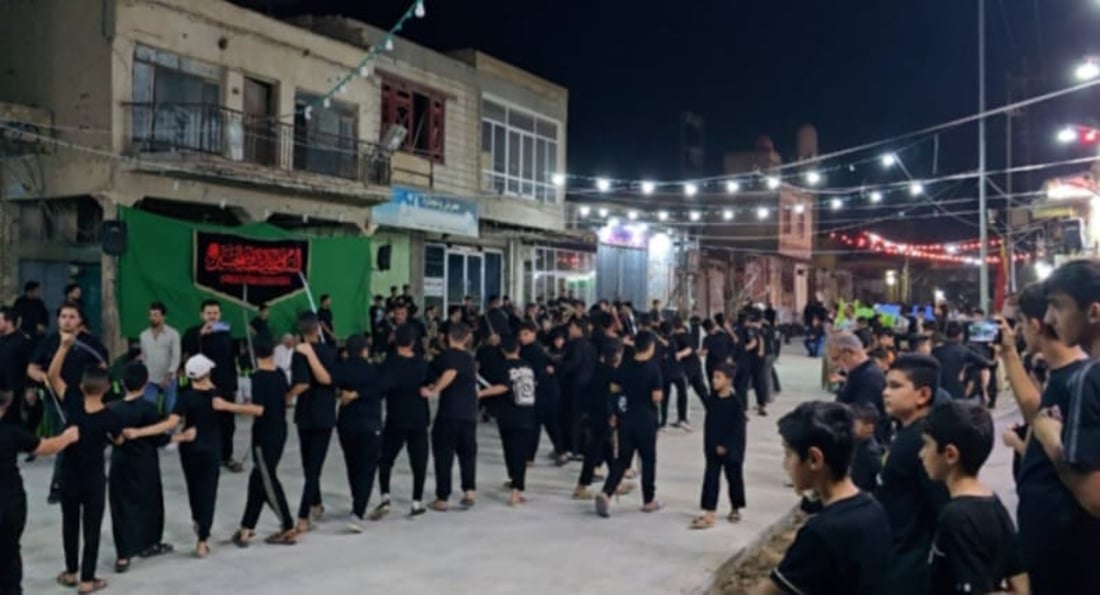
Suq Al-Shuyukh
Historic Ashura procession resumes political chants
DHI QAR — In Dhi Qar’s Suq Al-Shuyukh, the Hawiza area hosts the historic Ashura procession “Al-Jumhur Al-Hussaini,” which traces its origins back to 1928. Initiated by Muhammad Amin Al-Shahrabandi at the Al-Jami Al-Saghir Mosque, this procession became a notable voice against Saddam Hussein’s regime in the 1970s with its politically charged chants and marches to Karbala. Although halted after the 1977 Shia protests, known as the Safar Uprising, due to Ba’athist security pressures, these activities resumed post-2003 following the regime’s fall.
The Safar Uprising erupted from Feb. 4 to Feb. 9, 1977, in response to the Iraqi government’s blockade of the Arbaeen pilgrimage in Karbala and Najaf. The violent crackdown by Iraqi security forces resulted in numerous deaths, arrests, and harsh sentences for the demonstrators, including eight death sentences and 16 life imprisonments.
Muhammad Abdul Ali Al-Shahrabandi, the current procession leader, told 964media, “From the very beginning, the procession featured political chants against the regime. Security forces constantly surrounded us.” One of the chants, highlighting the procession’s defiant spirit, stated: “This is Hussein, who rose with a revolution and won. He saw the nation in danger and took this idea as a lesson. Where is Yazid and his throne? No trace remains of him.”
After the Baathist regime’s overthrow in 2003, the procession at Al-Jami Al-Saghir Mosque resumed its full range of activities. Sheikh Asad Majid Al-Sunaid now leads the mourning gatherings and recitations for ten days annually, continuing the tradition of commemorating Imam Hussein’s stand against tyranny, which is central to the Shia Muslim observance of Ashura.
Today, Suq Al-Shuyukh is a hub for 385 Hussaini processions, with 100 of them traveling to Karbala during the Arbaeen pilgrimage to serve attendees.