
Ali Al-Wardi
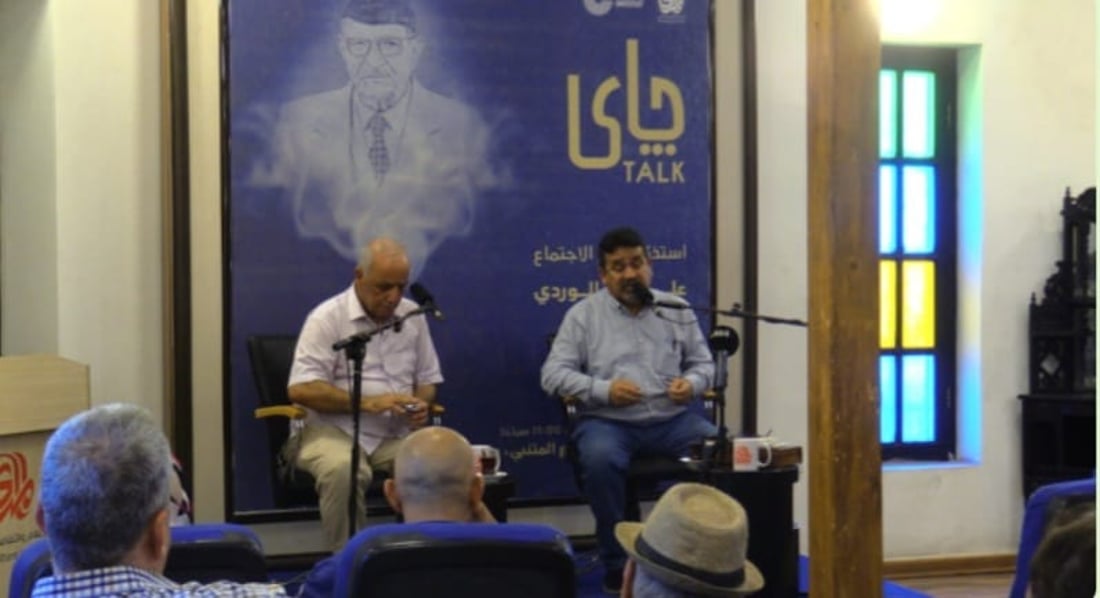
Baghdad hosts commemorative session for late Iraqi sociologist
BAGHDAD — The Al-Mada Foundation for Culture and Arts, in collaboration with Germany’s Goethe Institute, commemorated the late Iraqi sociologist Ali Al-Wardi on Friday, marking 29 years since his death. Critics and researchers discussed Al-Wardi’s life and his enduring works, which have been pivotal for scholars since the 1950s. His studies on the past five centuries of Iraqi history and his analysis of religious behavior, including his renowned work “Preachers of the Sultans,” have sparked debate across Iran, Turkey, and the Arab world.
Widely regarded as the most prominent Iraqi writer in the Arab world, Al-Wardi’s influence extends through his works translated into Kurdish, Persian, Turkish, and other languages. A sociologist, professor, and historian, Al-Wardi studied in the United States during World War II and applied modern social theories to analyze Iraqi society from the 1950s onward. Born in Baghdad in 1913, he died there in 1995, leaving a legacy that continues to impact discussions on Iraqi society.
Rafid Abdul Razzaq, session presenter, highlighted the significance of Al-Wardi’s publications: “Ali Al-Wardi’s books are among the most printed and read. Many of his works faced printing piracy even during his lifetime. He focused on the last five centuries of Iraqi history to demonstrate that the social challenges faced by Iraqi society could be explained sociologically.”
His 1965 publication “Study of the Nature of Iraqi Society” stands out as a foundational sociological study in Iraq. Al-Wardi was notably influenced by Ibn Khaldun, considered by some as the precursor to modern sociology.
Ali Hassan Al-Fawaz, president of Iraq’s Writers’ Union, emphasized the importance of discussing Al-Wardi’s ideas: “Discussing Ali Al-Wardi opens a dialogue and stirs debates needed at this political, social, and cultural crossroad and turning points we experience.” He specifically mentioned “The Mockery of the Human Mind” as crucial for understanding the nature of conflicts and the complexities of the Iraqi identity. “He found in the theme of the conflict between nomadism and civilization, rural and urban life, the basis to foster a scientific space for discussion,” Al-Fawaz stated.
Al-Wardi’s work often focused on the impacts of Mongol and Ottoman rule, which he saw as pivotal in shaping the Iraqi identity. “Today, what can we recall from Ali Al-Wardi amidst the collapses, fractures, and rise of sectarian and nationalist religious gangs?” Al-Fawaz asked.
Mahmoud Al-Qaisi, a researcher and translator, reflected on Al-Wardi’s relevance: “We, as specialists in human social sciences, wonder if Ali Al-Wardi were among us today, would he reiterate the same hypotheses to understand Iraqi society from the 1980s to post-2003? Certainly not.
“Have we managed to produce a specialist at Al-Wardi’s level to re-examine the issues of Iraqi society through field studies? Al-Wardi excelled in this by roaming cafes, guesthouses, and salons, conversing with the elderly, and using historical texts.”