
Historic site contested
Iraq signs deal to turn 2019 Tishreen protest landmark into Italian hospital
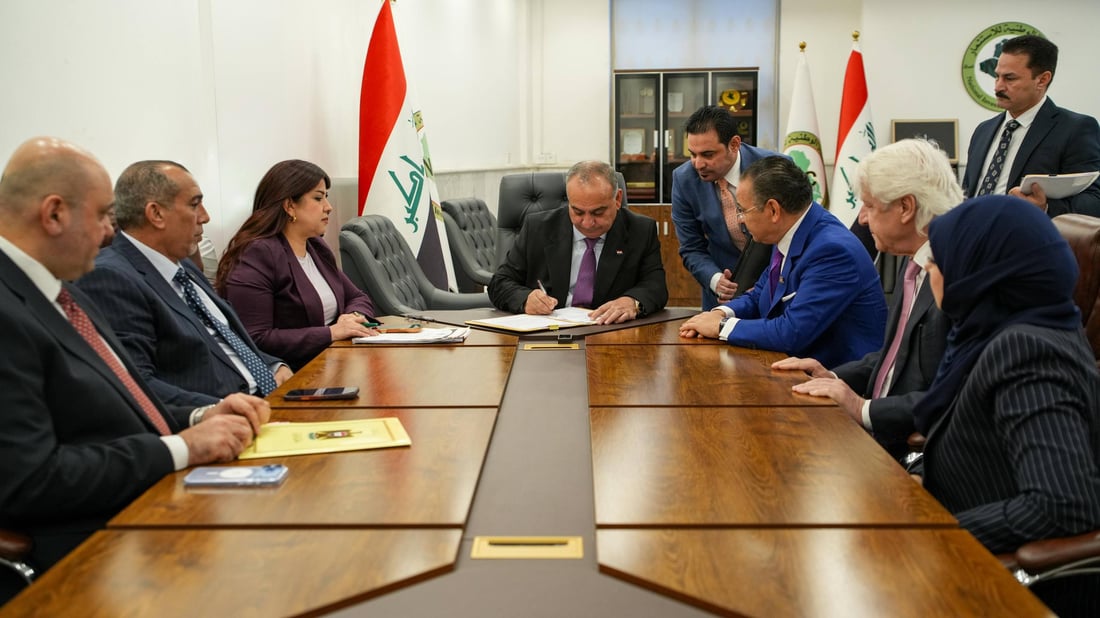
BAGHDAD — Iraq’s National Investment Commission on Monday signed a contract to turn Baghdad’s Turkish Restaurant building, a landmark of the 2019 Tishreen protests, into a 120-bed Italian hospital, despite objections from families of protesters killed in the unrest.
The commission signed the contract with 3H, part of the Italian healthcare group GKSD Holding, it said in a statement. The hospital will have five advanced operating rooms and offer pediatric, neonatal and adult heart surgery, spinal surgery and complex cancer operations.
It will also house laboratories for medical tests and genetic studies, an imaging center with MRI and CT scanners, and a center for wellness and longevity, the statement said.
Commission head Adel al-Yasiri called the project the first integrated European medical facility of its kind in Iraq. He said it would bring advanced medical technology and international expertise to the country and reduce the number of patients who travel abroad for specialized treatment.
The hospital will recruit international medical specialists, particularly from Europe, and run training programs for Iraqi medical staff with universities and specialist institutions, Yasiri said.
He also referred to the building’s past. Reusing the Turkish Restaurant site, “with the symbolism and standing it holds in the capital,” was a model for turning prominent sites into projects that serve the public, he said. The statement did not address the families’ objections or give the contract’s value or a completion date.
The Turkish Restaurant is an abandoned tower overlooking Tahrir Square and the Freedom Monument in central Baghdad. During the Tishreen protests, the anti-government demonstrations that began in October 2019, protesters occupied the building for months and used its upper floors to watch over the square and the surrounding streets.
Former Prime Minister Mohammed Shia al-Sudani launched construction of the hospital on July 31, 2025, when it was planned to have 103 beds. The government presented it as part of a drive to put abandoned buildings back into public use. Monday’s contract puts the capacity at 120 beds.
Families of protesters killed in the unrest wrote to the Italian Embassy in Baghdad in August 2025, urging Italy to reconsider its role. They called the building “the headquarters of Tishreen operations and its martyrs” and described the hospital plan as an attempt to “erase” the movement’s memory.
The same month, hundreds of Iraqi writers, intellectuals and activists signed a public statement against the project, among them the writers Zuhair al-Jazaeri, Salwa Zako, Suhael Sami Nader and Mohammed Khudayyir. It called on the authorities, including the investment commission, to halt the conversion.
The signatories saw the project as an attempt to bury the memory of Tishreen and asked why Sudani had not moved to identify those who killed the protesters.
Families and activists are still demanding accountability for the killings. On Oct. 25, the protests’ seventh anniversary, hundreds rallied in Tahrir Square to call for those responsible to be prosecuted. Protest representatives also submitted demands to the government, including action against corruption, weapons under state control and justice for victims.
The protests began on Oct. 1, 2019, over corruption, unemployment, poor public services and the political system set up after 2003, and spread across Baghdad and the southern governorates. Security forces met them with deadly force. The Iraqi Observatory for Human Rights has identified 624 people killed, while the Iraqi High Commission for Human Rights recorded 541 deaths between October 2019 and June 2020. The unrest led to the resignation of Prime Minister Adel Abdul-Mahdi.