
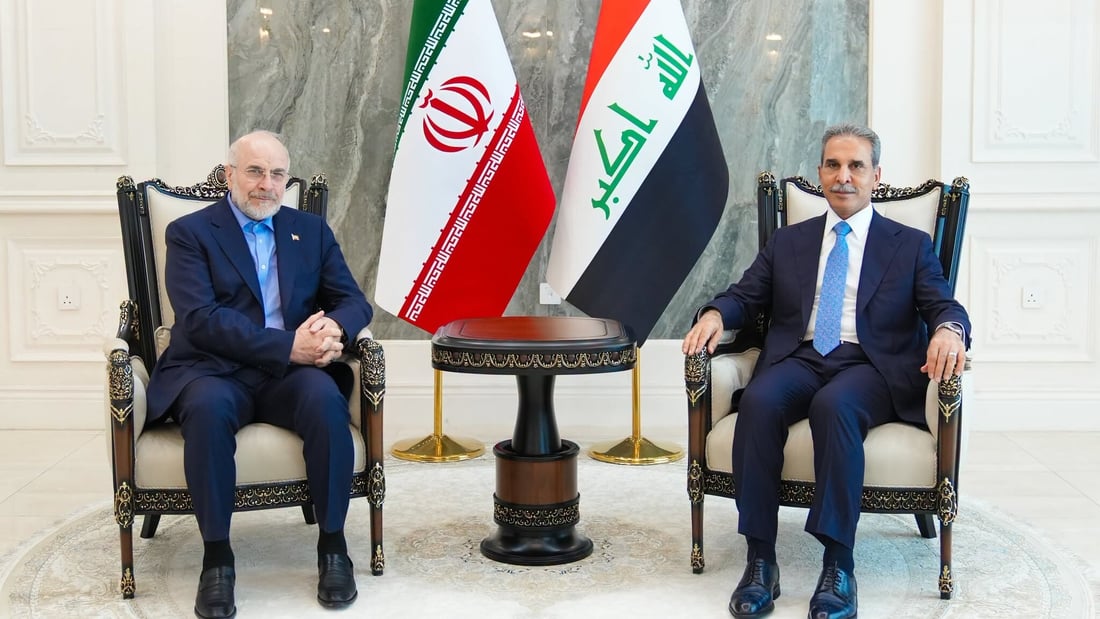
Iranian Parliament Speaker Mohammad Bagher Ghalibaf, left, meets Iraqi Supreme Judicial Council President Faiq Zidan in Baghdad on Aug. 20, 2026.
Iraq asks Iran for special treatment on oil exports through Hormuz
BAGHDAD — Iraq has asked Iran to give its oil exports special consideration in the Strait of Hormuz, Parliament Speaker Haibat al-Halbousi told the visiting Iranian parliament speaker, in the first known Iraqi request of its kind to the country that closed the waterway.
Halbousi raised the issue with Mohammad Bagher Ghalibaf on Wednesday, saying it was needed to protect Iraq’s economic interests. Iraqi exports have run at roughly 526,000 barrels a day since the closure, against about 3.3 million before the war, and oil provides more than 90% of federal revenue. Prime Minister Ali al-Zaidi told Oil Ministry officials this week they had a week to produce alternatives to the route, saying Iraq could not remain “captive to a single passage.”
Ghalibaf began his visit at the site near Baghdad International Airport where Iranian Gen. Qassem Soleimani and PMF deputy commander Abu Mahdi al-Muhandis were killed in a U.S. strike in January 2020. Speaking there, he said Iraq and Iran had saved the region from the Islamic State group, called the U.S. administration “terrorist” and said the resistance movements in the two countries had grown into a global movement. He described relations between the two peoples as “historical and inseparable” and said the visit would produce practical steps on shared security.
The visit comes three days after two drones struck the Kurdistan Region prime minister’s office and the home of the head of its intelligence agency in Pirmam district. The Region’s Counter-Terrorism Directorate said they were launched from the Iranian side of the border, and Masrour Barzani attributed the attack to Iran. Iranian Foreign Minister Abbas Araghchi called the strike a terrorist act in a call with his Iraqi counterpart and urged vigilance against anything that could damage relations between the two countries.
Ghalibaf met Zaidi on Wednesday and Supreme Judicial Council President Faiq Zaidan on Thursday, where the two discussed judicial and legal cooperation and following up agreements already signed. Iraq and Iran signed 14 memorandums in September 2024 covering military training, education, agriculture, telecommunications, labour, culture, religious tourism and free trade zones, and a March 2023 security agreement committed Iraq to preventing Iranian Kurdish opposition groups from using its territory for cross-border attacks. A further memorandum in August 2025 covered border coordination and cooperation between the two countries’ security agencies.