
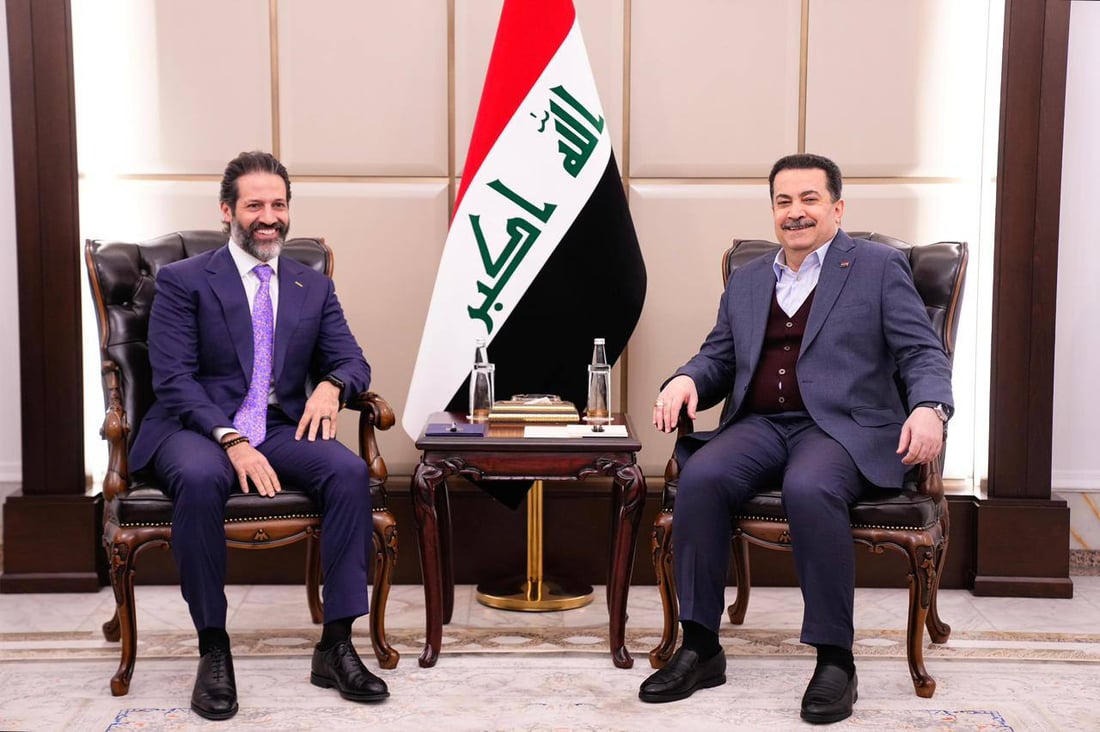
(Photo: Al-Sudani's media office)
Iraq PM meets KRG deputy as Syria crisis and government talks dominate agenda
BAGHDAD — Prime Minister Mohammed Shia al-Sudani met Saturday with Kurdistan Regional Government Deputy Prime Minister Qubad Talabani to discuss government formation talks, political stability and escalating regional security concerns linked to Syria, according to a statement from the prime minister’s media office.
The statement said the meeting reviewed “the general situation in the country” and the progress of political dialogues related to forming the government and completing constitutional obligations “in a manner that ensures the strengthening of political stability and the continuity of government work in serving and safeguarding citizens’ interests.”
Political maneuvering has intensified following the Nov. 11 parliamentary election, with the Shiite Coordination Framework moving toward nominating former prime minister Nouri al-Maliki for another term. Sources say Maliki, who served as prime minister from 2006 to 2014, has secured the backing of most factions within the framework after al-Sudani reportedly withdrew from seeking a second term.
The meeting also addressed developments in Syria, with both sides stressing “the importance of unifying the national discourse among all political forces regarding the rapidly unfolding events there,” the statement said, to preserve Iraq’s security and reinforce regional stability.
Since early this month, Syrian government forces and allied Islamist armed groups have launched a coordinated offensive against Kurdish-held areas in northeastern Syria, including Rojava, triggering renewed instability and humanitarian concerns. The campaign has focused on key towns and border regions, leading to clashes with the Kurdish-led Syrian Democratic Forces and the displacement of tens of thousands of civilians.
The fighting has intensified international concern over detention facilities and camps holding thousands of Islamic State detainees and their families. Clashes near several sites have led to reported escapes, raising fears that deteriorating security conditions could allow ISIS to regroup. U.S. Central Command has begun transferring detainees to Iraq, starting with 150 individuals, with plans to relocate up to 7,000.
Monitoring groups and Kurdish officials have accused Syrian government forces and allied factions of abuses during the offensive, including indiscriminate shelling of civilian areas, destruction of homes and infrastructure, forced displacement, and reports of summary executions and mutilation of bodies. Kurdish leaders have warned the developments could accelerate demographic change and ethnic targeting in Kurdish-majority areas.