
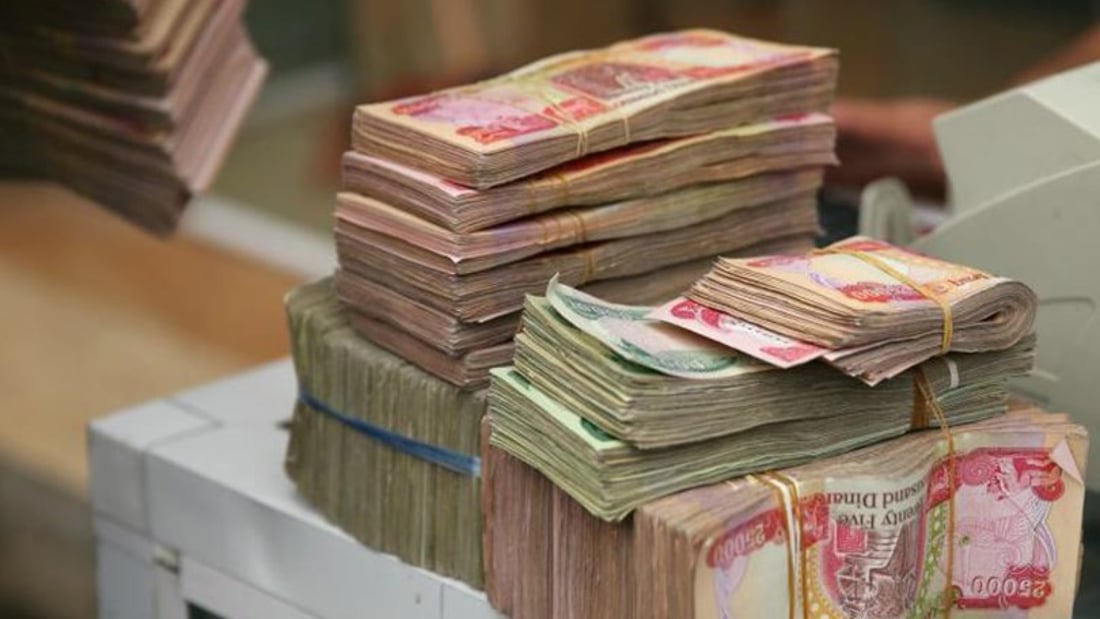
Stacks of Iraqi dinars are seen at a money exchange office
Revenues covered three quarters of salaries in first seven months, economist says
BAGHDAD — Iraq’s oil and non-oil revenues covered only 76% of public salaries and social welfare in the first seven months of 2026, economist Nabil al-Marsoumi said, leaving a deficit of 29 trillion dinars over the period.
Spending on salaries and welfare reached 51 trillion dinars, about $38.6 billion at the official rate, while total revenues fell to 39 trillion, he wrote on Facebook. “This means that total oil and non-oil revenues covered only 76% of salaries and social welfare.” The overall deficit averaged more than 4 trillion dinars a month, he said. He did not say how it had been financed.
Oil provides more than 90% of federal revenue. Exports fell from more than 99 million barrels in February to 18.6 million in March and fewer than 10 million in April after shipping through the Strait of Hormuz was disrupted, forcing cuts in production. They have recovered to about 2.6 million barrels a day in September, three quarters of the 3.3 to 3.5 million exported before, through the northern route to Turkey, tanker transfers outside the strait and an August agreement with Ankara on a minimum of 750,000 barrels a day through Ceyhan.
The state needs 7.7 trillion dinars a month, about $5.8 billion, to cover salaries and payments reaching an estimated 40 million people, the prime minister’s financial adviser Mazhar Mohammed Salih said in August. “The government salary bill reaches 7.7 trillion Iraqi dinars per month, and securing it is an obligatory matter,” he said. The government acknowledged a fiscal crisis in late July, when salaries went out in stages, and the 2027 budget draft went to the cabinet last week with no figures published.