
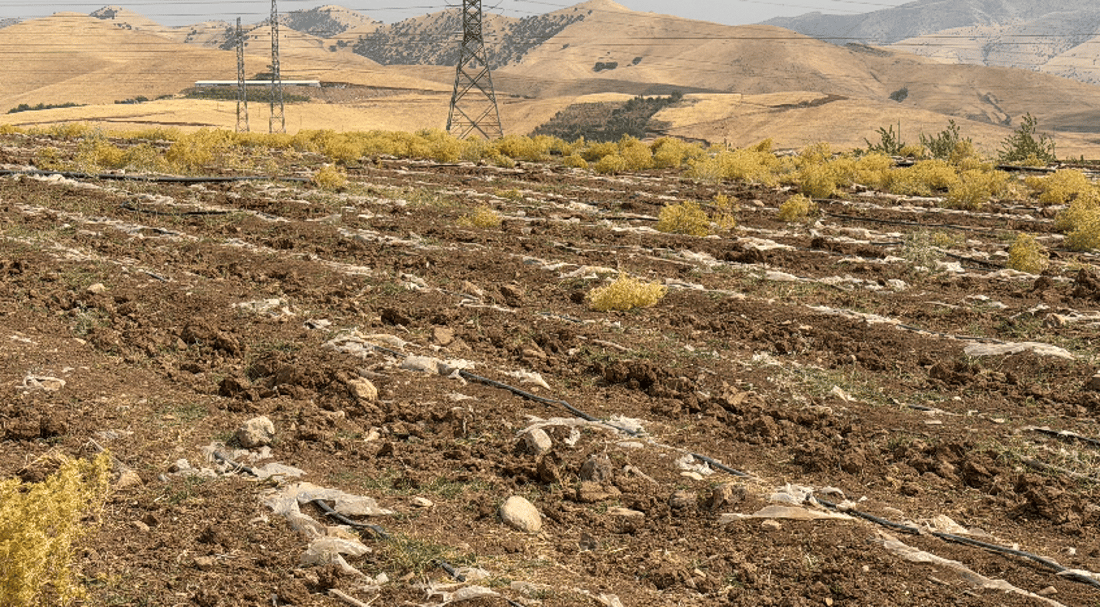
Farmers still using plastic sheeting 14 months after it was banned
ERBIL — Farmers across the Kurdistan Region are still covering fields with plastic sheeting more than a year after the agriculture ministry prohibited it, and an environmental specialist warns the fragments left behind can damage soil for decades.
Much of the plastic used is poor quality and breaks down in sunlight, said Karzan Abdullah. “Because the quality of the nylon is very poor, after being exposed to sunlight for a period of time, it breaks down into small pieces and easily mixes with the soil, making it impossible to collect,” he said, calling the practice “the worst agricultural invention.”
The fragments stop rain penetrating the ground, he said, so water runs across the surface carrying away fertile soil and nutrients and leaving farmers more dependent on chemical fertiliser. “A large part of the decline in production and deterioration in its quality is due to the nylon that becomes mixed with the soil.” A single season’s use can have consequences lasting 20 years, he said: “Imagine the disaster it causes to the land if a farmer repeats this every year.” Anyone who must cover crops should use thicker plastic that survives sunlight and can be collected after the season, he said.
The Ministry of Agriculture and Water Resources told agricultural departments on June 29 last year that plastic sheeting was not permitted, saying residues were being left after harvest to be buried in the soil or pollute the surroundings, and instructed offices to prevent it and take legal measures against violators. The Board of Environmental Protection and Improvement backed the directive at the time, its spokesperson saying it had called for a ban years earlier and urged an awareness campaign.