
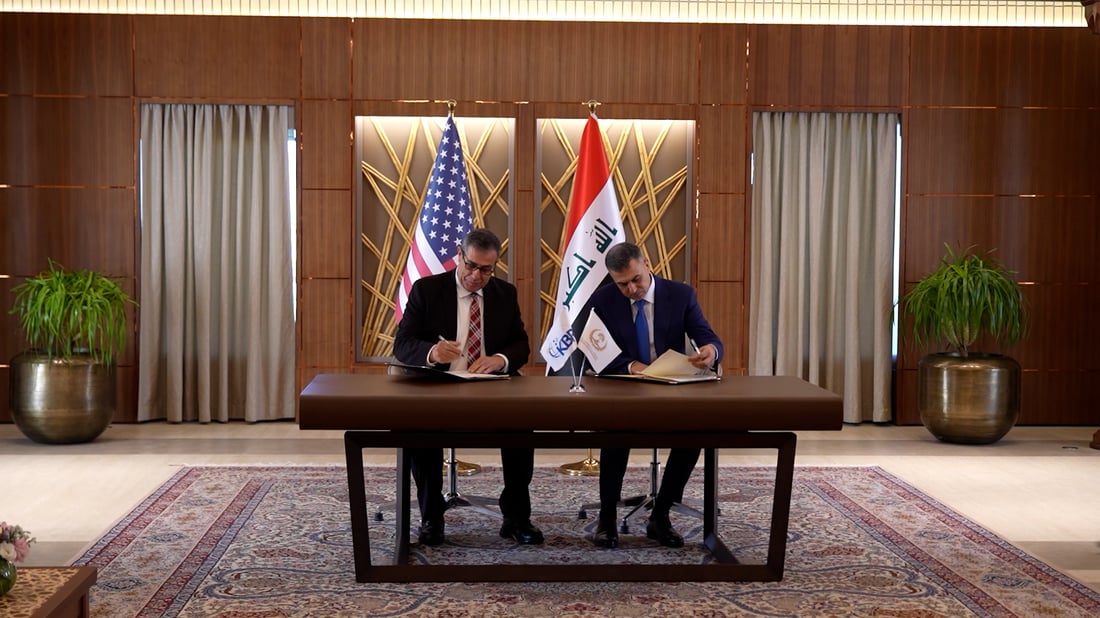
Basra Governor Asaad Al-Eidani, right, and a representative of U.S. engineering firm KBR sign a memorandum of understanding in Basra to develop a comprehensive development strategy for the governorate, with Iraqi and U.S. flags displayed behind them.
Basra signs development advisory deal with US firm KBR
BASRA — Basra Gov. Asaad al-Eidani announced a memorandum of understanding on Tuesday with the U.S. engineering firm KBR to draw up a comprehensive development plan for the governorate, casting it as part of wider economic cooperation between Iraq and the United States.
Speaking at a news conference during a visit by the U.S. chargé d’affaires, Eidani said Basra, as Iraq’s economic capital, could lead a new phase of development. He framed the agreement under the Strategic Framework Agreement between Baghdad and Washington, and said cooperation that once centered on the fight against the Islamic State group was now shifting toward development and investment.
The memorandum follows earlier meetings and is meant to produce an integrated development strategy for Basra, with advisory oversight of future projects across several sectors, Eidani said.
KBR’s global representative, Jalal Jay Ibrahim, said the company employs more than 40,000 people worldwide and has long worked in Iraq, including on the Majnoon and Rumaila oil fields. He said its work with Basra would go beyond engineering to advisory services and folding projects into a single development plan, naming the expansion of Basra International Airport, the Shatt al-Arab waterway, sports facilities and the Grand Faw Port. “Iraq possesses capabilities no less than neighboring countries to achieve comprehensive development,” Ibrahim said.
KBR’s presence in Basra has not been without risk. In early March, a drone strike set fire to a compound west of the city housing foreign oil firms, including offices and warehouses reported to be used by KBR. Iraqi security sources reported no casualties. The strike was one of a series of drone attacks on southern Iraq’s oil infrastructure during the regional conflict, which prompted some foreign energy companies to review security and temporarily withdraw staff.