
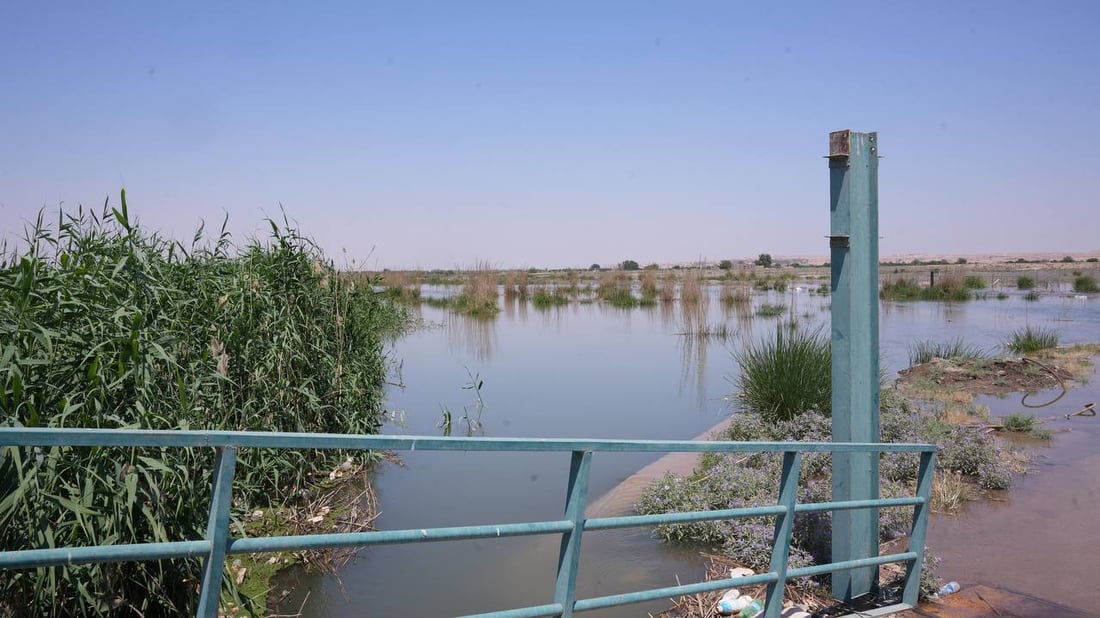
Floodwaters from the Euphrates River inundate low-lying land in Al-Qaim district, western Anbar governorate, after a flood wave crossed into Iraq from Syria.
Anbar
Three bridges knocked out in Al-Qaim as Euphrates flood wave arrives from Syria
AL-QAIM — Three bridges spanning the Euphrates River in Al-Qaim district have gone out of service and a local water project has stopped operating after a flood wave from Syria raised river levels, local authorities said Monday.
Al-Qaim Mayor Turki Mohammed Khalaf told 964media that the Huwaija, al-Bayda and al-Dughayma bridges were no longer operational, with roads leading to them submerged and movement between several districts directly affected. Authorities are monitoring developments and providing alternative routes between affected areas, he said. Rising river levels also forced the suspension of the Saada water project. “The specialized technical teams are following up on the status of the project and taking the necessary measures to ensure the continued supply of water to citizens,” Khalaf said.
The developments follow precautionary measures announced Sunday by Anbar Police Command, which activated its crisis and disaster management center in Al-Qaim and deployed senior officers, river patrol boats, divers, civil defense equipment and law enforcement units. Last week, Anbar Gov. Omar Mishaan al-Dabbous called on military and security authorities to take precautionary measures along the Euphrates from Husaybah to Haditha Dam after Syria opened spillway gates and upstream water inflows increased.
The Water Resources Ministry said it recorded no sudden or unusual rise in Euphrates levels inside Iraq despite flood warnings issued by Syrian authorities. Water Resources Minister Muthanna al-Tamimi, speaking during a visit to Haditha Dam on Friday, said the incoming wave remained within normal levels. “We reassure our people on the banks of the Euphrates River that this wave will be normal according to digital data,” he told 964media. “Haditha Dam is operational, its status is reassuring, and we aspire for it to achieve a pleasing water storage after years of scarcity.”
The flood wave originated after heavy rainfall in Turkey and Syria increased water releases into the Euphrates. Syrian authorities opened spillway gates at major dams and ordered evacuations in parts of Raqqa and Deir ez-Zor after water levels rose sharply, causing flooding in agricultural areas and residential communities. On May 28, the Anbar Water Resources Directorate published photographs showing higher water levels in Lake Haditha, attributing the increase to releases from upstream countries.