
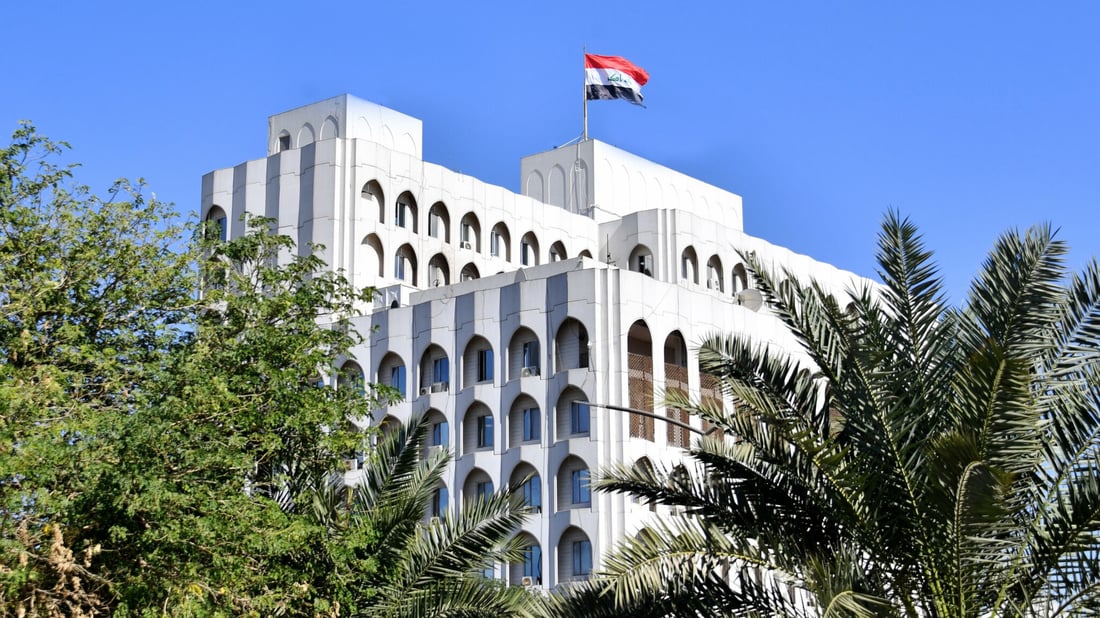
The Iraqi Foreign Ministry building in Baghdad
Calls for dialogue
Iraq warns attacks on regional energy facilities risk destabilizing global markets
BAGHDAD — Iraq’s Foreign Ministry warned Thursday that strikes on energy facilities in neighboring and regional countries represent a dangerous escalation that threatens global energy markets and undermines prospects for stability.
“The targeting incidents witnessed in energy facilities in a number of countries neighboring the Republic of Iraq, as well as in sister countries in the region, constitute a concerning escalation that would undermine efforts to de-escalate tensions and weaken the prospects for stability,” the ministry said, calling for dialogue and diplomatic solutions as “the optimal option for addressing disputes.”
The warning comes as the regional conflict enters a new and more volatile phase. Israeli airstrikes hit Iran’s South Pars gas field on March 18 — the world’s largest natural gas reserve — causing fires, halting parts of production and disrupting around 12 percent of Iran’s gas output. Iran retaliated with strikes on oil and gas facilities across the Gulf, hitting sites in Qatar, the UAE and Saudi Arabia in what analysts have described as the opening of a “gas war.” Brent crude jumped to near $109 a barrel following the South Pars strike, with oil prices now up around 40 percent since the war began Feb. 28.
Iraq faces acute consequences from the energy escalation beyond its own stalled oil exports. Iran halted gas flows to Iraq entirely following the South Pars strike, taking around 3,100 megawatts of power generation offline. Iran normally supplies between a third and 40 percent of Iraq’s electricity needs.
The ministry stressed the need for coordinated international and regional efforts to contain the escalation and ensure “the smooth flow of energy supplies to global markets,” warning that continued escalation “will not serve the interests of any party; rather, it would deepen crises and widen the scope of tensions.”