
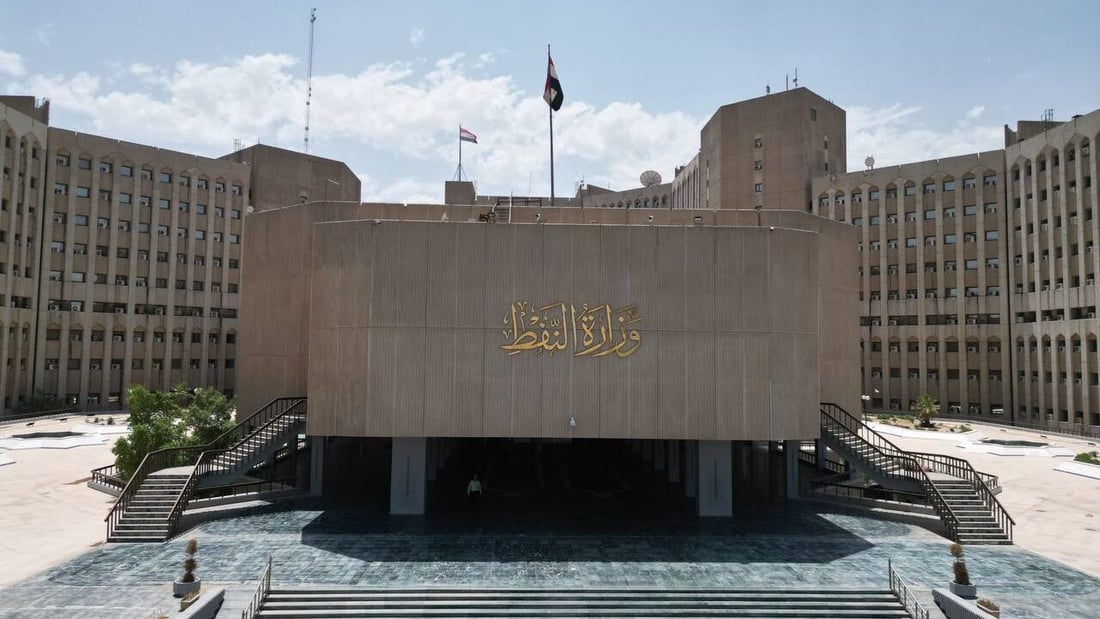
The Iraqi Ministry of Oil headquarters in Baghdad
Threatens legal action
Baghdad accuses KRG of ‘purely political’ stance on oil exports
BAGHDAD — Iraq’s Oil Ministry accused the Kurdistan Regional Government on Tuesday of taking a “purely political” position on crude exports through the Kirkuk-Ceyhan pipeline, warning that continued refusal could trigger legal action — as the two sides remain locked in a bitter public dispute over the stalled northern export route.
The ministry said the KRG’s stance “does not represent the professional and legal perspective of work in the oil sector” and accused Erbil of repeating “its attempt to violate the constitution,” citing articles that define oil and gas as property of all Iraqis and grant the federal government authority over financial policy. It warned that “exploiting the exceptional conditions the region is going through to obstruct exports through the Kirkuk-Ceyhan pipeline represents a major and irresponsible risk to the interests of all Iraqis, including the people of the Kurdistan Region.”
The KRG has rejected Baghdad’s framing outright. Its Ministry of Natural Resources said earlier this week that the federal government had “distorted the issue” and was attempting to shift blame onto the Kurdistan Region. It pointed to two issues it says must be addressed first: an end to the dollar embargo Baghdad imposed on Kurdistan Region traders — which blocks Kurdish businesses from accessing official-rate U.S. dollars through the Central Bank of Iraq — and a halt to militia attacks on oil and gas infrastructure across the region that it says have brought production to a standstill. “There are no oil products left in Kurdistan to be exported abroad,” the KRG ministry said.
Baghdad dismissed both conditions as outside the oil file. The ministry said linking exports to salary disputes “is outside the jurisdiction of the Ministry of Oil,” and defended the ASYCUDA digital customs system — which underpins the dollar embargo — as “one of the most important tools for combating corruption.”
As a temporary measure, Baghdad proposed using an internal pipeline linking Saralu station in Kirkuk to Fishkhabur toward Ceyhan, exporting up to 250,000 barrels per day, with the potential to reach 450,000 barrels per day if Kurdistan Region production is added. Oil Minister Hayan Abdul Ghani said separately that Iraq is also preparing to bypass the Kurdistan Region entirely by restoring a direct federal link from Kirkuk fields to the Iraq-Turkey pipeline, with final hydrostatic testing on the remaining 100-kilometer section expected to be completed within a week.
The dispute has taken on urgent dimensions after regional conflict disrupted tanker traffic through the Strait of Hormuz, cutting off southern terminals near Basra that normally handle around 90 percent of Iraq’s government revenue. Iraq’s parliament is scheduled to host federal and KRG oil officials in a session aimed at breaking the deadlock, while KDP leader Masoud Barzani has called on both governments to “meet together to address the complex issues and disputes” before the crisis deepens further.