
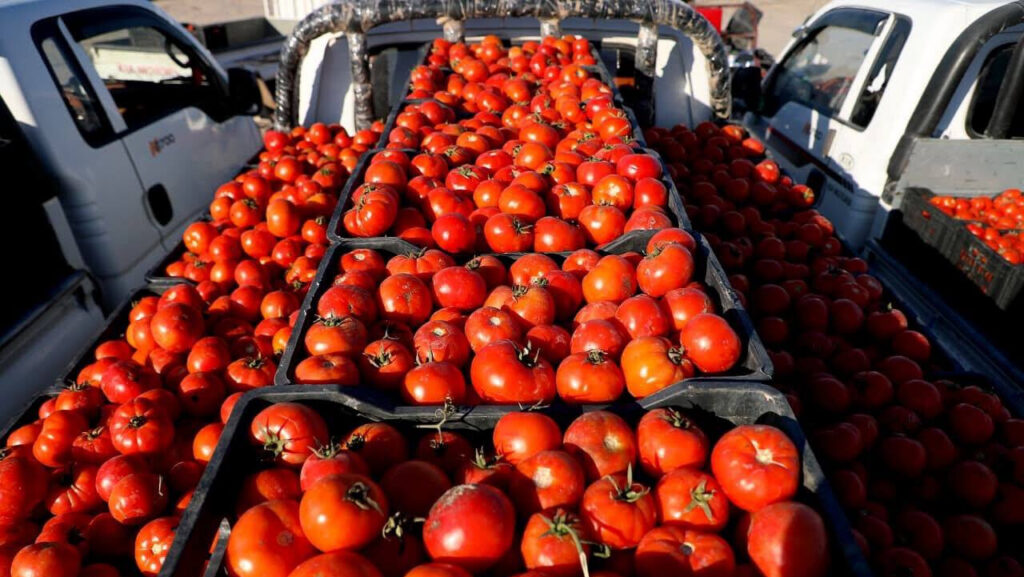
Crates of locally grown tomatoes loaded onto trucks ahead of export through the Safwan border crossing to Kuwait.
Iraq exports 1,000 tons of tomatoes to Kuwait via Safwan crossing
BAGHDAD — Iraq’s Ministry of Agriculture on Thursday announced the export of 1,000 tons of tomatoes to Kuwait through the Safwan border crossing, citing surplus production and the success of seasonal planning measures that secured domestic supply and opened external markets for farmers.
In a statement, the ministry said the shipment “reflects the success of agricultural plans aimed at enhancing national exports and comes as a result of the large surplus witnessed during the current agricultural season.” It added that the ministry had ensured local consumption needs were met while supporting Iraqi farmers “by opening external marketing outlets that guarantee continuity of production.”
The ministry said reaching an exportable surplus followed “a series of supportive measures, most notably protecting the local product through the agricultural calendar, providing technical support and facilitating procedures to accelerate export pathways to ensure the crop reaches external markets.”
The announcement comes after months of policy measures to protect domestic producers. In December, the ministry banned the import of tomatoes and several other crops due to sufficient local production, implementing a decision by the Ministerial Council for the Economy. In November, the Cabinet approved a 25% customs tariff on imported tomato paste for four years, citing the need to protect national products.
In January, the ministry said Iraq had achieved self-sufficiency in more than 48 agricultural products, including tomatoes, potatoes and leafy vegetables, attributing the gains to modern cultivation techniques and regulated imports.
However, tomato farmers in Zubair, Basra governorate, have recently complained of smuggled Iranian shipments entering markets during peak harvest season, despite the agricultural calendar prohibiting imports from December. Growers said the influx of cheaper produce had driven down prices to levels that did not cover production costs.
The ministry said the latest export shipment to Kuwait was part of efforts to stabilize markets, sustain local production and expand Iraq’s agricultural trade.