
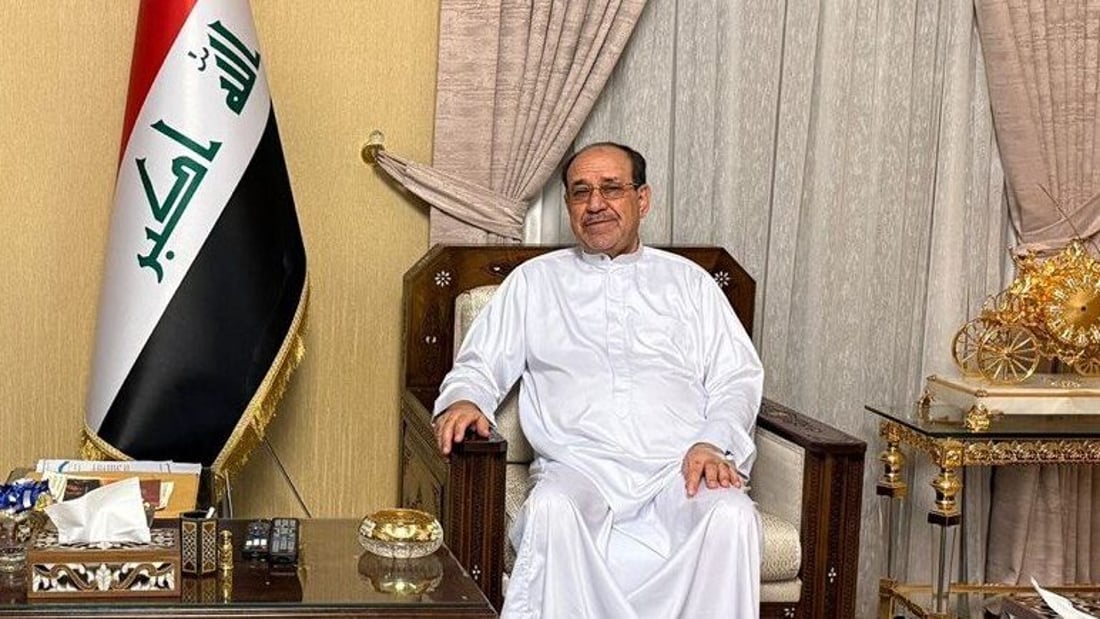
Nouri al-Maliki, head of the State of Law Coalition.
Maliki rejects US ‘interference’ after Trump warning
BAGHDAD — Former Iraqi Prime Minister Nouri al-Maliki on Tuesday rejected what he described as U.S. interference in Iraq’s internal affairs, following a warning by U.S. President Donald Trump over Maliki’s possible return to power.
“We categorically reject blatant American interference in Iraq’s internal affairs, and consider it a violation of its sovereignty and contrary to the democratic system in Iraq after 2003,” Maliki said in a statement. He added that it was also “an infringement on the decision of the Coordination Framework to choose its nominee for the post of prime minister.”
Maliki said relations between states should be governed by diplomacy rather than pressure. “The language of dialogue between states is the only political option in engagement, not resorting to the language of dictates and threats,” he said.
He said he would continue his political efforts based on what he described as constitutional legitimacy. “Out of respect for the national will, and the decision of the Coordination Framework guaranteed by the Iraqi constitution, I will continue working until we reach the end, in a way that achieves the supreme interests of the Iraqi people,” Maliki said.
The statement followed comments by Trump, who warned that the United States would “no longer help” Iraq if Maliki returns as prime minister. Writing on Truth Social, Trump said Iraq would have “ZERO chance of Success, Prosperity, or Freedom” without U.S. support if Maliki were reinstalled, citing what he called “insane policies and ideologies” during Maliki’s earlier time in office.
Trump’s remarks came days after Iraq’s Shiite Coordination Framework nominated Maliki as its candidate for prime minister, prompting mixed reactions across Iraq’s political spectrum. Maliki allies had previously suggested U.S. silence signaled acceptance of his nomination, a position undercut by Trump’s warning.
Maliki served two terms as prime minister from 2006 to 2014. His second term was marked by political tensions and protests in several Sunni-majority governorates over arrests, de-Baathification measures and the application of anti-terrorism laws, followed by security crackdowns. He stepped down in 2014 after Iraqi army positions collapsed and the Islamic State group seized Mosul.