
Sunni Taqaddum rejects Maliki-led government after party meeting
BAGHDAD — Taqaddum, the party led by former Speaker of Parliament Mohammed al-Halbousi, said Tuesday it will not participate in a new Iraqi government led by figures it said would return the country to sectarian conflict.
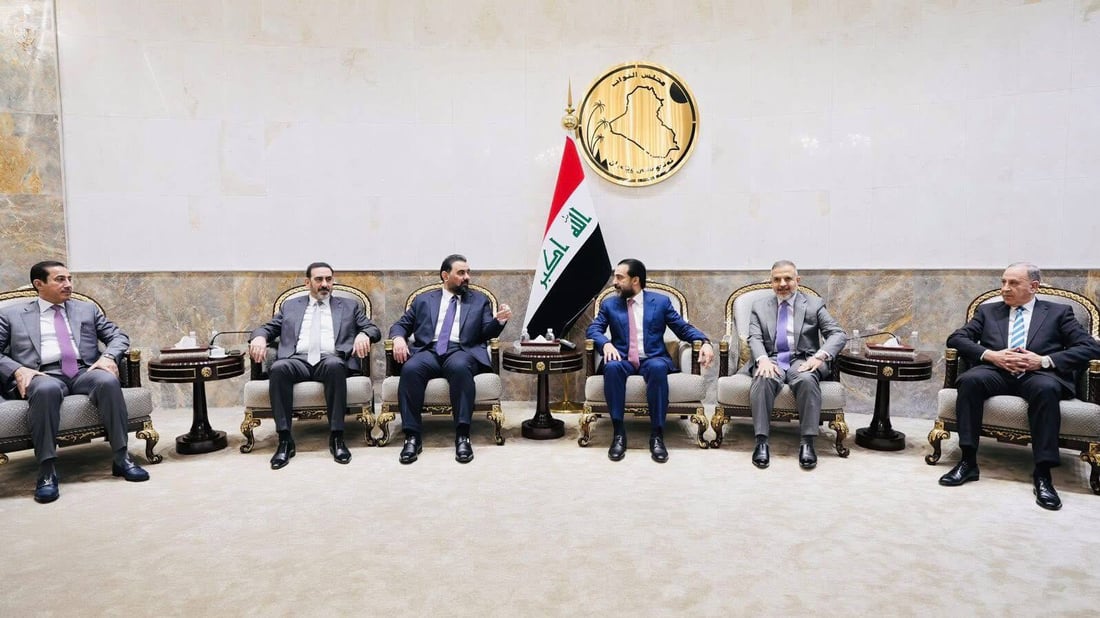
In a statement issued after a leadership meeting held in Baghdad on Jan. 27, Taqaddum said party leaders and members of its parliamentary bloc reaffirmed their “constant commitment to Iraq’s stability” and the continuation of “positive steps that enhance security, unity of the social fabric and the prioritization of national interest.” The party said it rejected participation in any government “led by personalities that bring Iraqis back to the memory of sectarian conflicts,” without naming individuals.
The statement called on the Shiite Coordination Framework to “take into account national acceptance” and treat it as a core principle in forming the next government. It said the incoming government should be effective at the national level, supported by political and social forces, responsive to what it described as a sensitive phase, and capable of managing regional and international relations while offering “clear solutions” to security, economic and financial challenges.
The stance follows the Coordination Framework’s announcement on Sunday that it had nominated State of Law Coalition leader Nouri al-Maliki for prime minister by majority vote.
During al-Maliki’s second term as prime minister from 2010 to 2014, Sunni political forces and communities repeatedly accused his government of pursuing exclusionary policies that deepened sectarian tensions. The period was marked by mass protests in several Sunni-majority governorates over arrests, de-Baathification measures and the use of anti-terrorism laws, followed by security crackdowns that further strained relations between Baghdad and Sunni leaders. Al-Maliki stepped down in 2014 under intense domestic and international pressure following the collapse of Iraqi army positions and the fall of Mosul to the Islamic State group.
In comments aired on Alawla TV, Aqeel al-Fatlawi, a spokesperson for the State of Law Coalition, said, “The absence of a U.S. veto on Mr. al-Maliki amounts to acceptance.” He added, “Mr. al-Maliki is the person most capable of performing this role and regulating the conduct of armed factions, and this aligns with the U.S. preference.”
Al-Fatlawi also addressed objections to al-Maliki’s nomination, saying, “We do not know the reason for Mr. al-Halbousi’s objection and his attempt to mobilize opposition to Mr. al-Maliki’s nomination.” He added, “At this stage, we cannot afford to disregard a bloc such as Taqaddum,” and said, “There is no constitutional opportunity to object to Mr. al-Maliki’s nomination, because he is the nominee of the largest bloc.”