
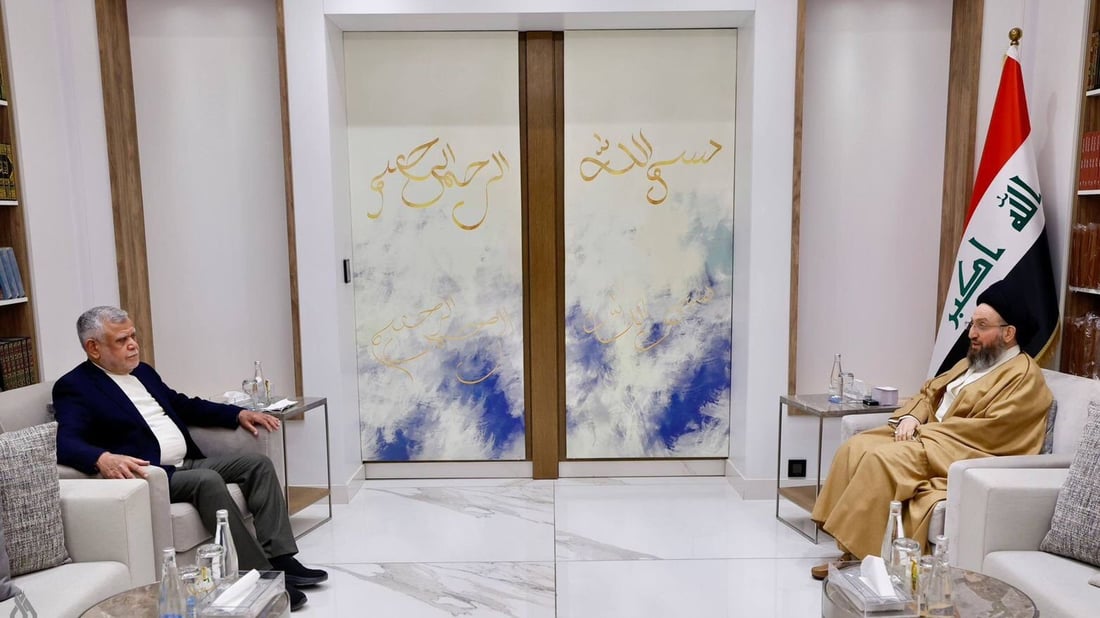
Hakim and Amiri urge unified political response, warn of border threats
BAGHDAD — Ammar al-Hakim, head of Al-Hikma Movement, and Hadi al-Amiri, head of the Badr Organization, reiterated their support for the Coordination Framework during a meeting on Saturday, calling it “a fundamental pillar of stability.”
The Coordination Framework is a coalition of predominantly Shiite political parties in Iraq, formed to coordinate positions and unify efforts among its member groups.
According to a statement from Al-Hakim media office, the two leaders emphasized “the importance of moving forward in preserving the achieved stability and not compromising the accomplishments made at the political, security, and social levels.”
They also called for increased vigilance at Iraq’s borders, stating, “It is necessary to sustain security, military, and intelligence readiness in confronting challenges on the border.”
Hakim and Amiri stressed the need to “unify political and social discourse in facing these challenges.”
The meeting comes as Syrian regime forces and allied groups press an offensive in Kurdish-majority areas of northeastern Syria.
The fighting and rapid territorial shifts have renewed international concern over prisons and camps holding thousands of Islamic State detainees and their families. Clashes near several detention sites have led to reported escapes, heightening fears among observers that ongoing instability could enable the extremist group to regroup and pose renewed security threats across the region.
Last week, U.S. Central Command announced the start of a mission to transfer Islamic State detainees from northeastern Syria to detention facilities in Iraq, beginning with the relocation of 150 individuals held in Hasakah.
“We are closely coordinating with regional partners, including the Iraqi government, and we sincerely appreciate their role in ensuring the enduring defeat of ISIS,” said CENTCOM commander Adm. Brad Cooper in a statement. CENTCOM said the initial phase of the mission moved 150 ISIS fighters from Hasakah to Iraq, and the program could ultimately involve the transfer of up to 7,000 detainees.