
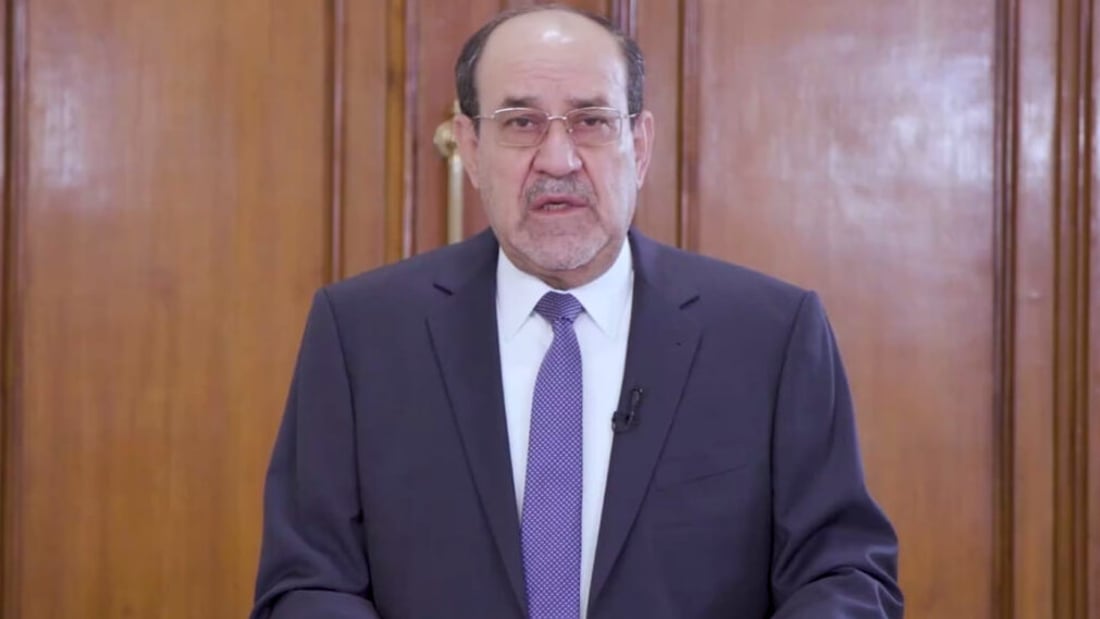
Nouri Al-Maliki, leader of Islamic Dawa Party
State of Law Coalition pushes for Maliki to lead next Iraqi government
BAGHDAD — A senior official in Iraq’s State of Law Coalition said Sunday there is what he described as a “decisive move” within the Shiite Coordination Framework to return former Prime Minister Nouri al-Maliki to office as negotiations continue over the next government.
Moayen al-Hassan told Al-Ahd News that “the current situation is very critical, and Mr. Maliki is the only one capable of managing Iraq at this stage.” He added, “We do not underestimate the capabilities of Mr. Al-Sudani, but this is Mr. Maliki’s era, because the country today faces a financial crisis and needs reassurance regarding the economic situation.”
Al-Hassan also cited regional and international pressures. “The international situation today requires a person with extensive experience, recognized internationally, who can navigate all these crises,” he said. “We do not want Iraq to be part of the problem; we want it to help resolve the situation and play a pivotal role in the region.”
He argued that public sentiment favors Maliki’s return. “The Iraqi people are eager to return to the Maliki era due to the economic prosperity they experienced before,” al-Hassan said.
Maliki served as prime minister from 2006 to 2014. He secured a second term after the 2010 election but stepped down in 2014 under intense domestic and international pressure after the collapse of army defenses and the fall of Mosul to the Islamic State group.
The remarks come amid reports that the Coordination Framework is weighing Maliki as a possible nominee after talk of Prime Minister Mohammed Shia al-Sudani stepping aside. Sudani’s camp has not publicly confirmed ending his bid for a second term, and the Coordination Framework has not named a candidate.
On Saturday, the Coordination Framework said it held a regular meeting to continue discussions on forming the next government and selecting a prime minister. The statement said the meeting featured “positive atmospheres and responsible discussions” that produced “important developments and advanced indicators in line with political stability and the country’s supreme interest,” without identifying a nominee.