
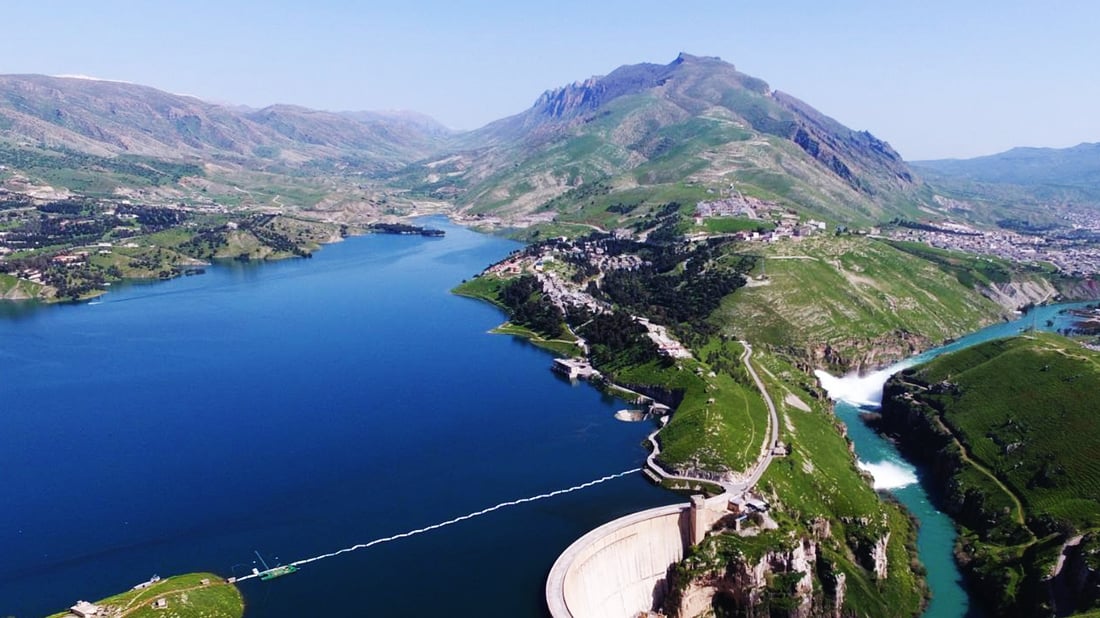
An aerial view of Dukan Dam, which recorded a sharp rise in water levels after heavy rainfall across the Kurdistan Region.
Storms add over 100 million cubic meters to key Kurdistan dams after drought lows
ERBIL — The Kurdistan Region’s Ministry of Agriculture said Wednesday that more than 100 million cubic meters of water have been added to storage at Dukan and Darbandikhan dams after several days of heavy rain and flooding, easing some of the pressure on reservoirs that had fallen to critically low levels this winter.
In a statement, the ministry said dams “have begun storing water as a result of the recent wave of rain and flooding over the past two days,” and reported sharp increases in inflow at both Dukan and Darbandikhan. Water levels at Darbandikhan rose by 1.5 meters, while Dukan saw a 70-centimeter increase. Smaller dams in Garmiyan and Sulaymaniyah governorates reached full capacity, and one dam in Erbil governorate overflowed as water was diverted. Dams in Duhok also recorded gains, although at lower levels.
The ministry said the storm system is expected to continue feeding dam inflows in the coming days.
Heavy rain has battered the Kurdistan Region since Monday, triggering destructive floods across several districts. On Tuesday, Chamchamal in Sulaymaniyah governorate reported two deaths, 12 injuries and damage to more than 500 houses, while roads linking Chamchamal to Kirkuk and Sulaymaniyah were blocked by stalled vehicles. In Kirkuk governorate, a 9-year-old girl died in Laylan’s Farqani village after being swept away by floodwaters.
Sulaymaniyah city recorded 122.7 millimeters of rain in 24 hours, bringing the year’s total to 258.7 millimeters, according to local data. In Taqtaq, in Koya district, hundreds of fish ponds collapsed and their fish were washed into nearby waterways.
Local governments in Sulaymaniyah and Halabja suspended official work Wednesday as emergency teams continued clearing debris and assessing damage from the storms.
Before this week’s rainfall, the Kurdistan Region had entered the winter season with severely depleted reservoirs, according to data from the General Directorate of Dams as of Dec. 8, 2025. The report showed steep declines in stored water compared with 2024, reflecting the effects of prolonged drought and heavy summer consumption.
Dukan Dam, the region’s largest, had fallen 14 meters below last year’s level, losing about 1.47 billion cubic meters of water and forcing its hydropower output to drop from 87 megawatts to zero. Darbandikhan Dam was nearly 9 meters lower than a year earlier, with hydropower output reduced from 58 megawatts to 9, while Duhok Dam showed a 5.5-meter decline in water level.