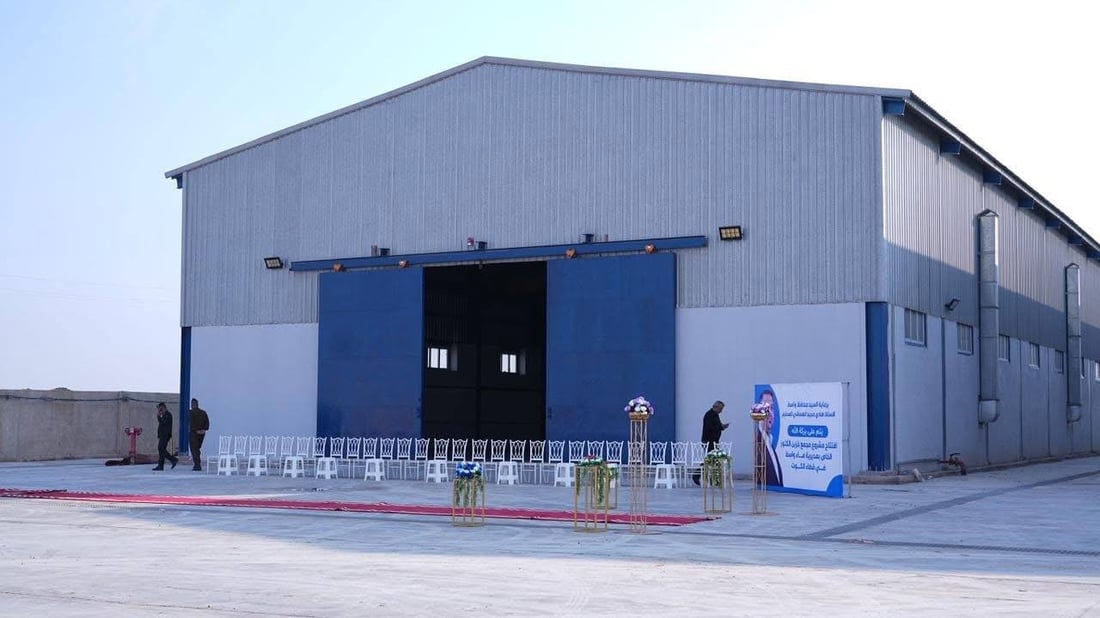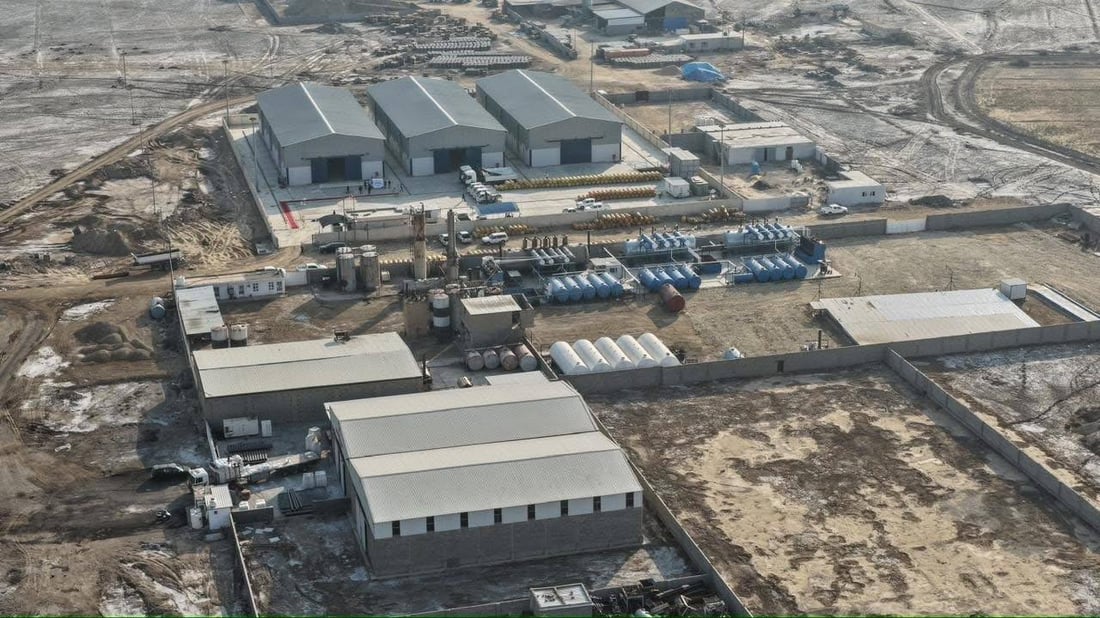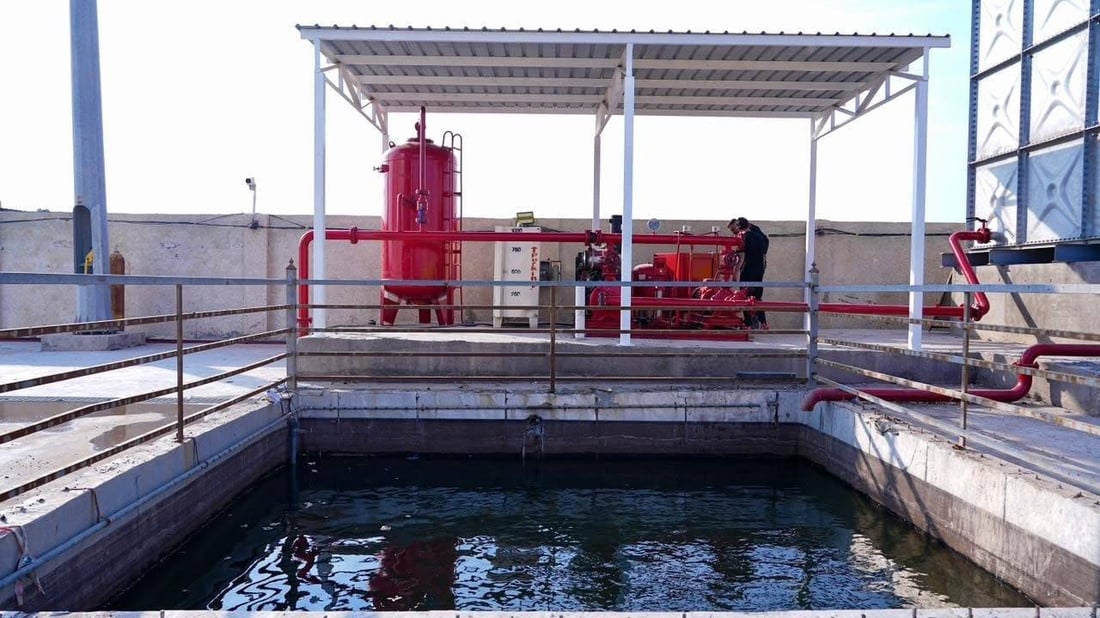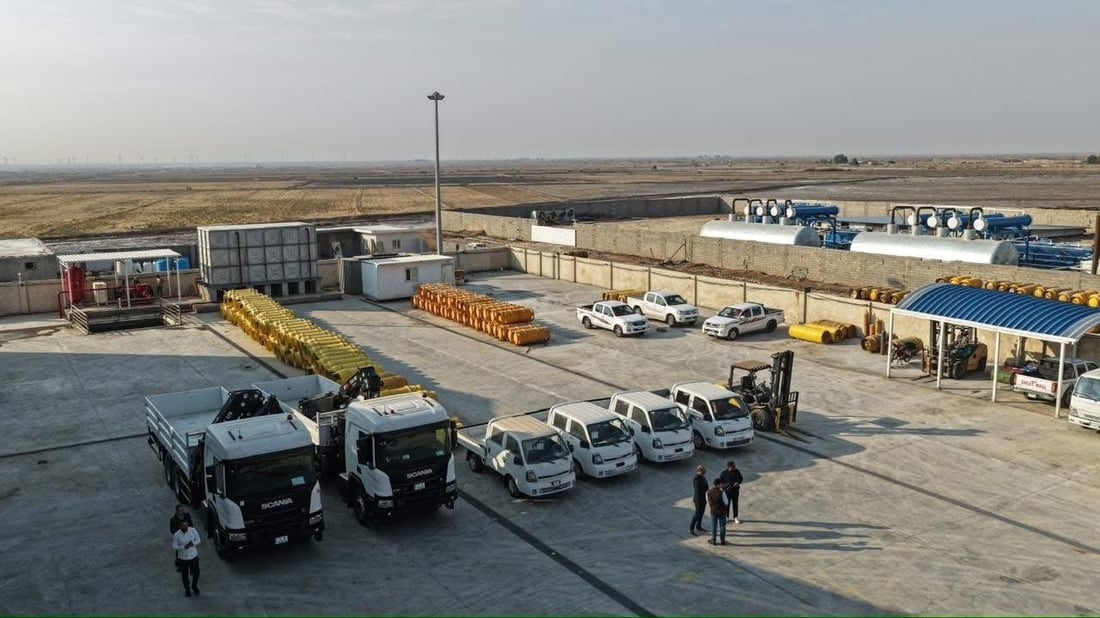
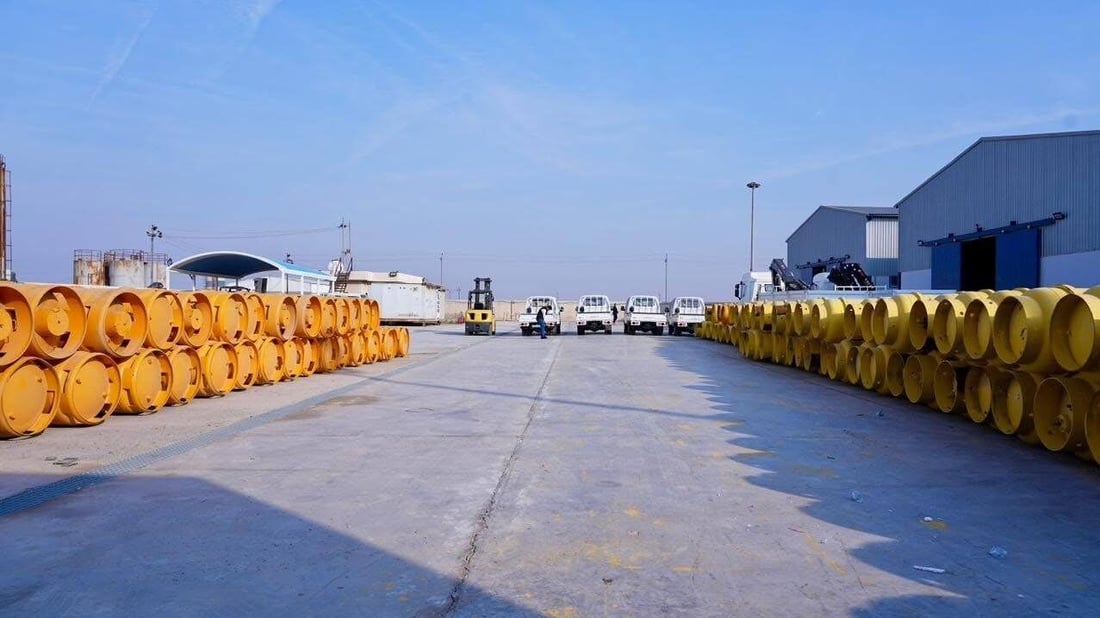
Newly built chlorine storage yards in Kut hold rows of cylinders and specialized equipment as Wasit authorities move to replace aging facilities and improve safety standards.
Wasit opens new chlorine storage complex after series of leak scares
KUT — Local authorities in Wasit on Sunday opened a new chlorine storage and handling complex in central Kut, replacing an aging facility that officials said had exceeded its service life for years.
Ali Humaidan, director of the Wasit Water Department, told 964media: “We opened today a new achievement added to the accomplishments of the Wasit Water Directorate, which is the standard chlorine storage complex that comes within the 2023 Regional Development Projects, at a cost exceeding 5 billion dinars (about $3.55 million).” He said the project is vital because of “its direct connection to citizens’ lives,” noting that the old site did not meet modern environmental or civil defense requirements.
Humaidan said the new complex consists of three hangar-style warehouses equipped with chlorine and smoke detection systems, an early warning system and seven specialized vehicles ranging from cranes to field cars. He said the aim is to raise safety standards across the governorate’s water network and reduce the risk of hazardous leaks.
Chlorine is central to Iraq’s drinking water treatment because it disinfects supplies and kills harmful bacteria and viruses. Improper storage, corrosion and equipment failure have repeatedly caused leaks across the country, with health authorities warning that exposure can lead to poisoning, respiratory distress and asphyxiation. Those risks have pushed water directorates to replace aging infrastructure and modernize storage conditions.
In the past year, multiple chlorine incidents have triggered medical emergencies. On Sept. 27, 2025, two people in Kirkuk’s Dubz district were hospitalized after exposure at a pumping station. In August, 621 people in Karbala required treatment following a leak along the Karbala–Najaf road, and 75 people in Fallujah were treated on June 30, 2024, after a ruptured pipe at a treatment plant released chlorine. A leak at the Bani Saad water project in Diyala on Oct. 13, 2024, caused 20 cases of poisoning after corroded valves on old cylinders released gas.
These incidents have intensified scrutiny of Iraq’s water infrastructure and prompted officials to reassure the public. On Sept. 15, 2025, Baghdad Municipality said drinking water in the capital is safe and subjected to hourly and daily laboratory testing. Officials said chlorine and alum are added during treatment to remove contaminants and that differences in water quality between neighborhoods are often tied to aging pipelines, distance from pumping stations and fluctuating river levels. The ministry said technical teams continue to monitor governorates to maintain safe supply standards.