
Baghdad workshop promotes culture in fight against extremism
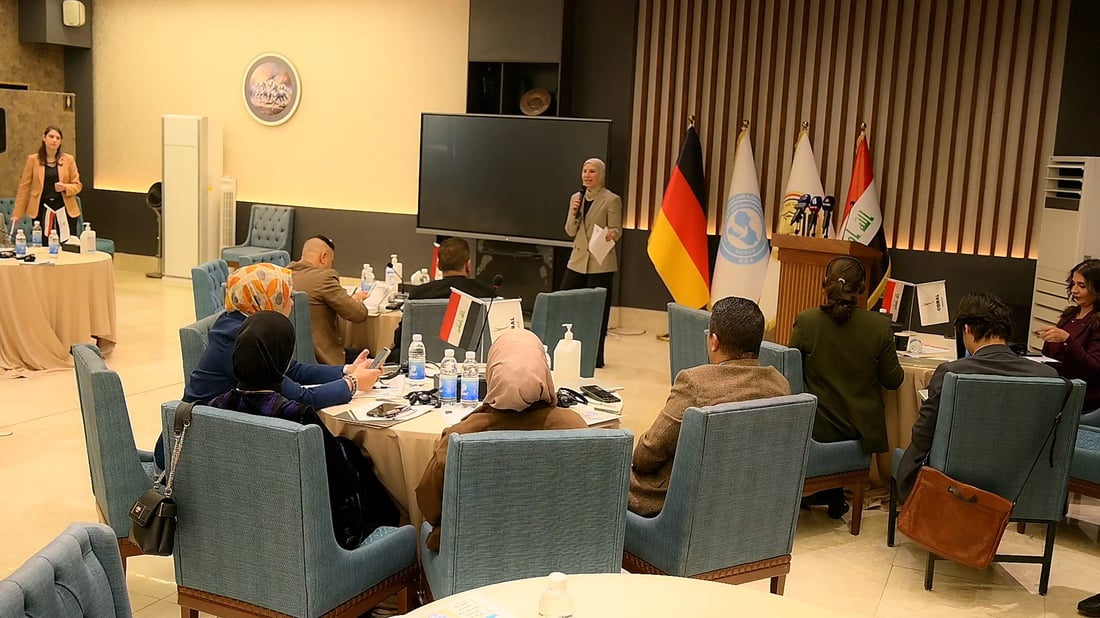
BAGHDAD — The National Committee at Iraq’s National Security Advisory convened its third workshop on Sunday in Baghdad, focusing on the use of culture to prevent violent extremism and reshape narratives in areas formerly controlled by extremist groups.
The workshop, attended by subcommittee members from ministries representing eight governorates—Basra, Kirkuk, Salah Al-Din, Dhi Qar, Diyala, Wasit, Najaf, and Muthanna—along with Baghdad, emphasized the role of literature, arts, and sports in fostering moderate discourse and social resilience.
Ali Abdullah, head of the Committee for Combating Violent Extremism, told 964media, “The third workshop focuses on soft power discourse in addressing violent extremism that leads to terrorism. We are working within a program involving all ministries.”
He added that the committee is transitioning to a methodology that uses literature, art, and sports to deliver positive messages to society. “Several related activities have already taken place in 10 governorates, and we are now evaluating the outcomes with plans to expand the initiative nationwide and across ministries.”
Ali Al-Atabi, a representative from Dhi Qar, said the workshop aims to build participants’ capacity to craft cultural and educational messages for those with differing behaviors or ideas. “We need to invest in this soft power to tell others: ‘You are not my enemy.’ We must share ideas and believe in a common understanding rather than resorting to weapons.”
He noted that parts of the country still have entrenched ideological clusters requiring time and dialogue to dismantle, adding, “We need to educate relevant institutions across Iraq.”
Iraq saw several terror groups emerge over the past two decades, beginning with the rise of Al-Qaeda in Iraq following the U.S.-led invasion in 2003. The group carried out attacks targeting Iraqi security forces, civilians, and coalition troops.
Later, Islamic State declared a so-called caliphate in June 2014 after seizing large areas of Iraq and Syria, including the city of Mosul. The group enforced strict interpretations of Sharia law, carried out mass executions, and persecuted minorities such as Yazidis and Christians. Iraqi and international military operations eventually recaptured ISIS-held territories, and by 2017, the group had lost most of its land.
Despite its territorial defeat, ISIS shifted to insurgency tactics, conducting sporadic attacks through decentralized cells.